







On November 25, 2026, Hanoi University of Civil Engineering (HUCE) held a workshop to summarize research activities under the PRES Project – “Project to survey and verify the implementation of a system for reusing dredged sludge from rivers in Vietnam”. The project is supported by the Japan International Cooperation Agency (JICA), with the cooperation of Japanese partners and Hanoi University of Civil Engineering.
Attending the workshop, on behalf of JICA Vietnam was Mr. Miyajima Takahiro – Project Advisor. On the Japanese side were Mr. Kato Yukimasa – President of Taiyo Kisokogyo Co., Ltd.; Mr. Tsuchiya Atsuo – Senior Managing Director of Taiyo Kisokogyo Co., Ltd., Technical Director of the PRES Project; and Mr. Nakajima Kazuo – Member of the Board of Directors of Oriental Consultants Co., Ltd., Head of the PRES Project Consulting Team.
Representing Hanoi University of Civil Engineering were Prof. Dr. Nguyen Hoang Giang – Vice Rector, along with scientists, experts, lecturers, business representatives, and a large number of students interested in the field of construction technology, material processing and reuse.
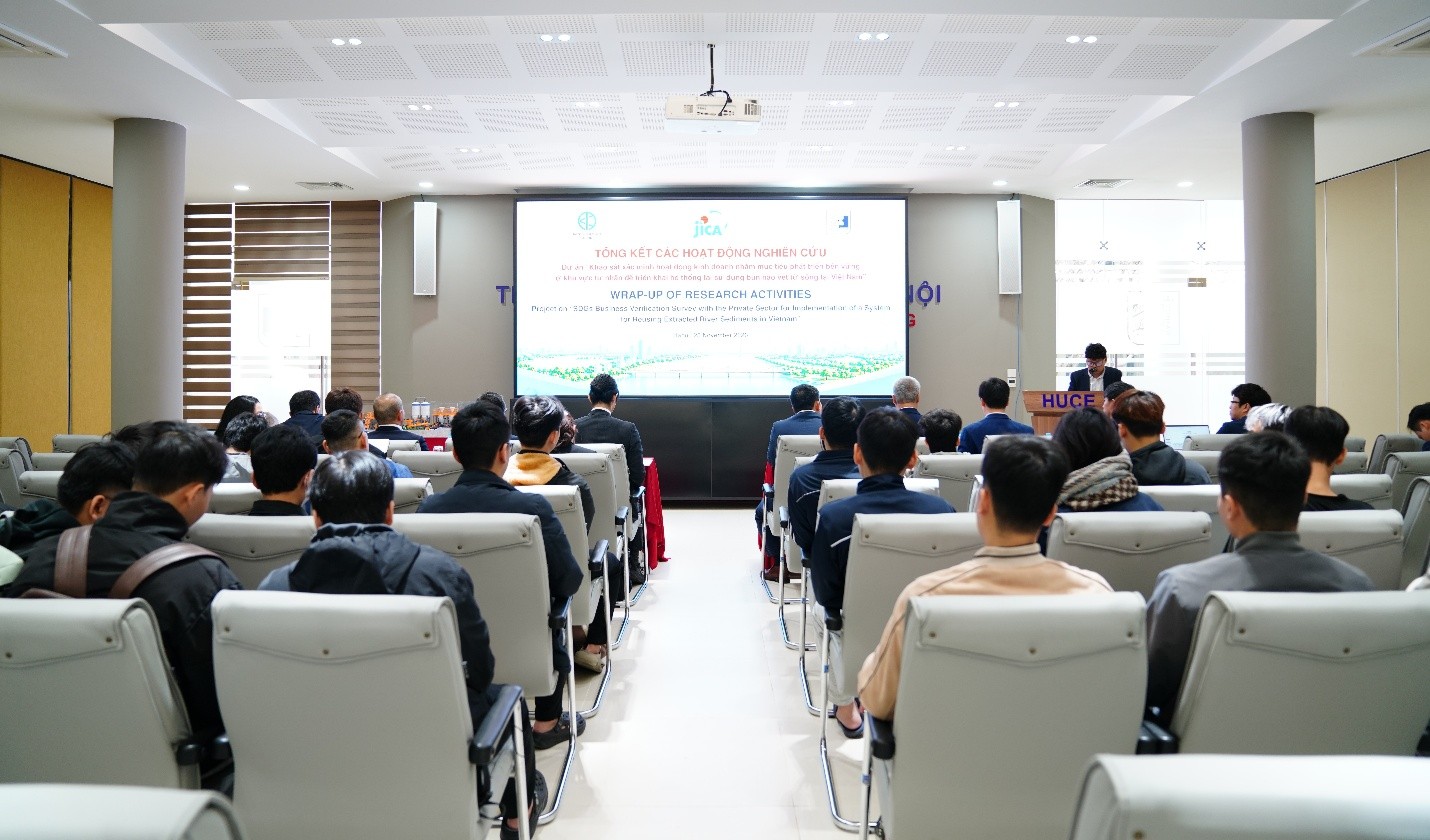
Overview of the concluding workshop
Currently, dredging activities in rivers, canals, and seaports in Vietnam generate large quantities of mud and soil that require proper treatment. Meanwhile, the demand for soil materials for dike reinforcement, land leveling, and road construction is increasing. This reality necessitates the search for technological solutions capable of effectively treating and reusing dredged mud, thereby reducing environmental pressure while supplementing the supply of construction materials.
The PRES project was launched to research and verify the applicability of Japanese dredged sludge recycling technology in Vietnam. Through the use of soil improvement materials combined with pipe mixing technology, dredged sludge, which would normally be treated and disposed of, can have its mechanical properties improved, its strength and stability enhanced, thereby creating a reusable material for construction projects.
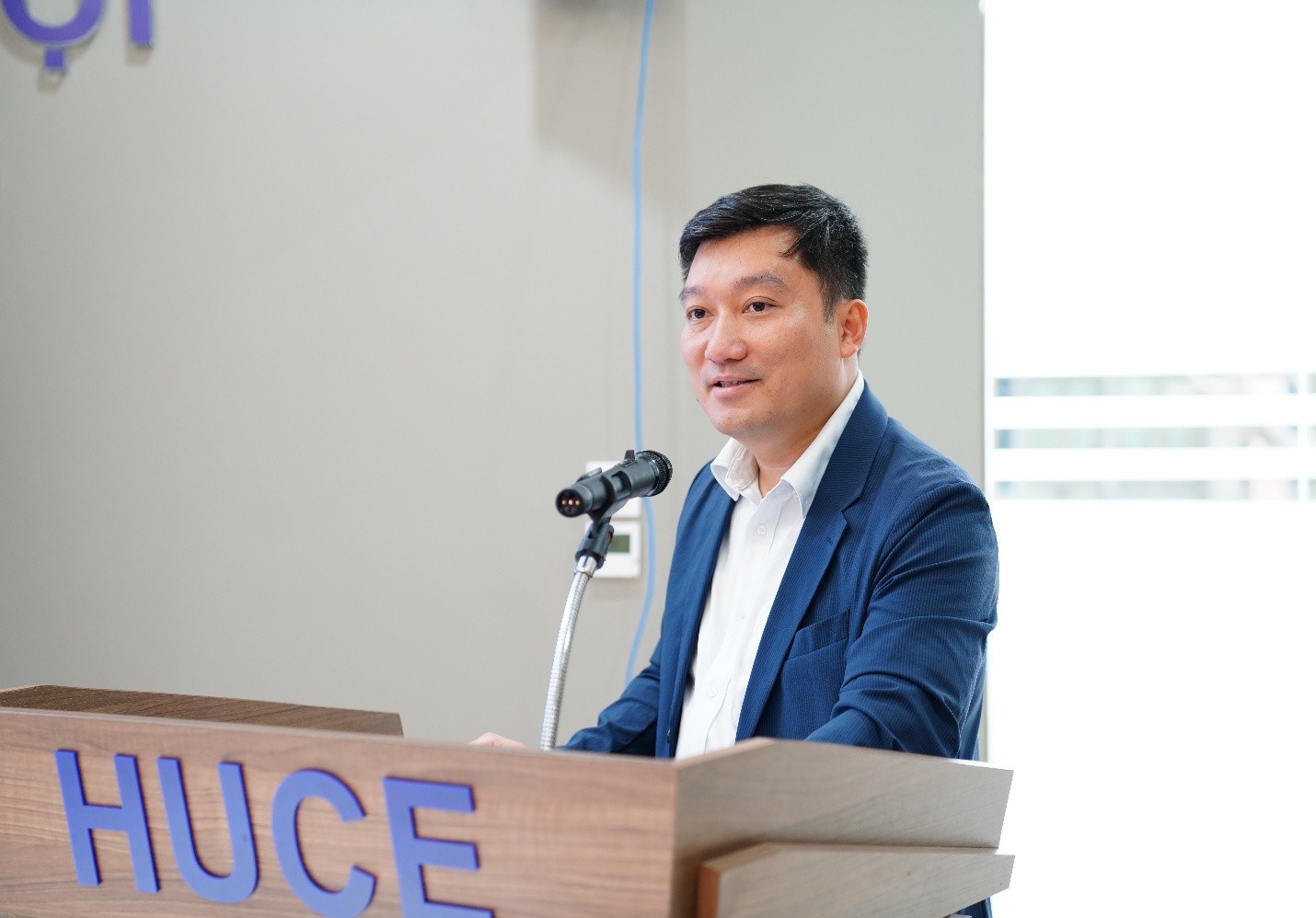
Professor Dr. Nguyen Hoang Giang – Vice Rector of Hanoi University of Civil Engineering, delivered the opening speech.
In his opening remarks at the workshop, Professor Nguyen Hoang Giang, Vice Rector of Hanoi University of Civil Engineering, emphasized the significance and urgency of the PRES Project in the context of the increasing need for dredging sludge treatment and the search for construction materials in Vietnam. According to Professor Nguyen Hoang Giang, in recent times, with the cooperation of Japanese experts and partners, the project has implemented numerous research, technology introduction, and testing activities. Notably, the technology presentation program held at Hanoi University of Civil Engineering last June attracted a large number of experts and relevant units, contributing to the introduction of new technical solutions and expanding opportunities for exchange and cooperation between parties.
Evaluating the results achieved, Professor Nguyen Hoang Giang stated that the project has contributed to clarifying the current state of dredged sludge treatment in Vietnam, introducing appropriate technological solutions, and gradually building a technical basis, providing technological guidance, and construction support for practical implementation. These are practical and significant results, providing additional reference material for management agencies. acute; specialized units and local authorities are involved in selecting solutions for treating and reusing dredged sludge.
Besides the research results, the Vice Rector also emphasized the important requirement in the next phase: promoting commercialization and putting the technology into practical application to meet the specific needs of localities. Hanoi University of Civil Engineering will continue to cooperate with experts, partners, and businesses to research, refine, and promote the application of technology, contributing to maximizing the effectiveness of the project.
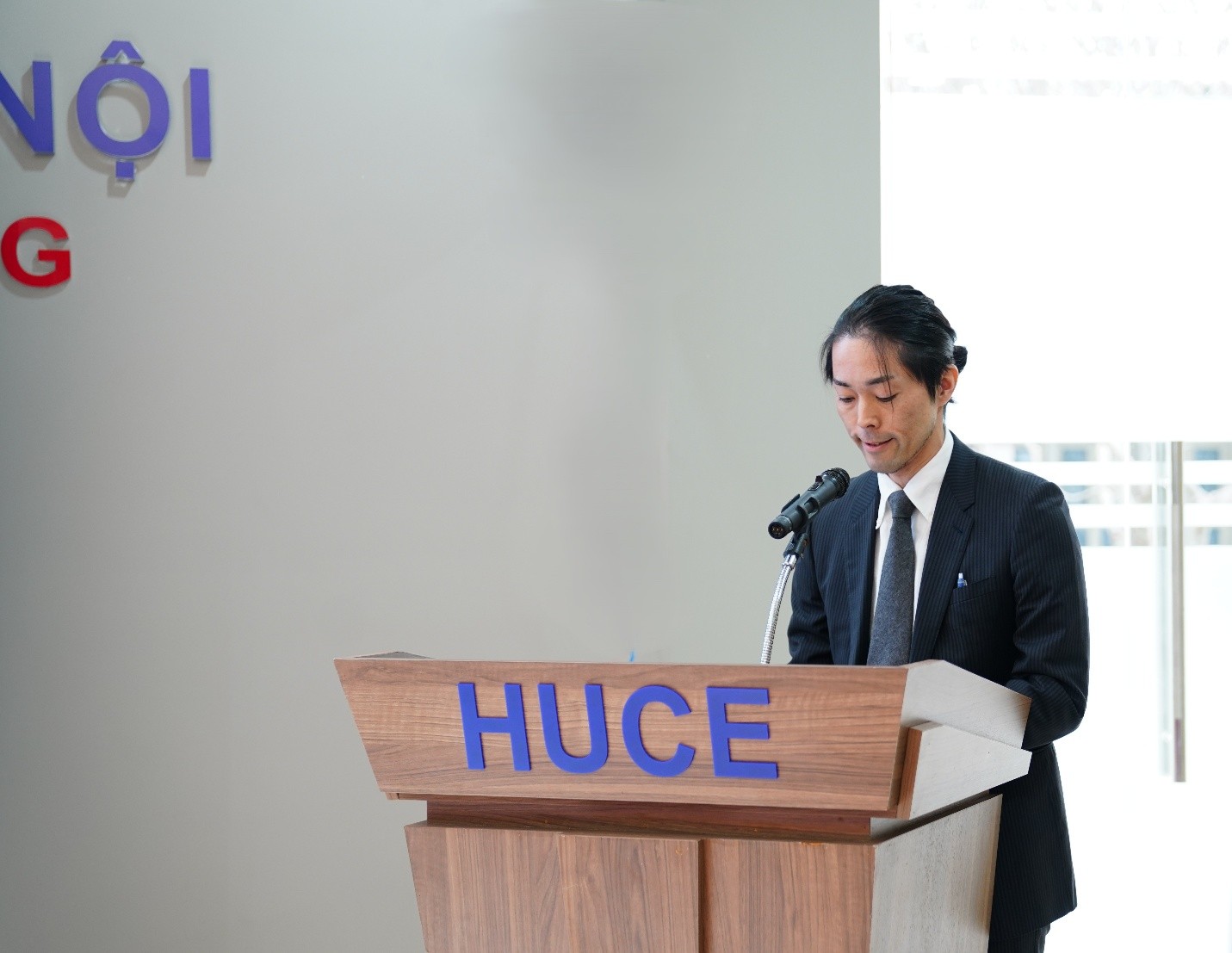
Mr. Miyajima Takahiro – Representative of JICA Office in Vietnam, delivered a speech at the Workshop.
Speaking at the workshop, Mr. Miyajima Takahiro – representative of the JICA Office in Vietnam – expressed his gratitude to the agencies, organizations, and individuals of both countries for their active cooperation and contributions to the project's implementation. He emphasized that the technology researched not only contributes to solving the problem of dredged sludge treatment but also opens up the possibility of utilizing this material for construction, bringing practical economic and environmental benefits.
The JICA representative also specifically acknowledged the support of Hanoi University of Civil Engineering, from mobilizing highly qualified lecturers and experts to providing locations, equipment for experiments and practical training, workspaces, and assistance with related procedures. He affirmed that the University's partnership was a crucial factor contributing to the project's implementation, and expressed his hope that the technology would continue to be refined, disseminated, and replicated throughout Vietnam.
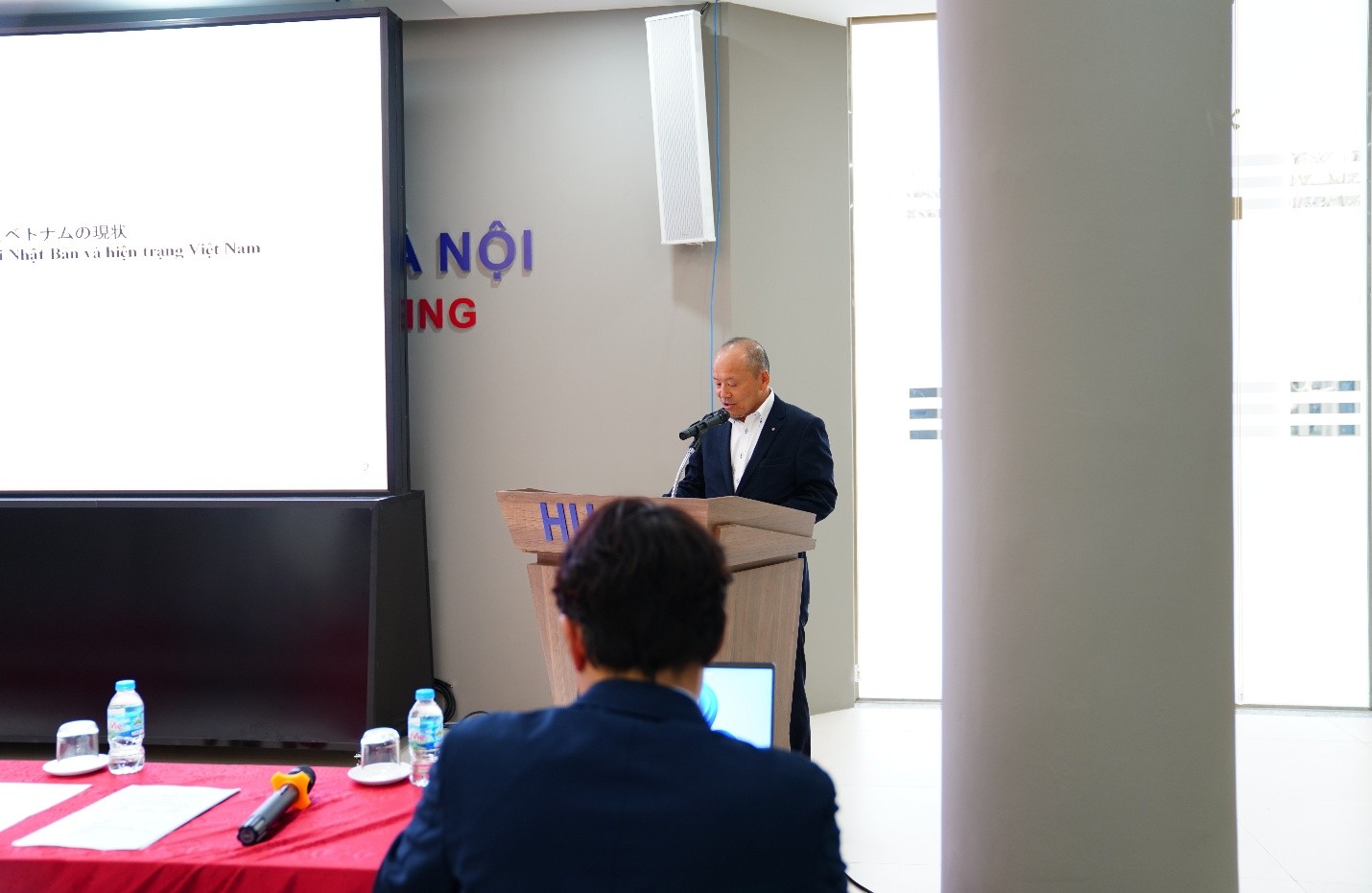
Mr. Tsuchiya Atsuo, Senior Managing Director of Taiyo Kisokogyo Co., Ltd. and Technical Director of the PRES Project, presented the project summary.
At the workshop, Mr. Tsuchiya Atsuo – Senior Managing Director of Taiyo Kisokogyo Co., Ltd., and Technical Director of the PRES Project – presented a summary of the implementation process, introduced the technology, the testing activities, and the results achieved. The report focused on clarifying the current status of dredged sludge utilization and treatment in Vietnam, the Japanese technological solution, and technical directions for implementation under real-world conditions.
Throughout the implementation of the PRES Project, the research team from Hanoi University of Civil Engineering collaborated closely with Japanese experts to carry out synchronized research, surveys, and technology verification testing. The key results focused on four areas:
Survey of the current status and assessment of dredged sludge characteristics in Vietnam: The research team collected data, took field samples, and analyzed the physico-mechanical, chemical, and environmental characteristics of dredged sludge at several locations. river and canal routes. Through this, a scientific database will be built to serve research and evaluation of the potential for processing and reusing this material.
Experimental research and verification of the applicability of Japanese Pipe Mixing technology: Through laboratory experiments and field verification tests, notably a practical trial combined with a scientific workshop at the Ha Nam branch of the University, the project evaluated the effectiveness of processing, reinforcing, and improving the mechanical properties of dredged sludge. The results showed that pipe mixing technology can transform dredged sludge into high-quality backfill and embankment materials, contributing to the utilization of local materials and reducing the volume of sludge that needs to be transported and disposed of.
Evaluating technical, economic, and environmental effectiveness towards sustainable development: Preliminary studies clarify the feasibility of the technology under actual construction conditions in Vietnam, while also showing the potential for saving natural material resources, reducing waste and emissions from the transportation and treatment of dredged sludge. This is also a solution that contributes to promoting a circular economy in the infrastructure construction sector, in line with the Sustainable Development Goals (SDGs).
Building a scientific foundation to support the refinement of standards, technical guidelines, and technology transfer: Research results and experimental data are synthesized and systematized, creating a scientific and practical basis for proposing relevant standards, regulations, and technical guidelines. This is an important prerequisite for further refining technology, promoting transfer, commercialization, and widespread application in Vietnam.
The discussion and Q&A session featured numerous exchanges between experts, scientists, businesses, and attendees, focusing on technology effectiveness, application conditions, commercialization potential, and solutions to promote technology transfer in the future.
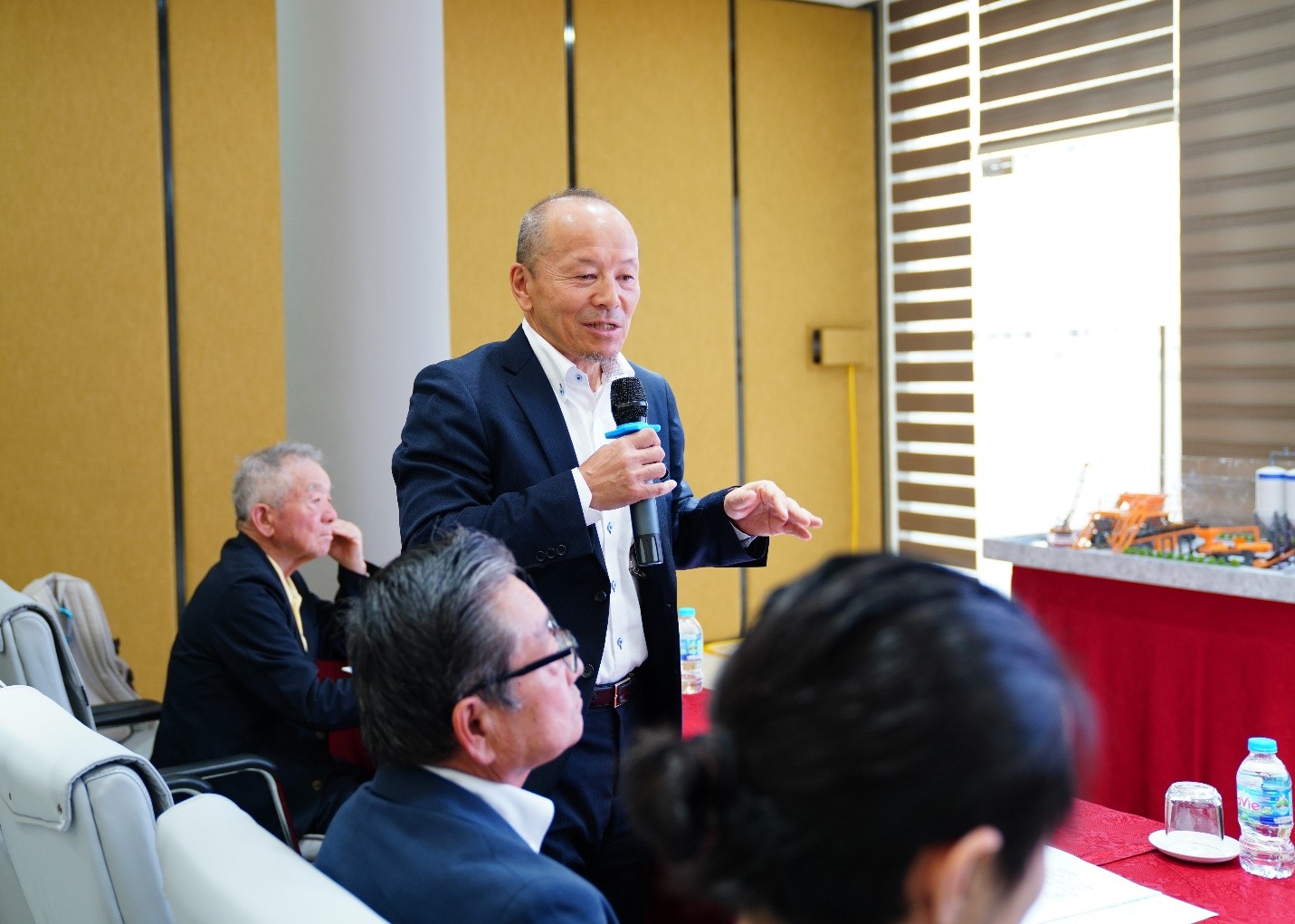
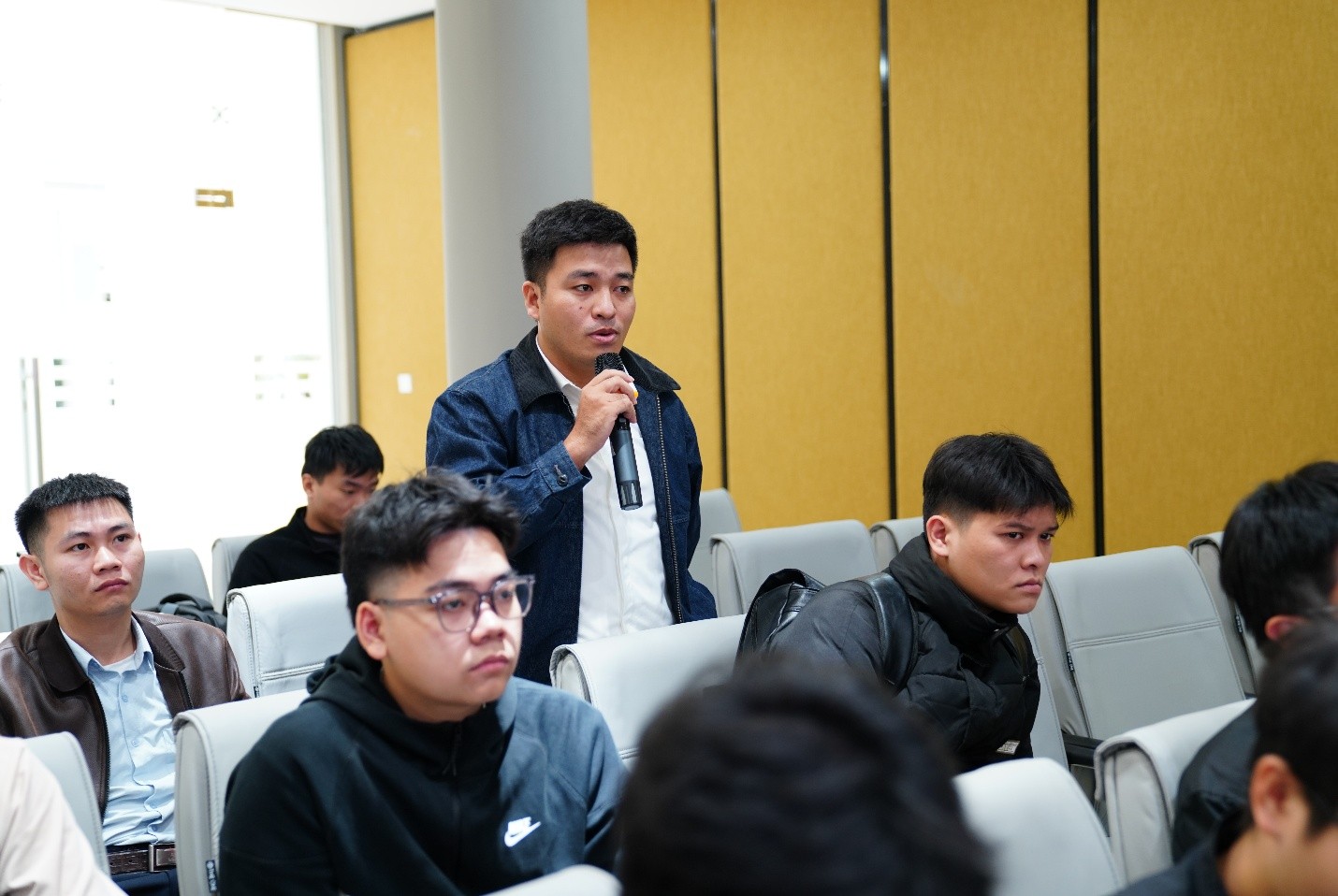
Experts exchanged views during the discussion and Q&A session.
The PRES Project concluding workshop marks a significant milestone in the cooperation between Hanoi University of Civil Engineering, JICA, and Japanese partners in the field of construction research and technology transfer. The achievements not only contribute to solving the problem of dredged sludge treatment in Vietnam but also open up new approaches in resource management, reuse, and circular economy development.
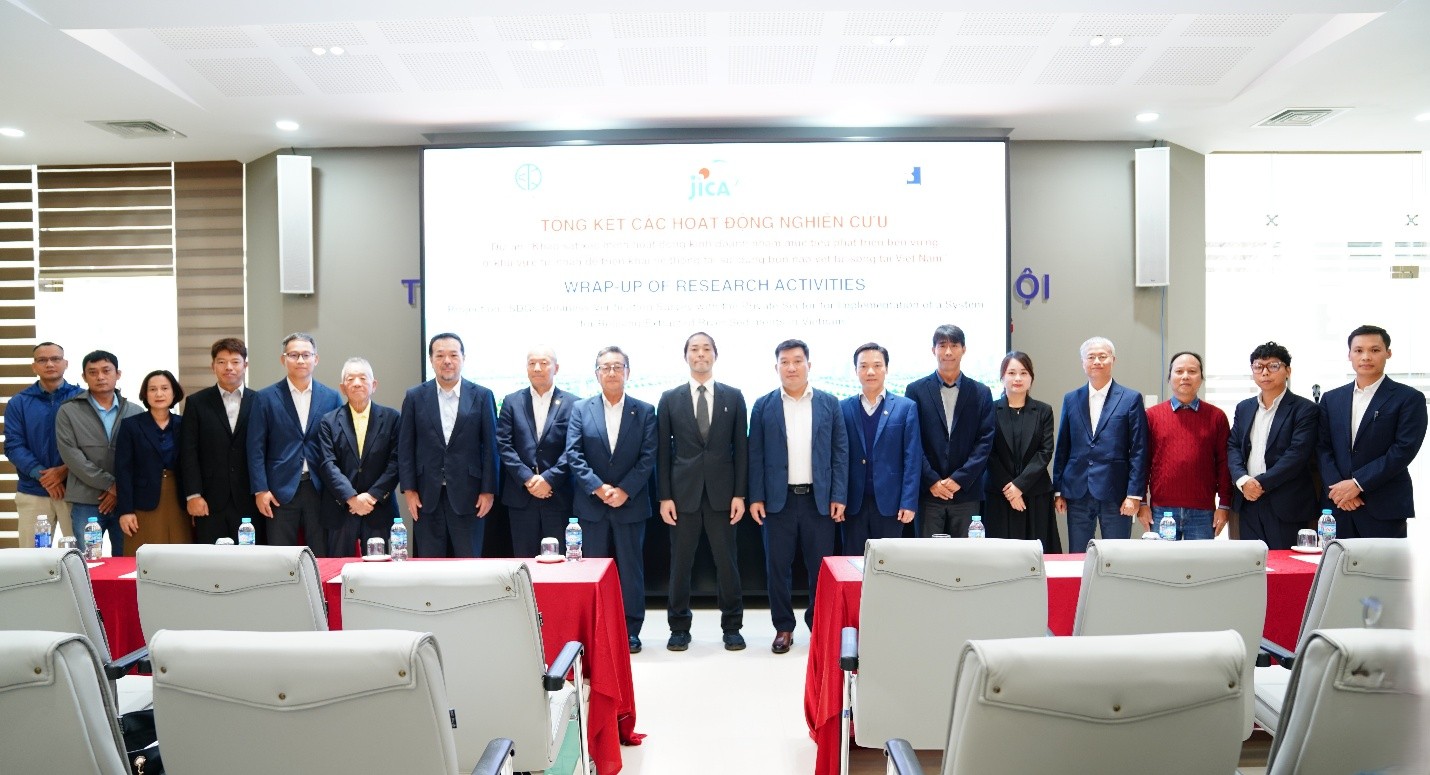
Representatives from both countries pose for a commemorative photo.
Through this project, Hanoi University of Civil Engineering continues to affirm its role as a training, scientific research, and technology transfer institution, proactively connecting international knowledge with practical needs and contributing to the sustainable development of the construction industry and the country.
Information and Communication Technology Department