







With the theme "Low-Carbon Emission Concrete," the 2026 Student Innovation Competition in Building Materials attracted a large number of students from universities, bringing forth many ideas and research solutions aimed at reducing emissions, utilizing industrial waste, and developing sustainable building materials.
On November 21, 2026, the Final Round of the 2026 Student Innovation Competition in Construction Materials took place at Hanoi University of Civil Engineering. This was the 10th time the competition has been held, continuing to create a valuable academic platform, encouraging students to develop creative thinking, research skills, and apply their professional knowledge to solve practical problems in the construction industry.
This year's competition attracted 52 teams with approximately 250 students from 6 universities: Hanoi University of Civil Engineering, University of Transport Technology, University of Transport, Hanoi University of Architecture, Hanoi University of Mining and Geology, and Hanoi University of Water Resources. After several evaluation rounds, 7 outstanding teams were selected to participate in the Final round.
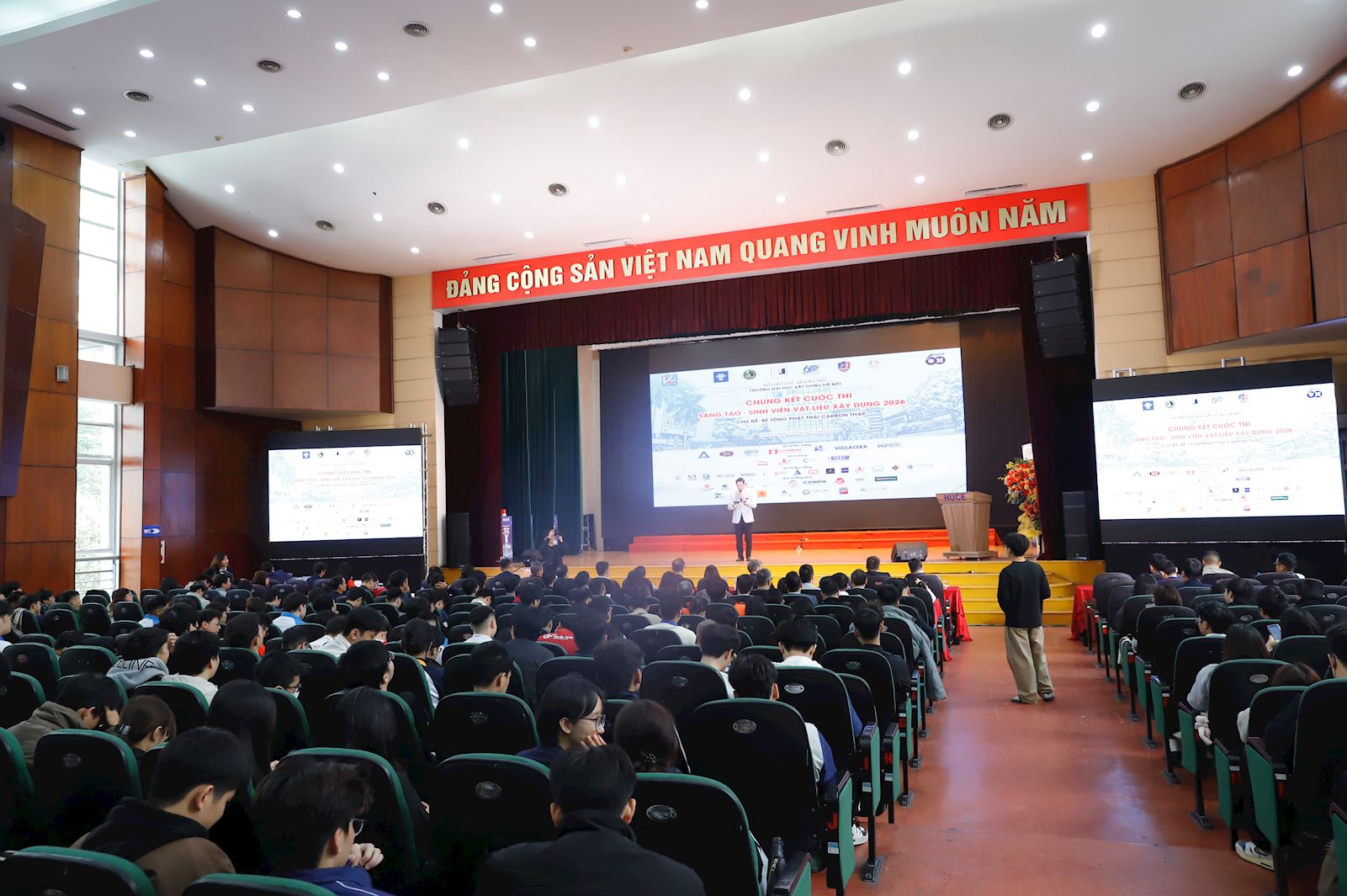
Overview of the auditorium where the Final Round of the 2026 Student Innovation Competition in Building Materials was held.
Researching low-carbon concrete solutions
In the context of the construction industry's accelerated green transformation, aiming for net zero emissions, research and development of environmentally friendly building materials is becoming increasingly urgent. Cement production, in particular, is a significant source of CO₂ emissions, necessitating technological innovation and the search for suitable alternatives.
With the theme "Low-Carbon Emission Concrete," the competition presented a practical research challenge for students: how to reduce cement usage, effectively utilize alternative materials, and still ensure the technical requirements of concrete are met.
A highlight of the competition is that teams not only present their ideas but also have to directly research, design mix proportions, fabricate concrete samples, and evaluate the product according to criteria such as workability, compressive strength, and carbon emissions.
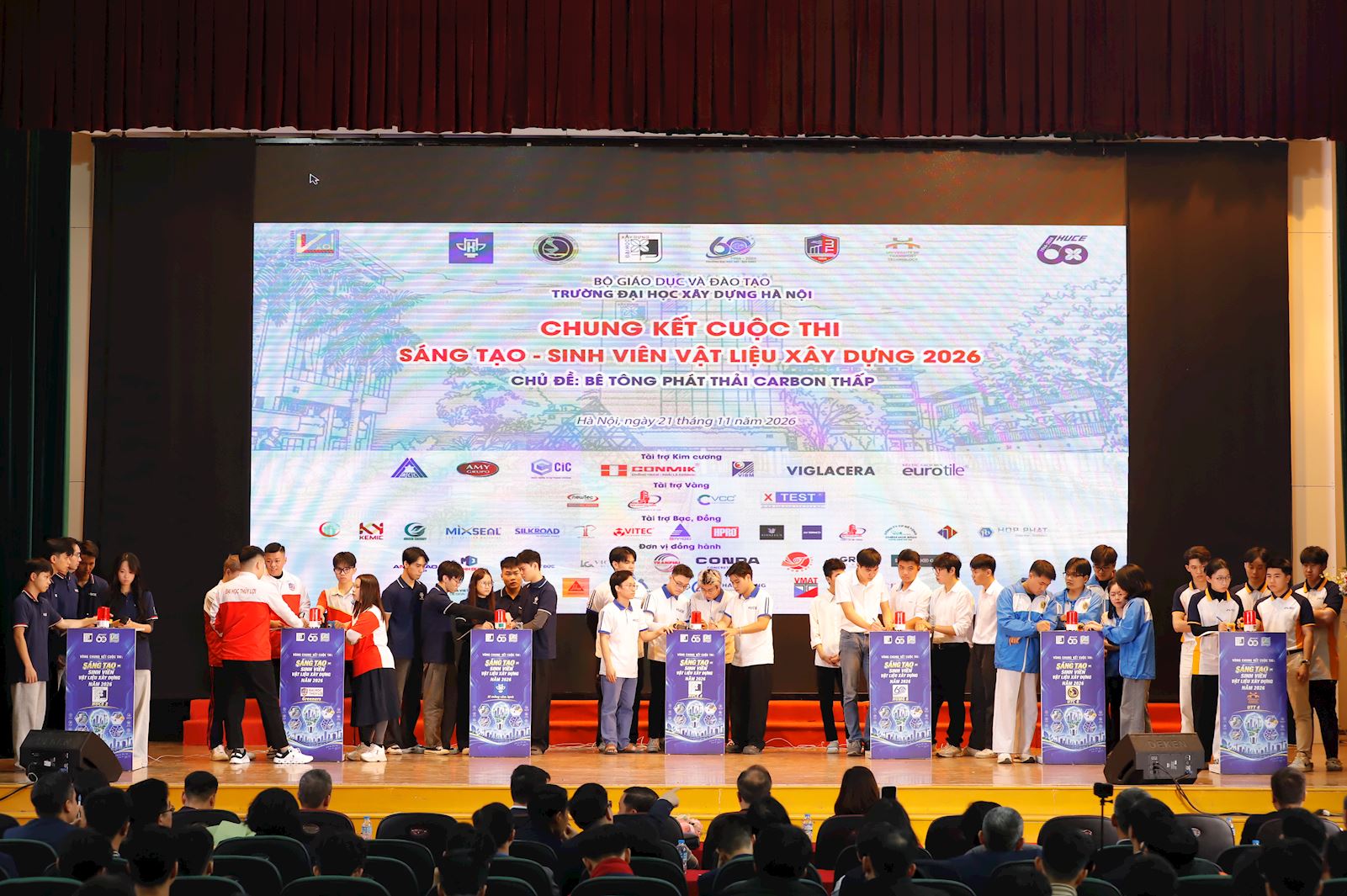
Teams performing in the Final Round
Many research directions were chosen by the teams, focusing on using fly ash and blast furnace slag to partially replace cement in concrete mixes; optimizing the ratio of material components to reduce clinker content and limit emissions during production. In addition, research into new binders, including geopolymers, also opens up potential approaches in the development of green building materials.
The research solutions demonstrate students' proactive approach to new industry issues, particularly their ability to utilize industrial waste and by-products to create valuable materials, contributing to resource conservation and environmental impact reduction.
From laboratory research to practical applications.
In the Final round, in addition to introducing the product and defending the technical solution, C&A acute;c The competing teams also participated in discussions and debates with the judging panel on issues related to green transformation in the construction industry.
Many issues were raised, such as the responsibility of engineers towards achieving Net Zero, the role of professional ethics and law in environmental protection, and the potential application of low-emission materials in construction projects.
The discussions all indicated that reducing emissions cannot remain merely an idea or environmental protection message, but must be proven by specific research results and experimental data. A low-emission concrete product must simultaneously meet requirements for strength, durability, workability, constructability, and economic efficiency.
This also presents a significant challenge in the process of translating research results from the laboratory into production and practical applications. Besides technological factors, solutions need to be evaluated for stability, ability to meet technical standards, production costs, and the feasibility of large-scale deployment.
|
|
|
|
|
|
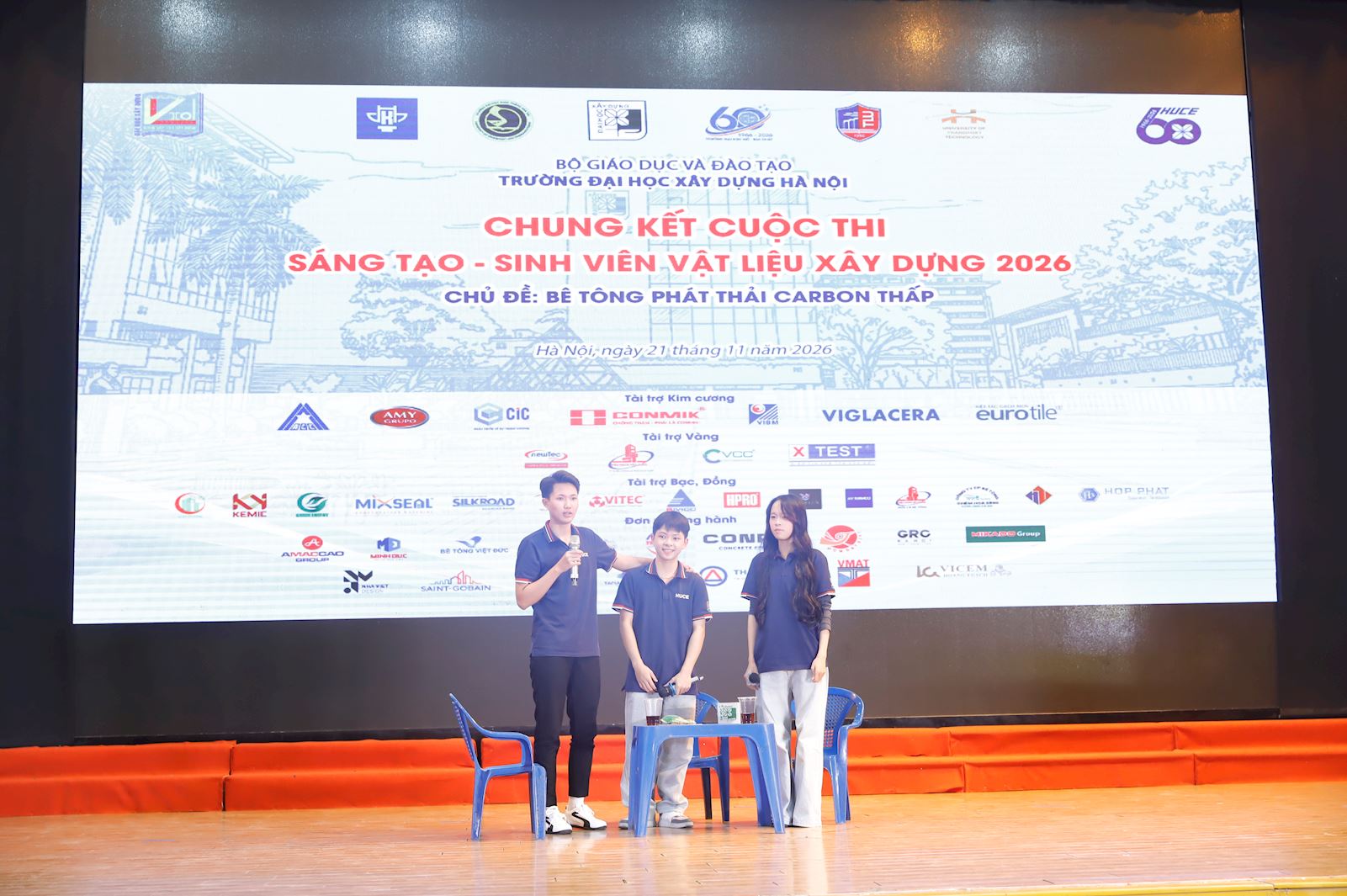
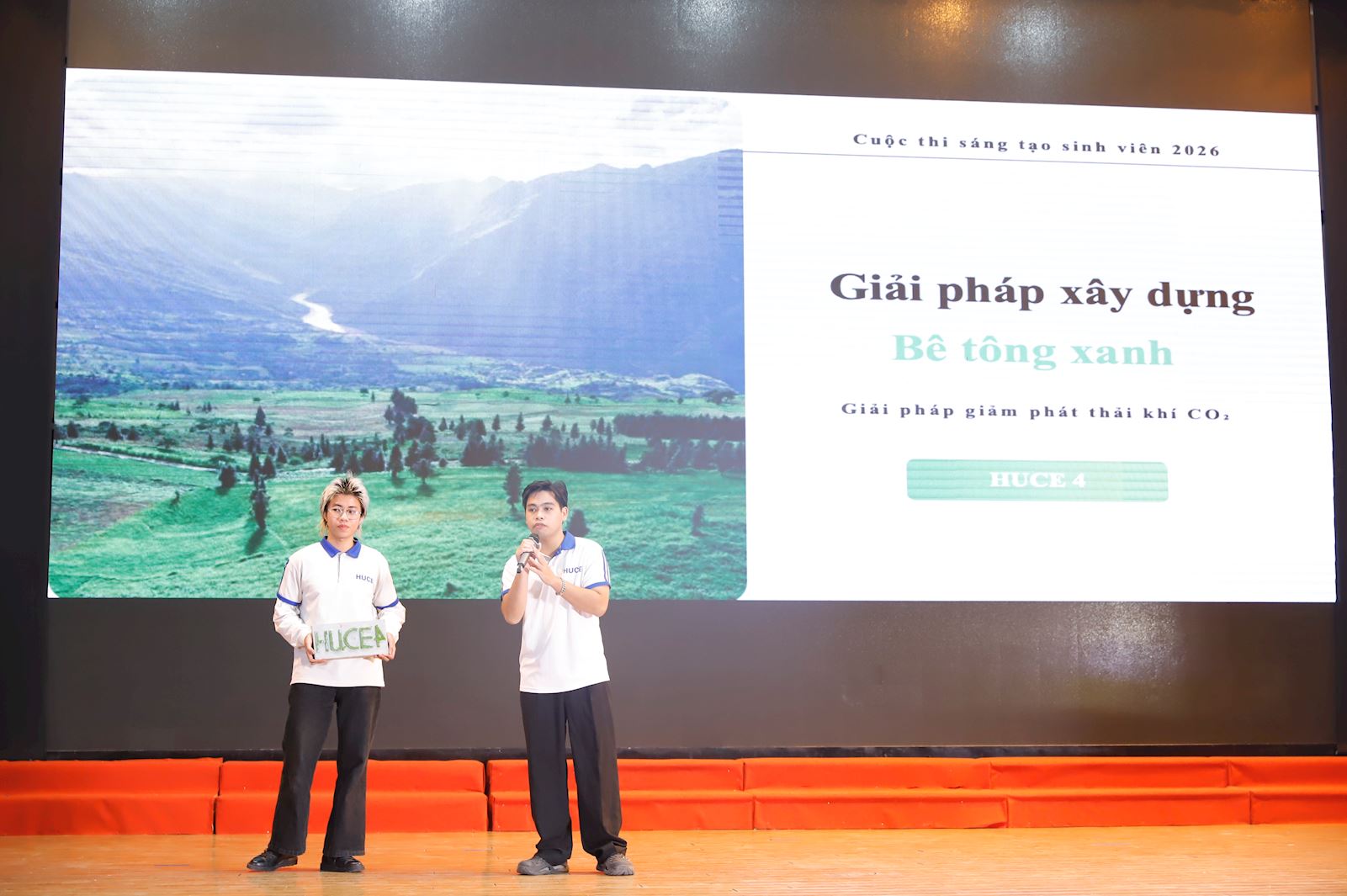
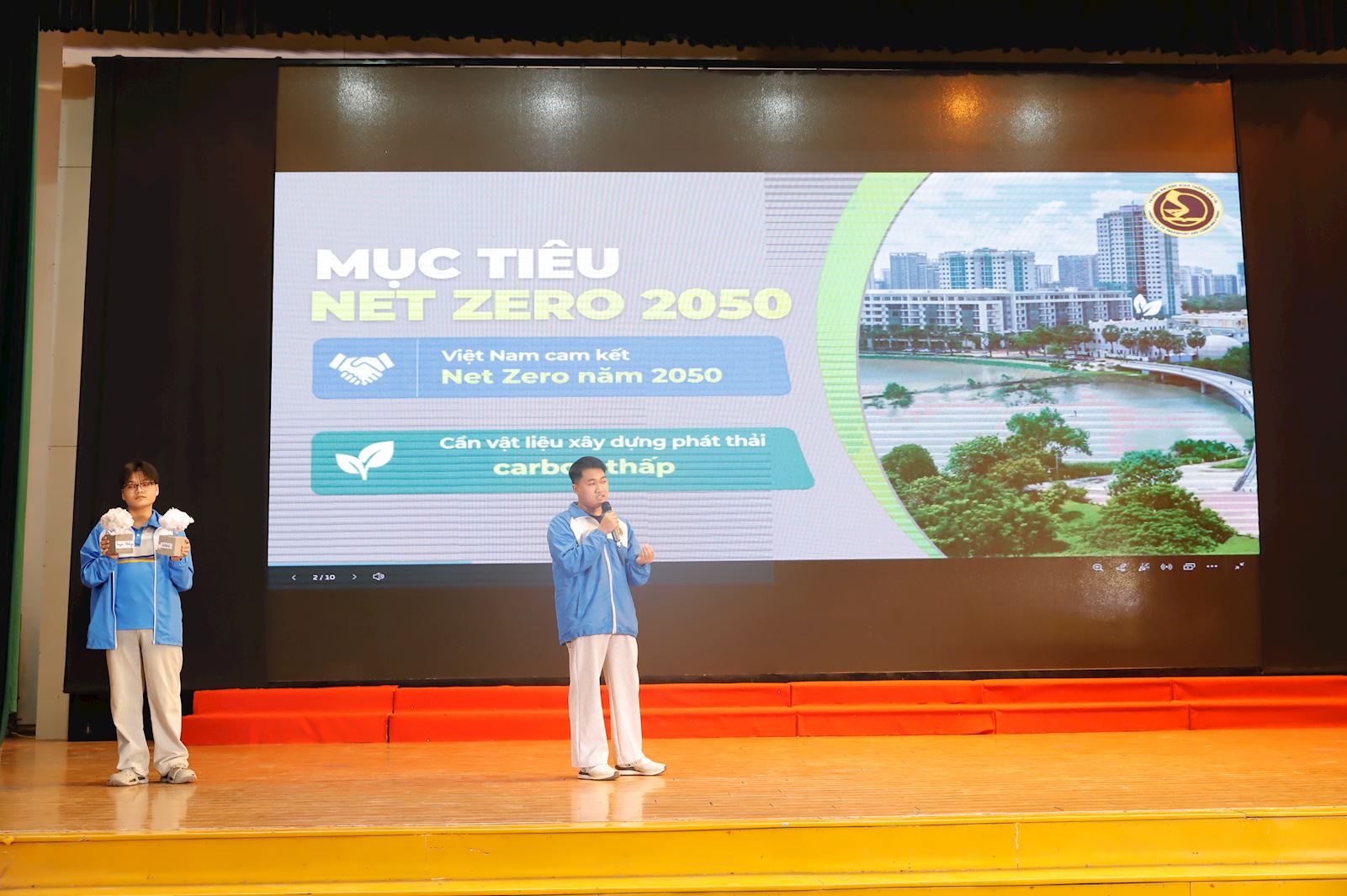
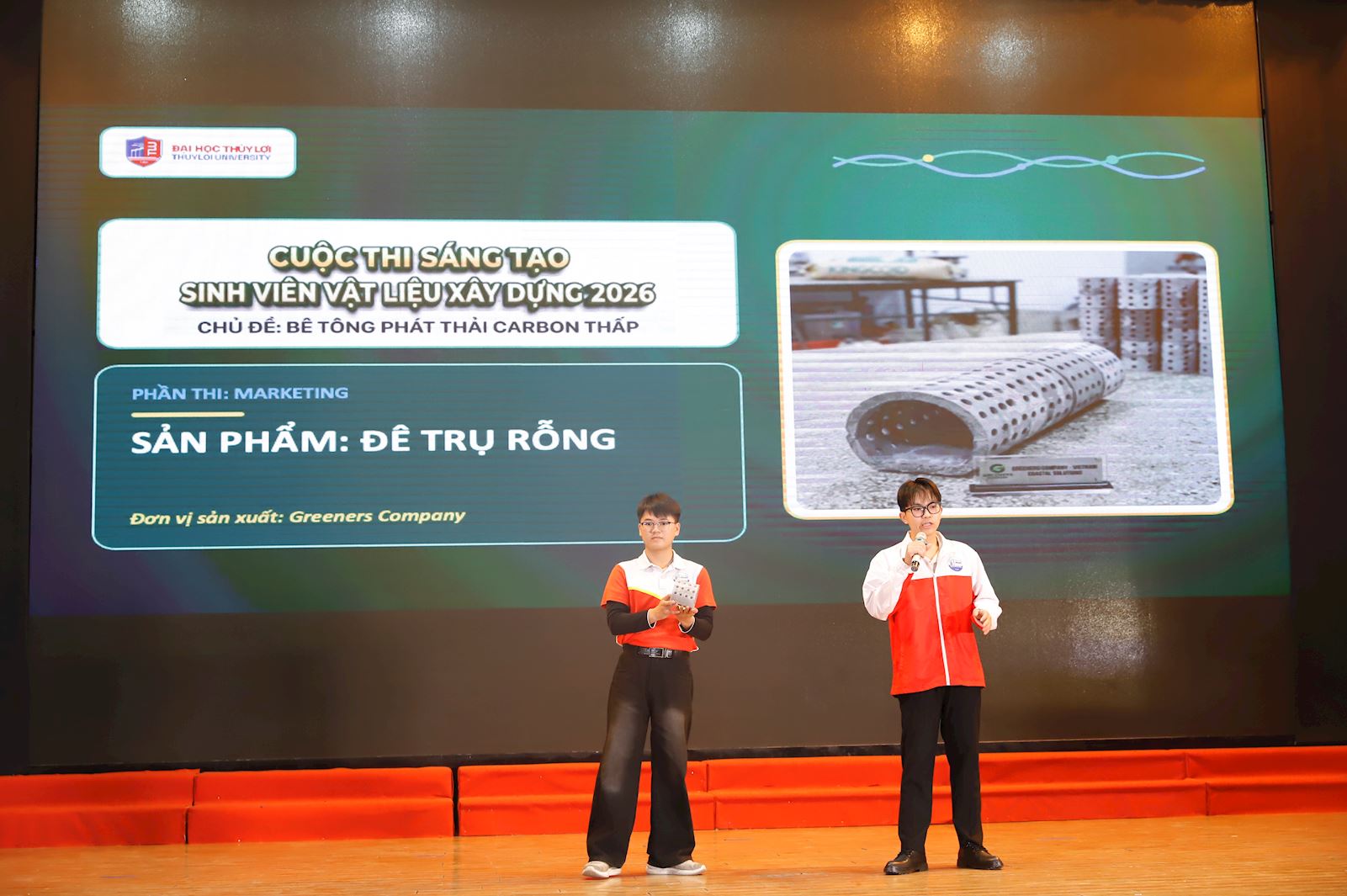
Teams performing in the Final Round
Through research, experimentation, and critical review, the competition not only helps students consolidate their professional knowledge but also cultivates scientific thinking, teamwork skills, problem-solving abilities, and a sense of professional responsibility in the face of sustainable development requirements.
Spreading the spirit of innovation and promoting the development of green building materials.
At the end of the competition, the Organizing Committee awarded prizes to the teams with outstanding achievements:
- Special Prize: UTC6 Team – University of Transport and Communications.
- First Prize: Team HUCE2 – Hanoi University of Civil Engineering.
- Second Prize: Team HUCE4 – Hanoi University of Civil Engineering and Team TLU2 – Thuy Loi University.
- Third Prize: The remaining three teams will participate in the Final Round.
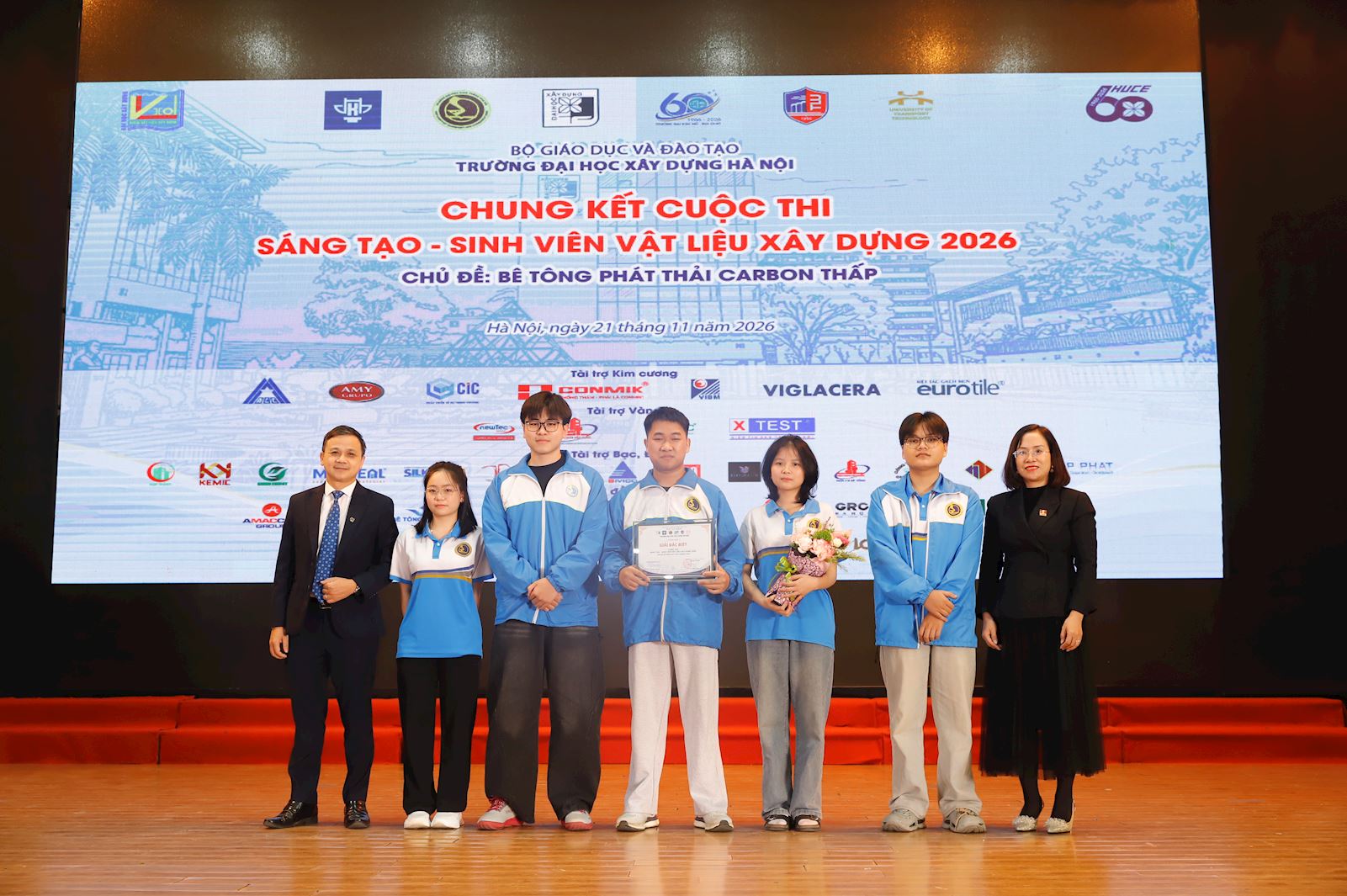
Congratulations to the UTC6 team for winning the Special Prize!
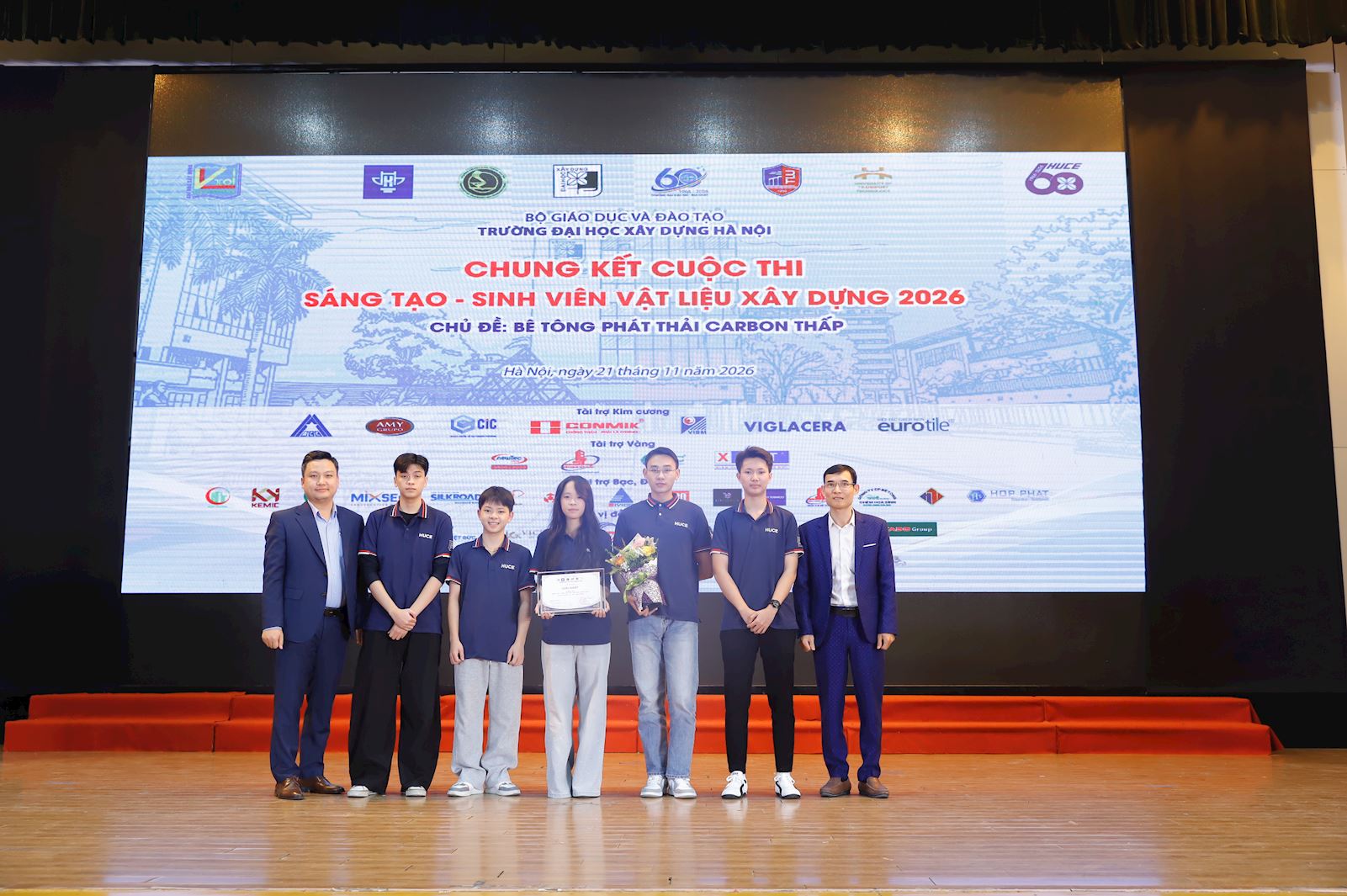
Congratulations to HUCE 2 team for winning first place!
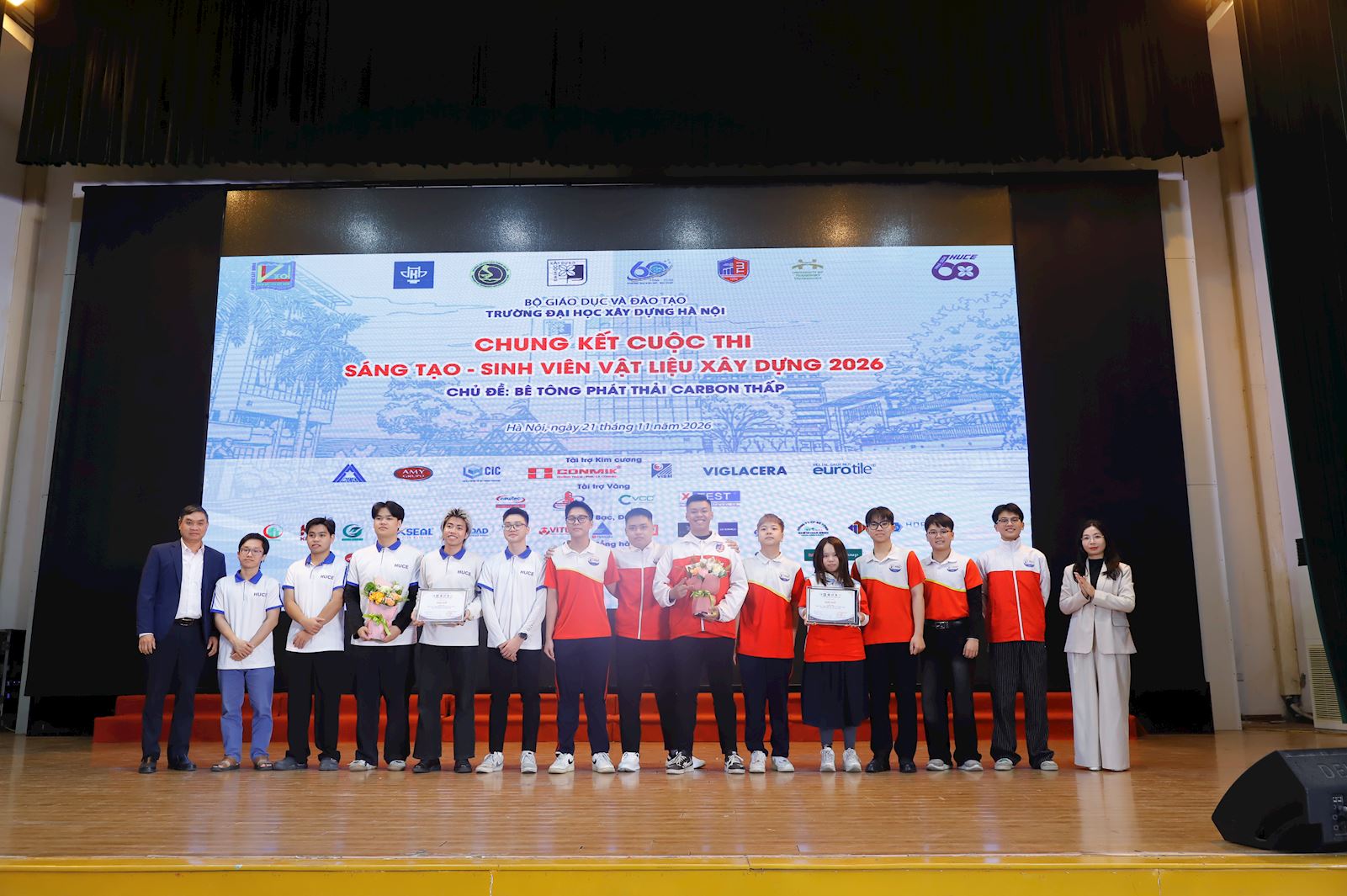
Congratulations to HUCE 4 and TLU 2 teams for winning second place!
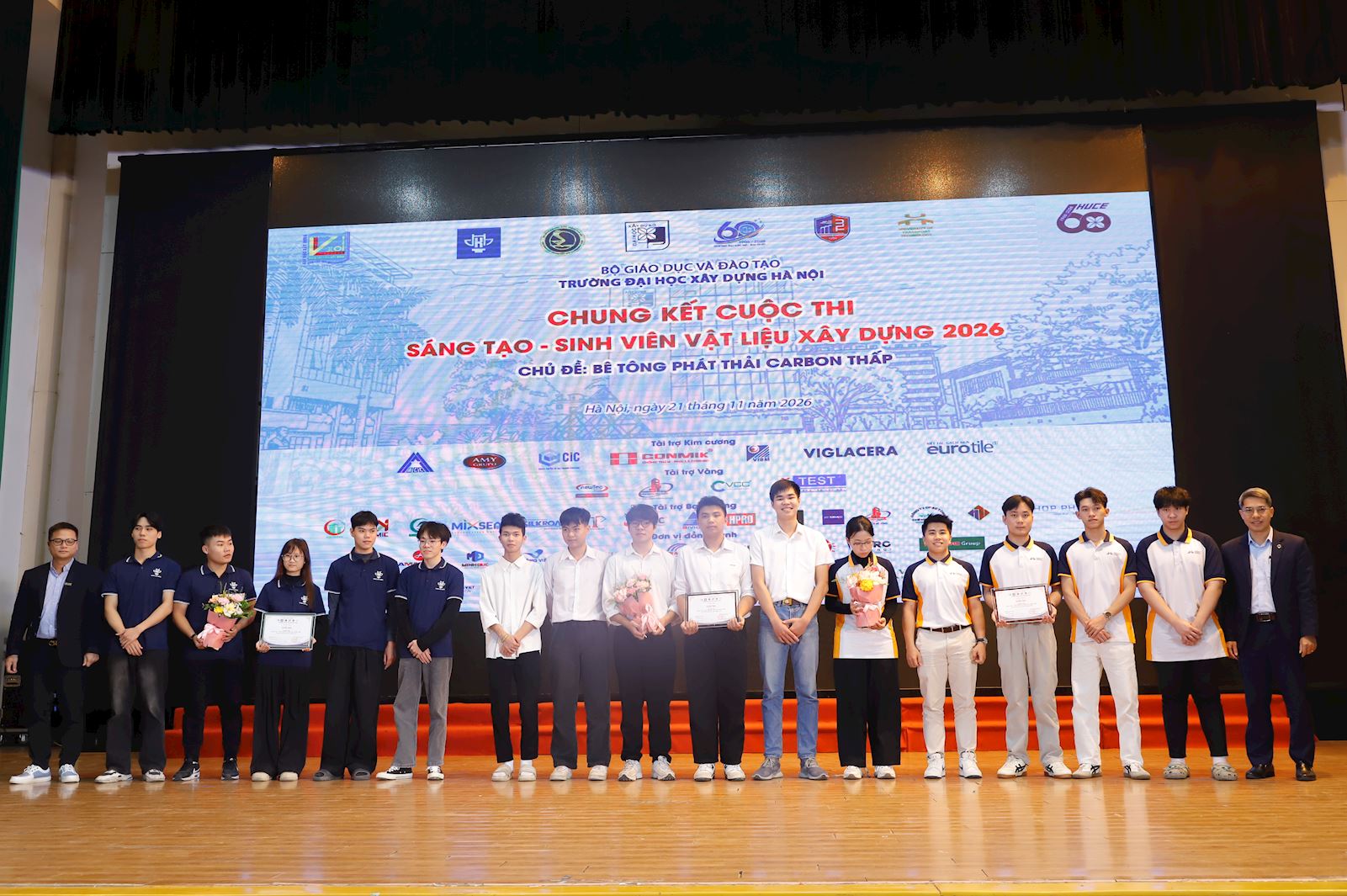
Congratulations to the teams that won third place!
The 2026 Student Innovation Competition in Building Materials concluded with many noteworthy results, not only in research products but also in the proactive learning spirit, creativity, and responsibility of students towards issues arising from the practical realities of the construction industry.
In the context of developing green buildings and a circular economy, research on low-emission building materials is crucial, contributing to reduced resource consumption, efficient utilization of industrial waste, and a sustainable development of the construction industry. To ensure that research ideas can be further refined and widely applied, it is necessary to strengthen the connection between educational institutions, research institutes, and businesses.
With 10 editions, the Student Innovation Competition in Building Materials continues to affirm its value as an academic playground linked to practice, contributing to nurturing a passion for scientific research, promoting innovation, and preparing the knowledge and skills for future generations of engineers.
Hanoi University of Architecture will host the competition next year, continuing to spread the spirit of research and creativity among university students.
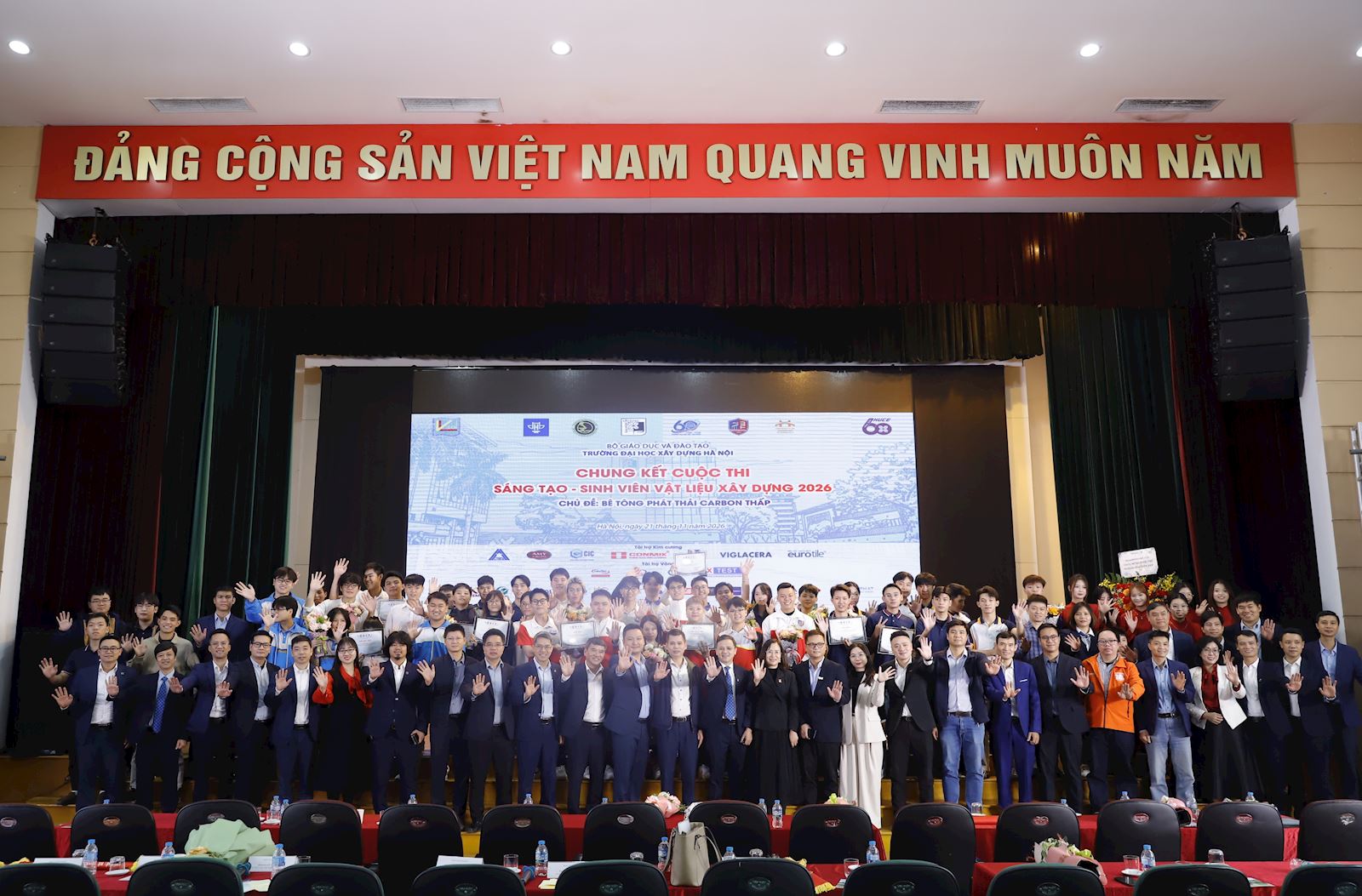
Congratulations on the successful conclusion of the 2026 Student Innovation Competition in Building Materials.
Here are some photos from the Final Round and Awards Ceremony:
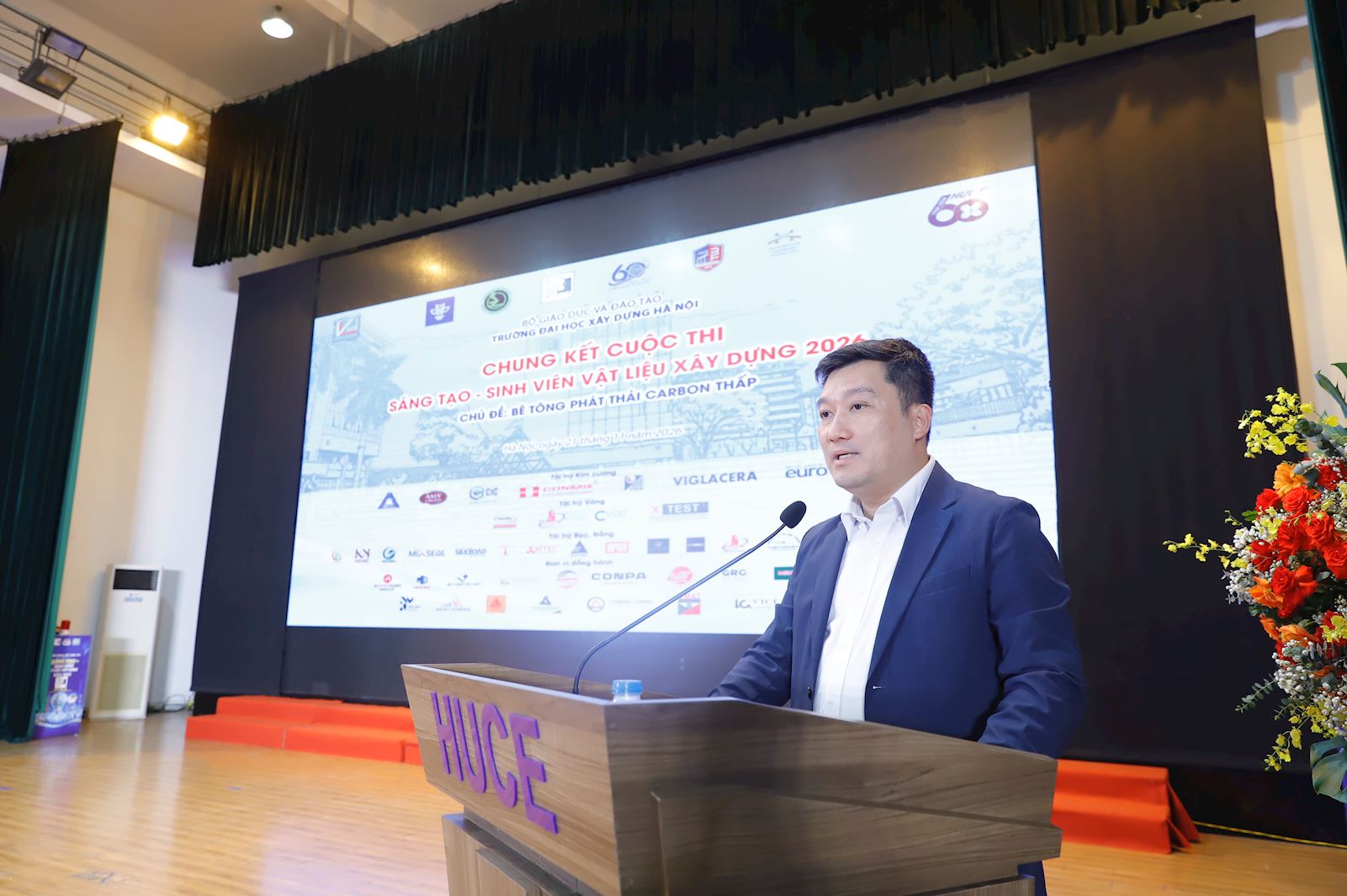
Professor Dr. Nguyen Hoang Giang - Vice Rector of HUCE, delivered a speech at the program.
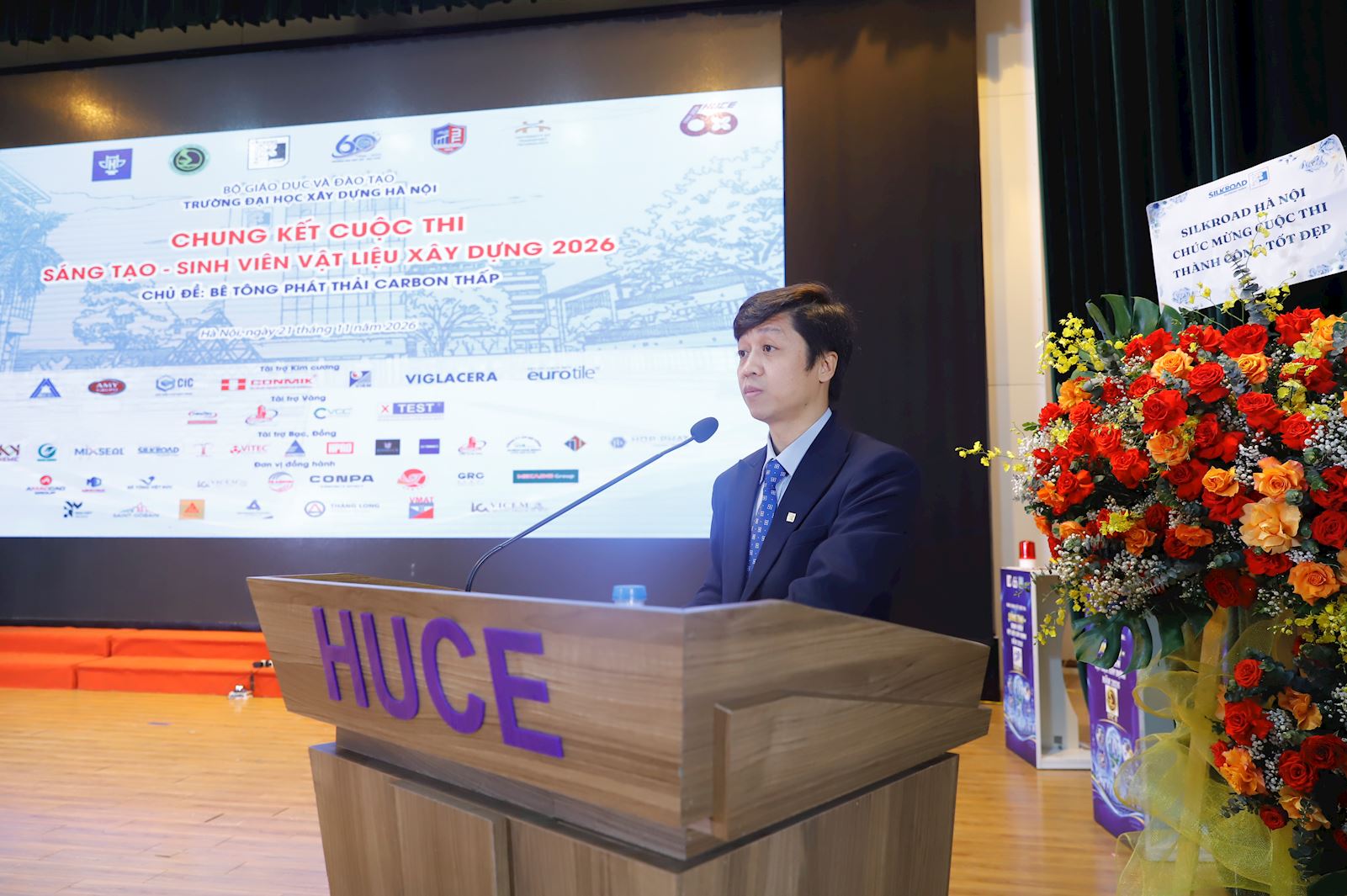
Dr. Tran Duc Trung, on behalf of the Secretariat, announced the rules for the Final Round of the Competition.
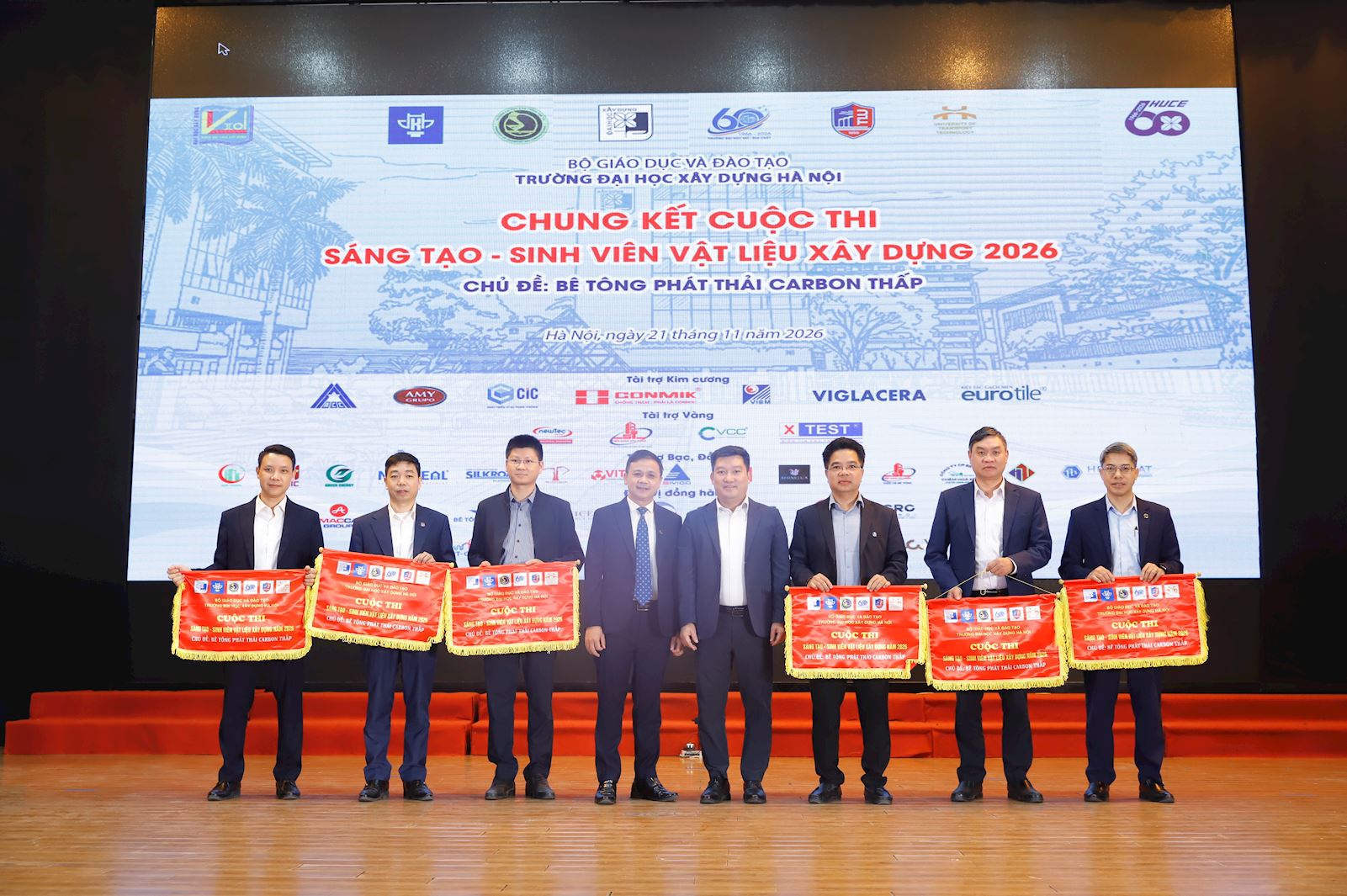
Professor Nguyen Hoang Giang - Vice Rector of HUCE, presented commemorative flags to the units whose teams participated in the competition.
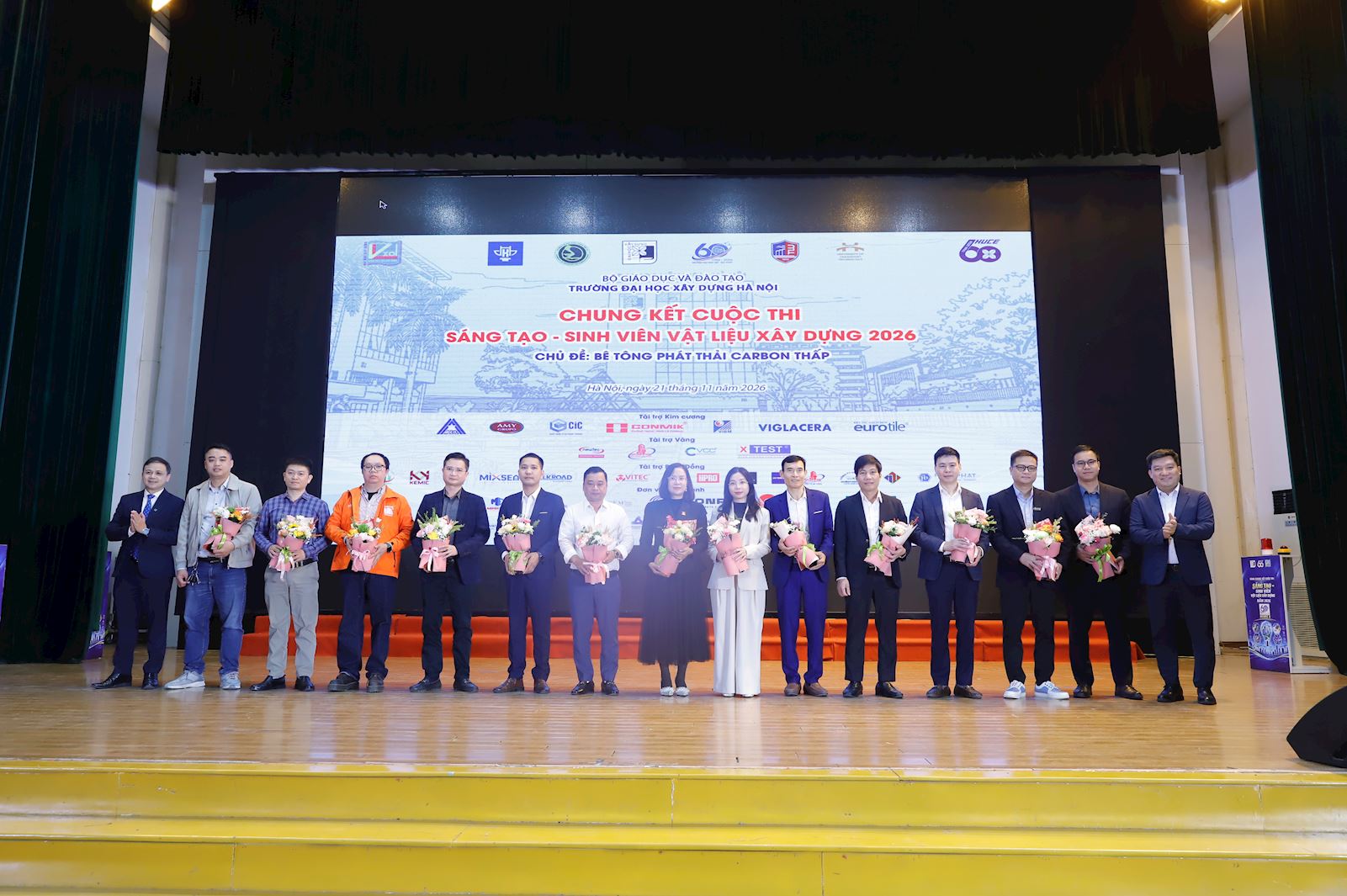
The Organizing Committee presented certificates and flowers to thank the sponsors.
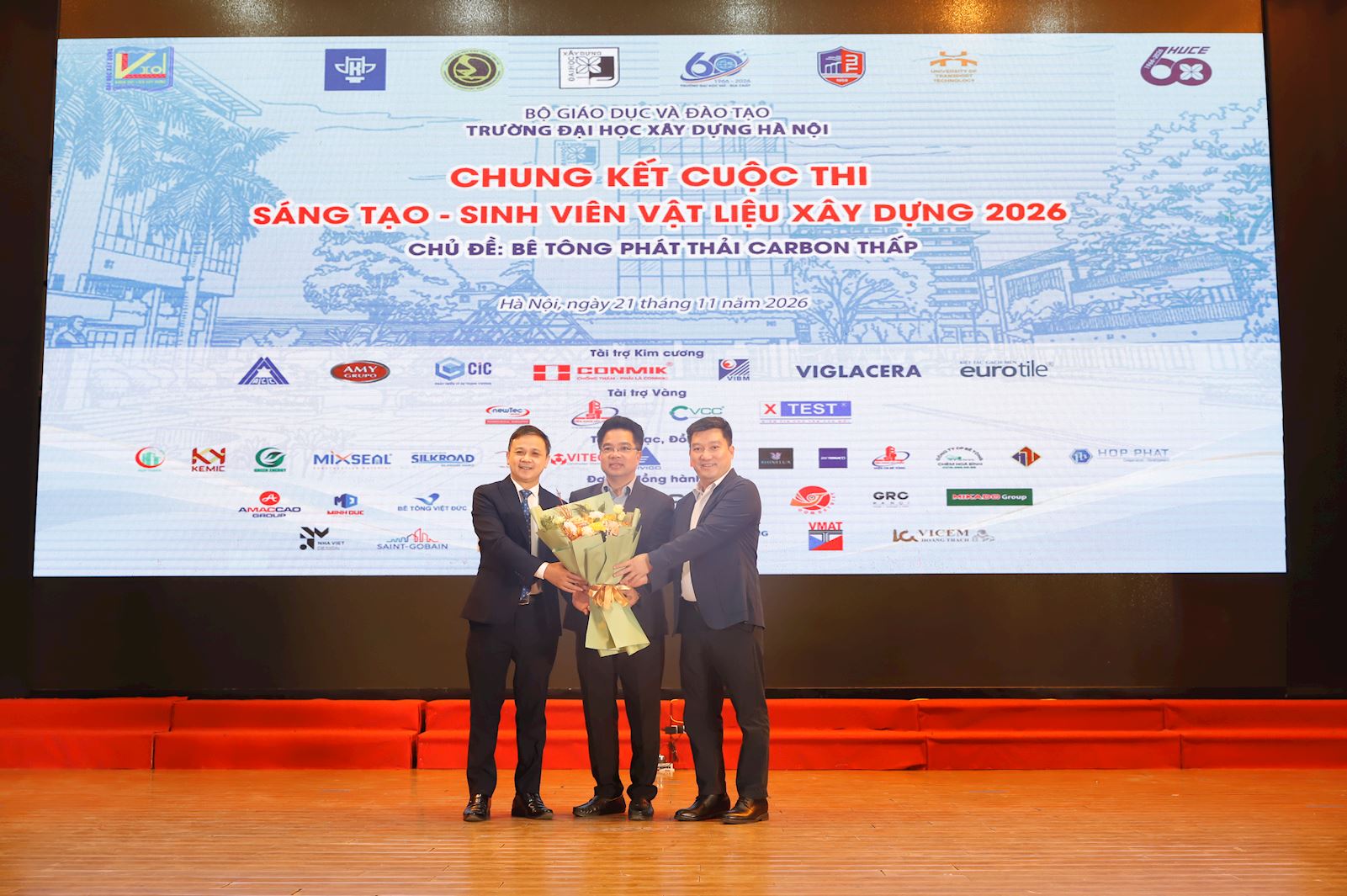
Welcome to the host institution for the 2027 competition - Hanoi University of Architecture.
Phòng TT&TS