







The CIB-ICONS 2026 International Conference, themed “Empowering People, Protecting the Planet, Unlocking Opportunities,” was successfully held at Hanoi University of Civil Engineering from May 20-22, 2026. The event was co-organized by Hanoi University of Civil Engineering, the University of Wolverhampton (UK ) , and subcommittees of the International Council on Research and Innovation in Construction (CIB), under the patronage of the Ministry of Construction.
The conference has become the focal point of the industry in recent days . Few specialized forums bring together international academics, government agencies, and the domestic and international construction business community on such a large scale. The presence of experts from many countries around the world, along with the global CIB scientific network, not only reflects the growing prestige of Hanoi University of Civil Engineering (HUCE) but also shows that the university is gradually becoming a hub for connecting international construction knowledge in Vietnam.
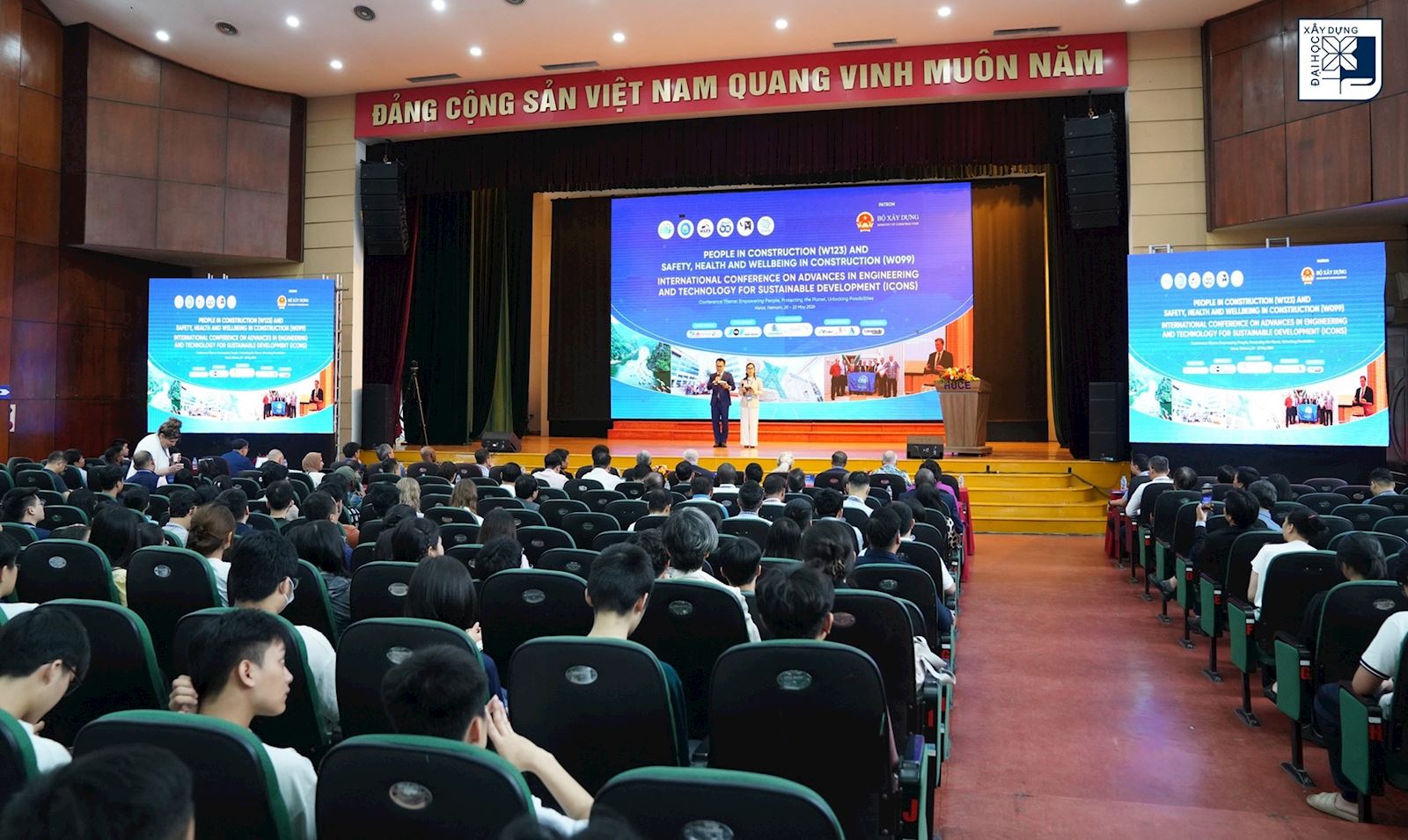
Overview of the hall during the opening session of the Conference
In particular, CIB - ICONS 2026 is also a historically significant event, marking the 60th anniversary of Hanoi University of Civil Engineering, once again firmly affirming the university's pioneering role in scientific research and teaching closely linked to practice.
A turning point in thinking amidst the era of mega-projects: Placing the "human" element at the center.
While many forums revolve around technology, materials, or construction techniques, Hanoi University of Civil Engineering chooses to place "people" at the center of its development. This is not merely an academic slogan, but reflects a profound shift in the thinking behind the development of the construction industry in the new era.
Speaking at the event, Deputy Minister of Construction Pham Minh Ha remarked that current management thinking no longer focuses on rapid construction but must shift to building intelligently, safely, and sustainably. He particularly praised the approach of CIB - ICONS this year , as the conference placed "people and safety" at the center of its development strategy.
From a policy perspective, this is a landmark shift. For years, the construction industry has often been viewed through the lens of speed and productivity. But for the first time, concepts such as "safety from the design stage," "digital modeling to mitigate risks," "worker mental health," and "safety culture" are being elevated to central themes of a large-scale international forum.
Leaders of the Ministry of Construction further stated that Vietnam is entering an era of explosive infrastructure development with a series of historic mega-projects being launched on an unprecedented scale and scope: the 1,541 km North- South high-speed railway line with a total investment of over 67 billion USD ; and the urban railway network in Hanoi and Ho Chi Minh City . The "backbone" of the megacity's transportation system, aiming for completion by 2035, has a total capital requirement exceeding US$72 billion ; the North-South Expressway (Eastern section ), over 2,063 km long , is being accelerated, aiming for seamless connectivity from Lang Son to Ca Mau... This enormous workload opens up vast development opportunities, while simultaneously placing unprecedented demands on project management capabilities, resource optimization, and especially ensuring the safety of millions of workers directly involved in the construction sites.
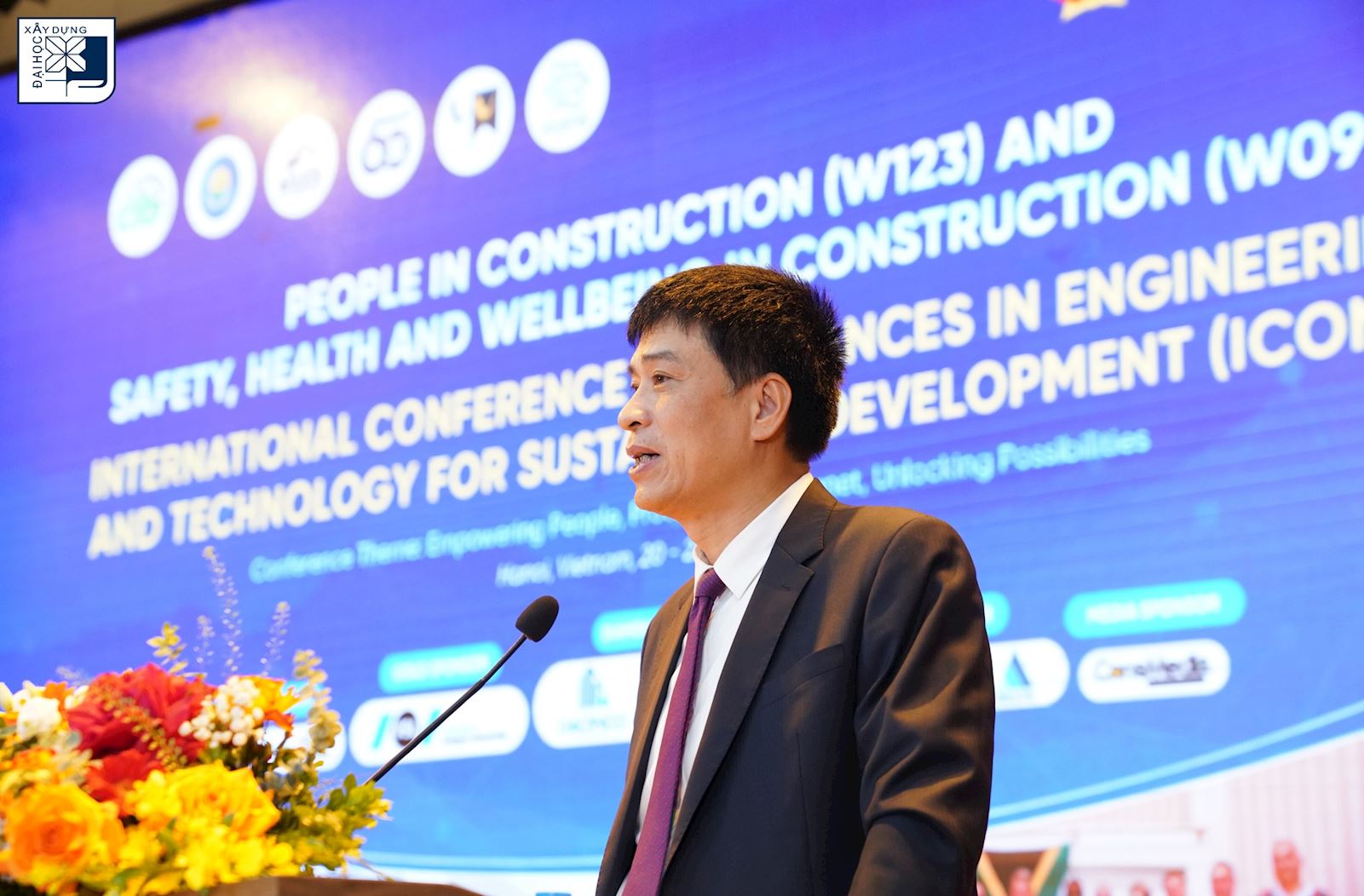
Deputy Minister of Construction Pham Minh Ha delivered a speech at the workshop.
On behalf of the organizing unit, Associate Professor Hoang Tung – Rector of Hanoi University of Civil Engineering – affirmed: "While previous ICONS conferences focused on tangible elements such as new materials, smart structures, or the circular economy, this year's conference returns to the most fundamental value of any construction project: people. Mega-infrastructure projects cannot be sustainable without a safe working environment, a foundation of maximum protection for physical and mental health, and a workforce capable of adapting to digital transformation."
The construction industry, inherently fraught with risks and labor-intensive, demands a new approach to safety, mental health, and gender equality. These topics were included in the workshop program as an essential part of the shift in development thinking.
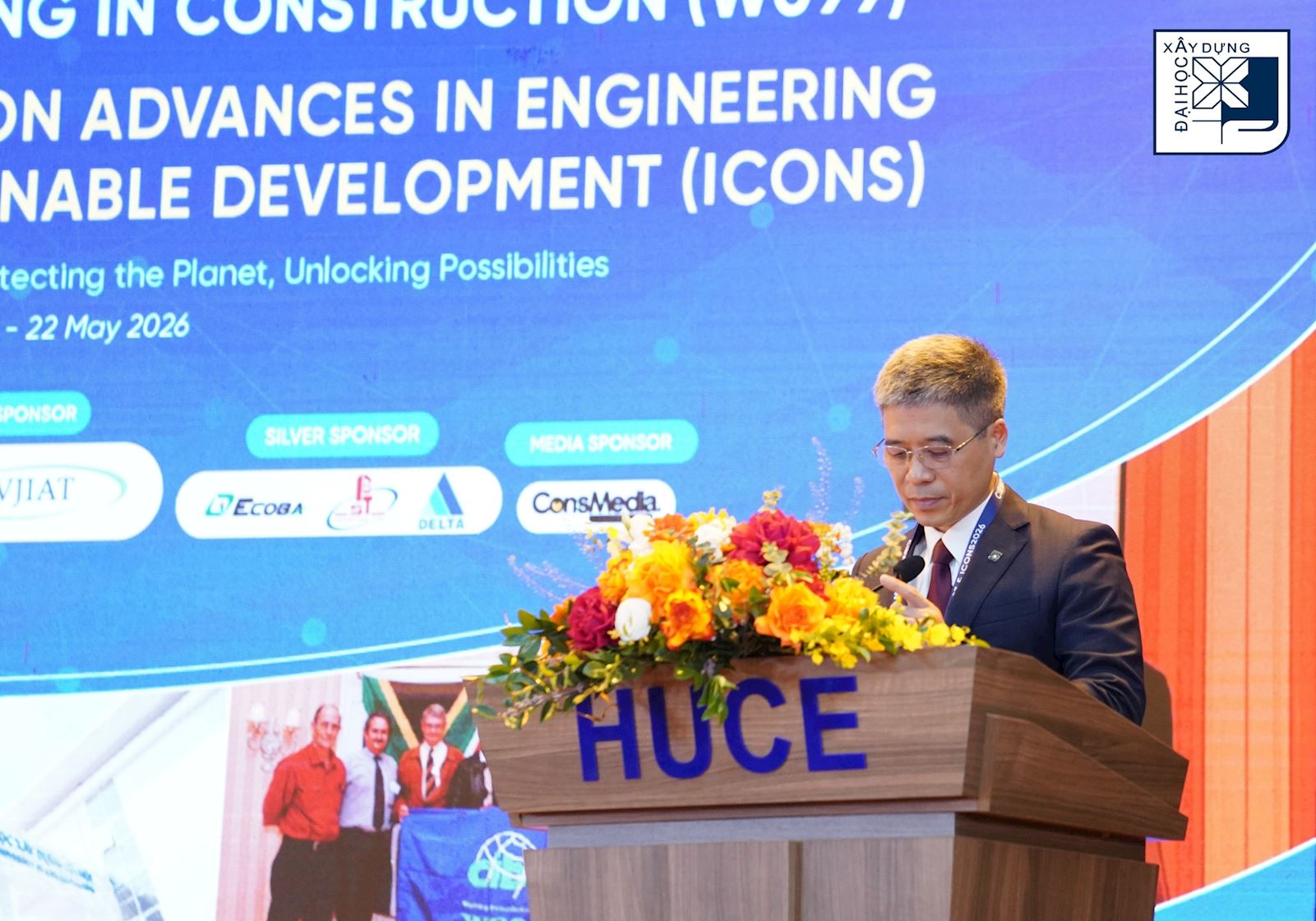
Assoc. Prof. Dr. Hoang Tung - Rector of the University, delivered a speech at the Conference.
According to Professor Nguyen Hoang Giang, Vice Rector of the University, this conference is closely linked to the University's transformation. After many years of fulfilling its role in training key human resources for the industry, the university is aiming to become a research and innovation center in the region. This orientation is concretized through government decisions, in which the University is among the top five key national technical universities and is tasked with leading the Center for Excellence and Talent in New Materials and Construction Technology. The formation of the center is not merely an organizational matter, but also creates a mechanism for research results to be quickly put into practice. The gap between the laboratory and the construction site is thus shortened, contributing to improved efficiency in the application of science and technology in infrastructure and urban development.
Pioneering digital technology: Restructuring education with AI and Big Data
Behind the core themes of human development lies a profound transformation of the global construction industry driven by artificial intelligence (AI), big data, and digital technology. In this wave, Hanoi University of Civil Engineering continues to demonstrate its leading position. Beyond training civil engineers in the traditional model, the university is gradually shaping a new generation of engineers capable of mastering technology.
Speaking about the School's strategic vision, Professor Dr. Nguyen Hoang Giang – Vice Rector of the School – emphasized:
"Digital transformation is no longer a choice but a vital requirement for the modern construction industry. Artificial intelligence needs to be directly integrated into teaching, research, and the solving of practical engineering problems, so that the technology does not just exist in theory but truly becomes a driving force for changing the mindset of training, the capabilities of engineers, and the operational methods of the industry."
In the context of a global construction industry facing a shortage of highly skilled labor capable of adapting to new technologies, this direction represents a strategic preparatory step for Vietnam to participate more deeply in the international construction value chain.
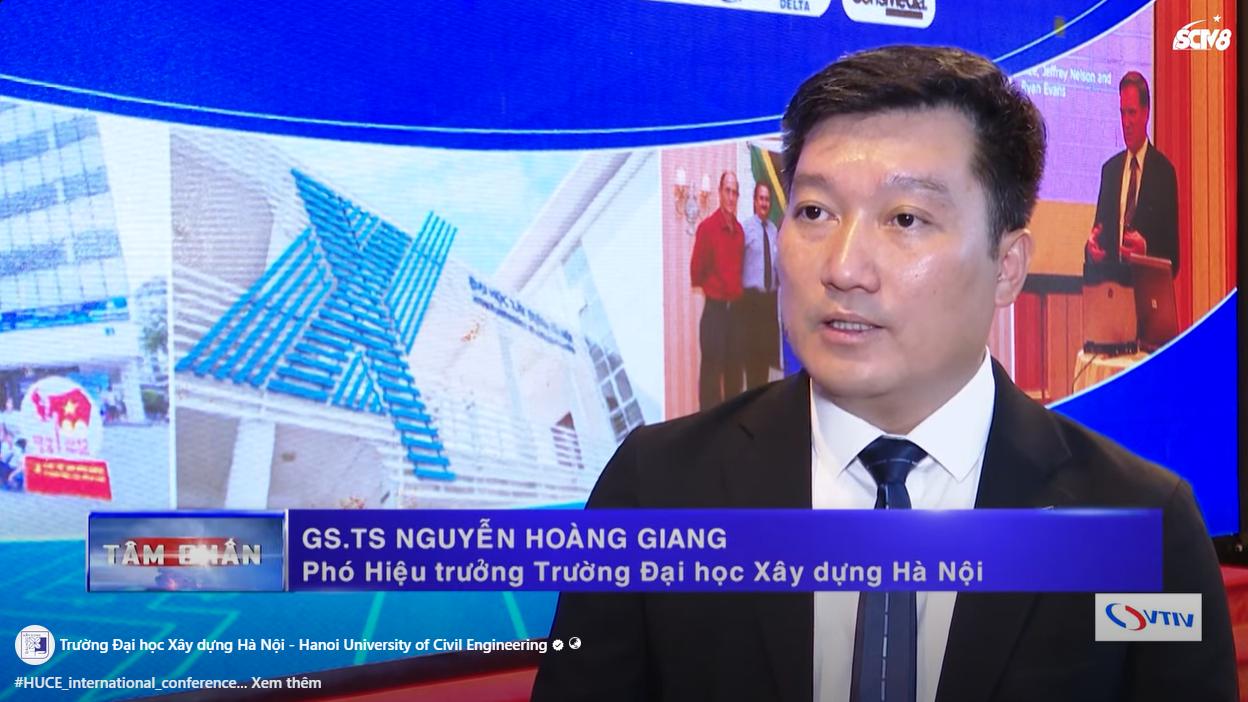
Professor Dr. Nguyen Hoang Giang - Vice Rector of the University, giving an interview at the Conference.
The "Three-Party" Model: Bringing Research from the Classroom to the Field
Beyond its academic achievements, Hanoi University of Civil Engineering also affirms its prominent role in connecting businesses and transferring technology. The CIB - ICONS 2026 conference dedicated a space to a UK-Vietnam business networking session and a policy discussion aimed at bringing research beyond the classroom into construction sites, projects, and real-world applications. This is proof of the "Three Pillars" model that the University is persistently pursuing: the State – the University – the Enterprise. Accordingly, scientific research is only truly valuable if it is accepted by businesses, implemented in practice, and creates change for society.
Through its extensive alumni network in local areas and major construction companies, many of the university's research findings have been applied to real-world projects. The university also promotes the establishment of innovation and technology transfer centers to bridge the gap between research and application.
From a business perspective, Mr. Tran Duc Lan – General Director of VSL Vietnam (part of the VSL Group of Switzerland), and also the Chairman of the Alumni Association of Hanoi University of Civil Engineering, stated: The greatest value that forums like CIB - ICONS bring is the ability to create a space for genuine technology exchange between academia and businesses. Advanced technological solutions that save materials, shorten construction time, and develop green buildings can only be effective if they are directly connected with engineers and project managers.
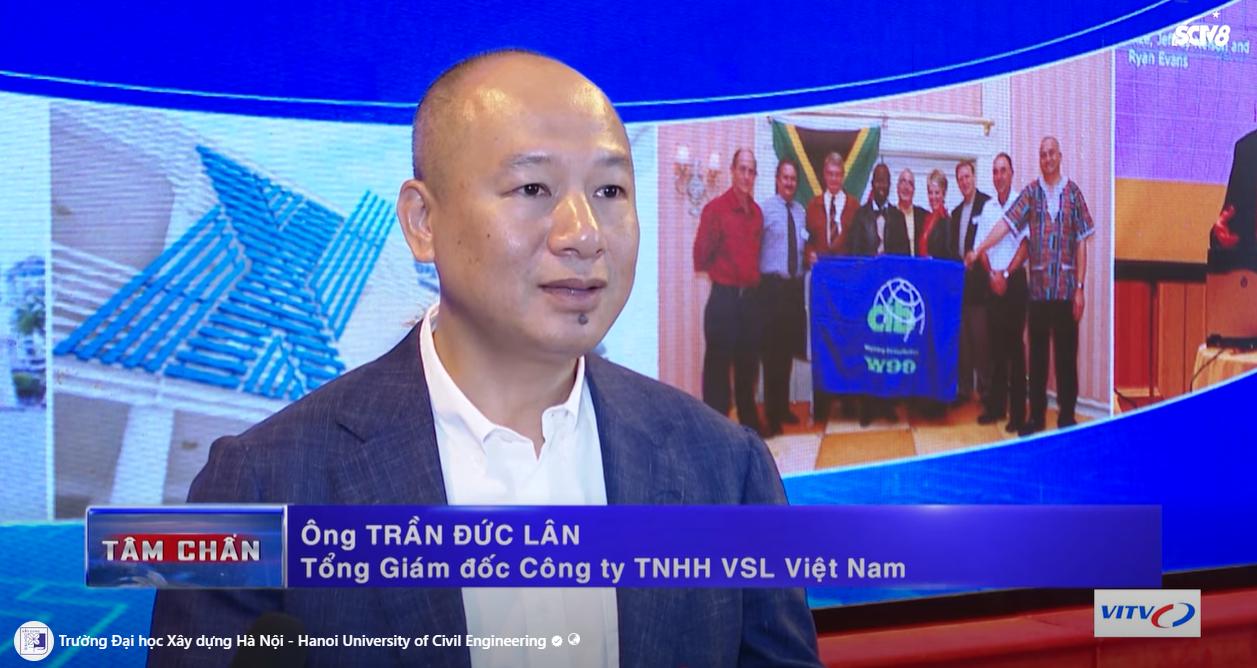
Mr. Tran Duc Lan – General Director of VSL Vietnam, giving an interview at the seminar.
In conclusion: A 60-year journey alongside the nation.
From traditional construction sites to digital sites, from a "build fast" mindset to a "build smart, safe, and sustainable" mindset, artificial intelligence, digital data, and green technologies are becoming the driving forces shaping the new face of the construction industry in the era of mega-infrastructure.
The 60-year journey of Hanoi University of Civil Engineering (HUCE) is like a chronicle paralleling the nation's progress. In the context of Hanoi and many other major cities facing the challenge of development with a centuries-long vision – from population decentralization and satellite city development to the construction of green and smart infrastructure – the role of a leading technical university like HUCE is becoming increasingly important.
The success of the CIB - ICONS 2026 International Conference is not only a meaningful gift to celebrate the 60th anniversary, but also an affirmation that Hanoi University of Civil Engineering will continue to pioneer in creating knowledge, shaping the face of modern cities, and steadfastly accompanying the nation-building process in the new era of development.

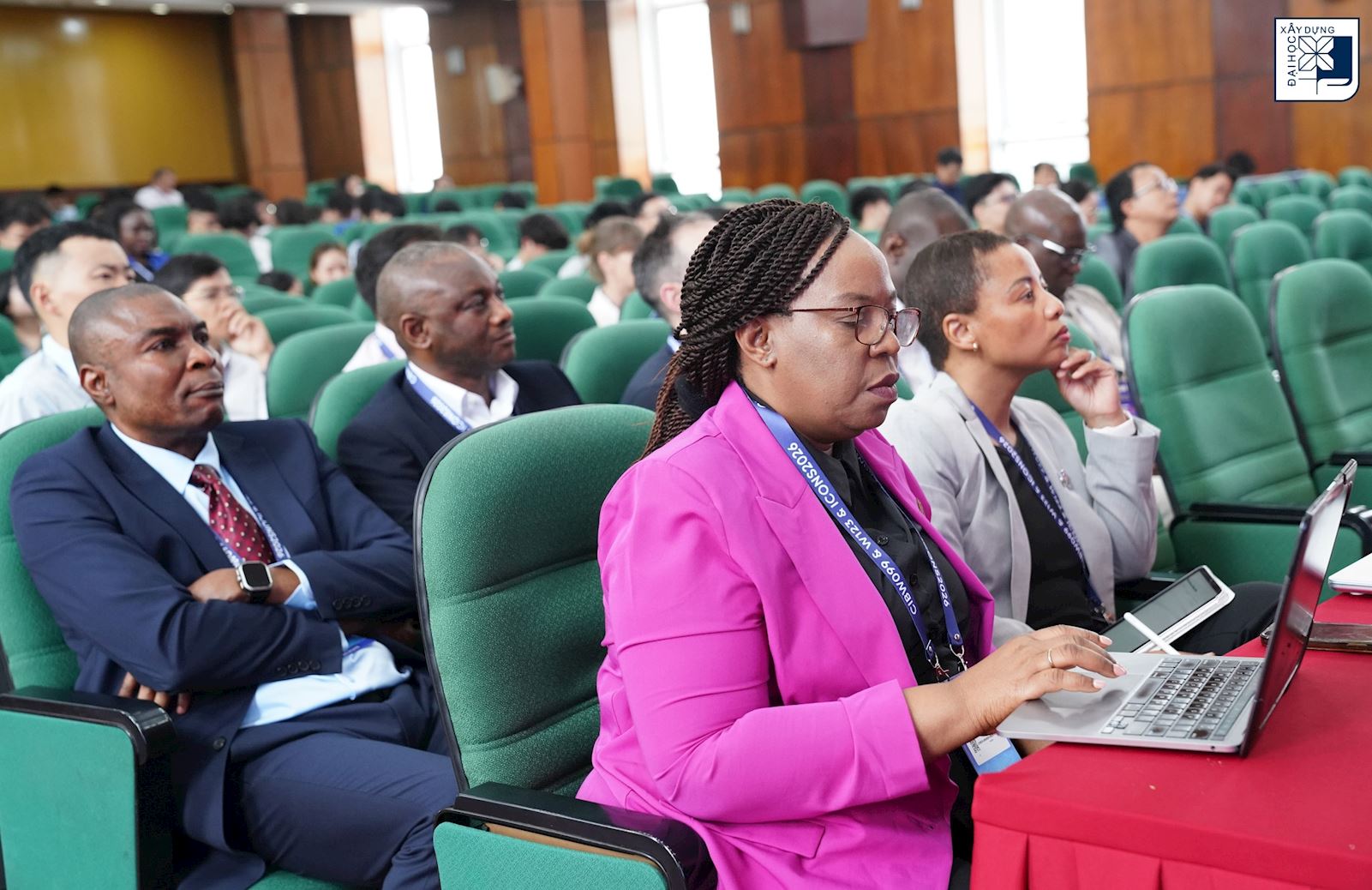
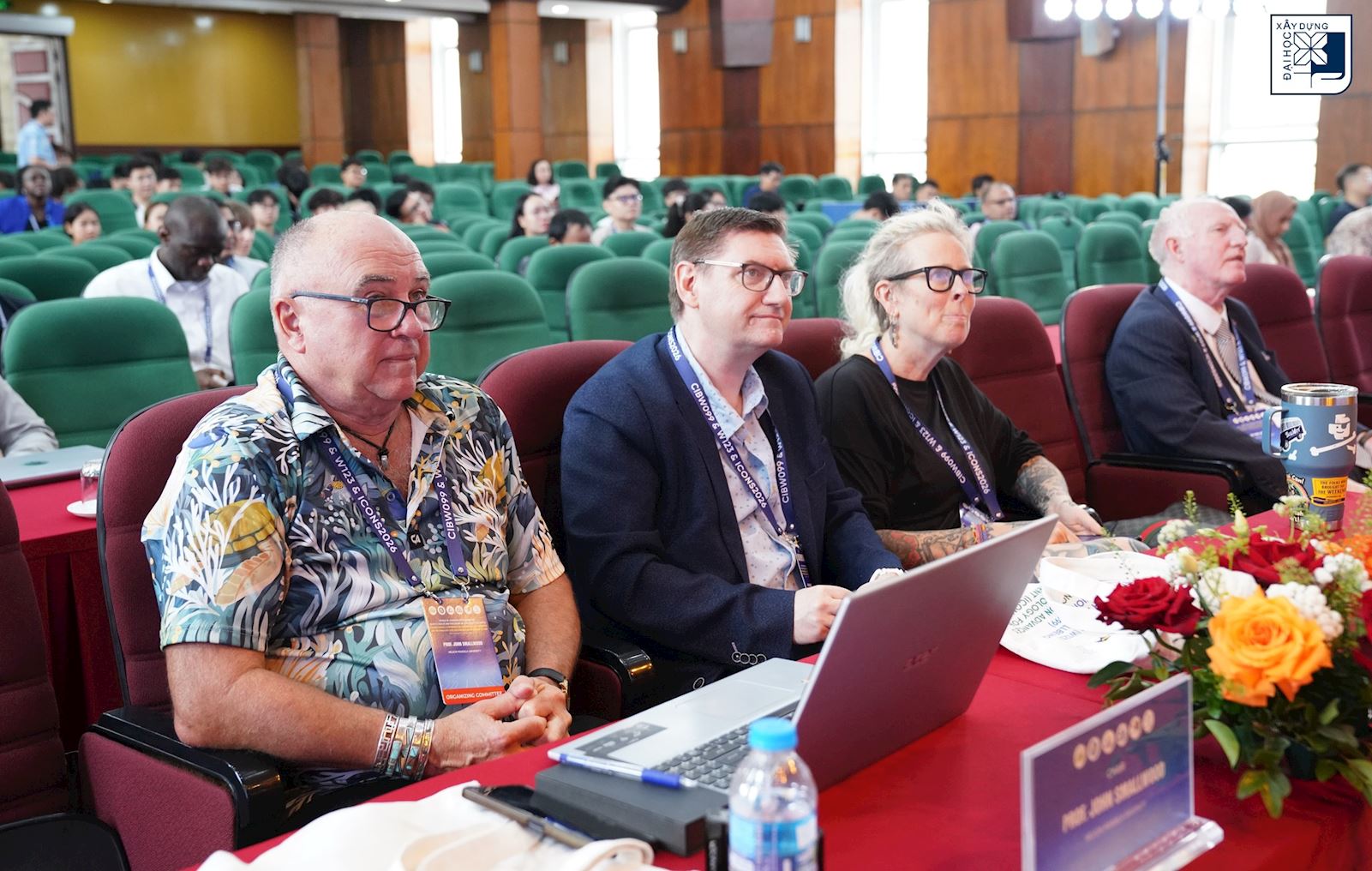
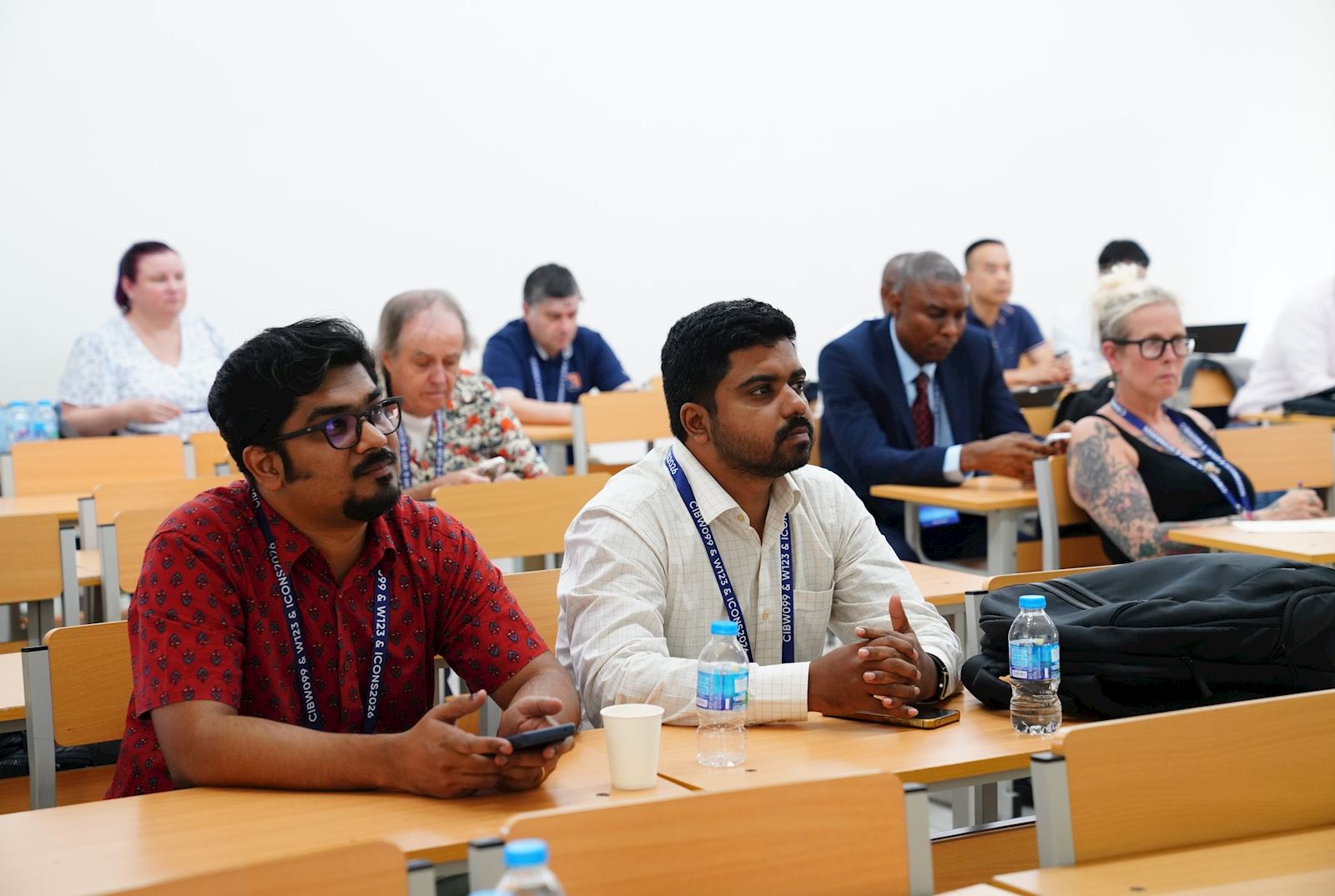
Thematic discussion at the ICONS 2026 Conference
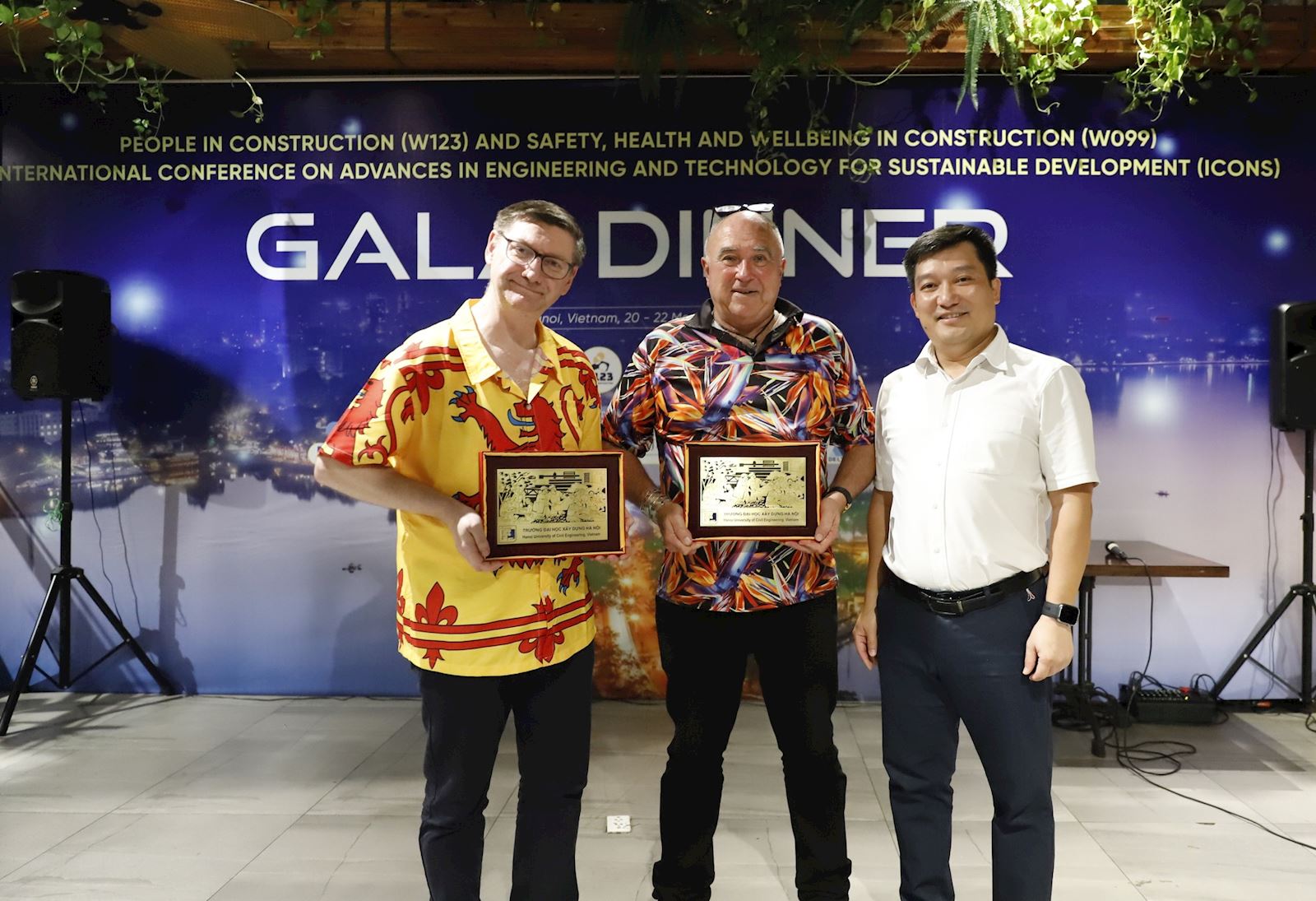
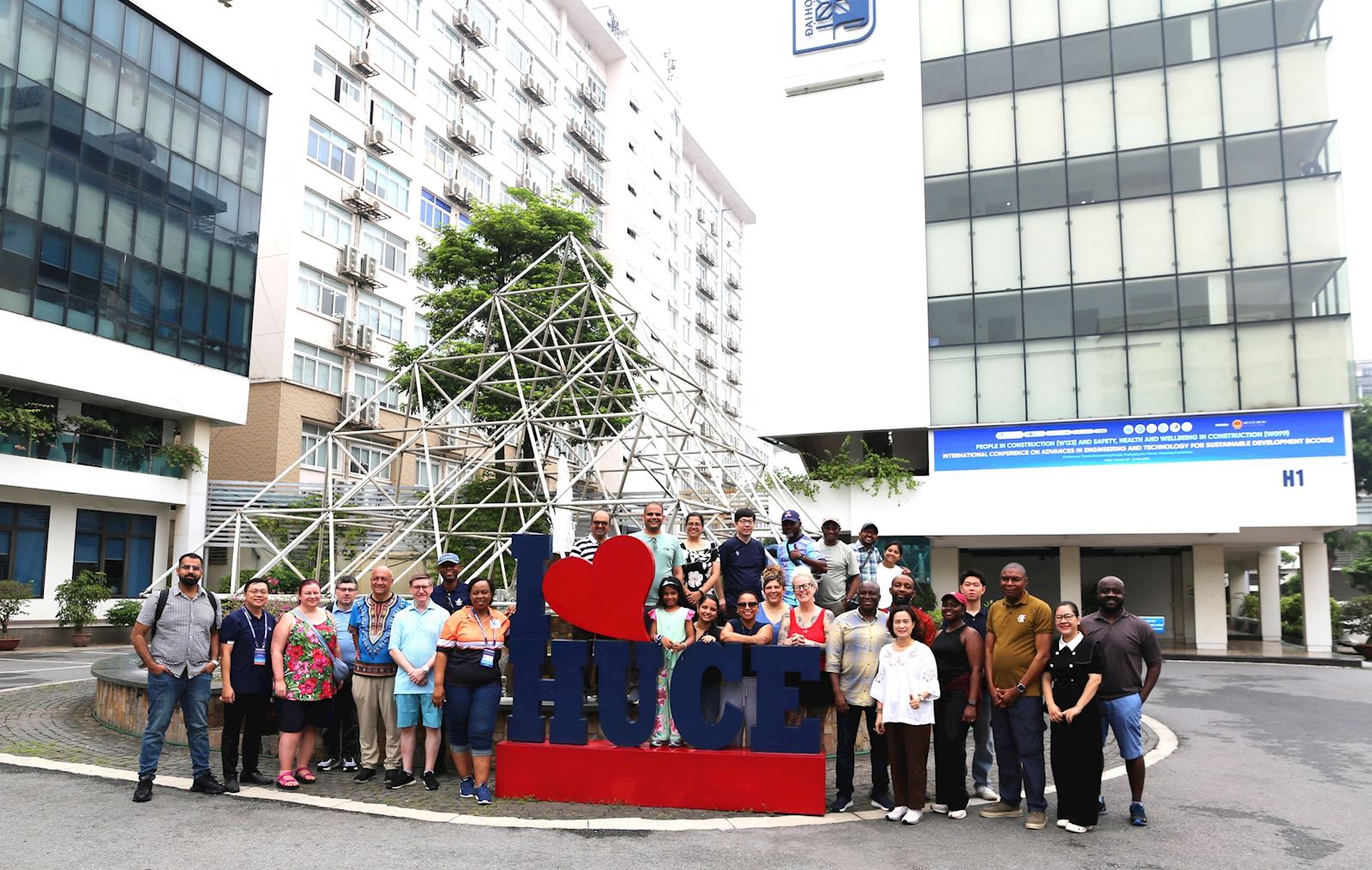
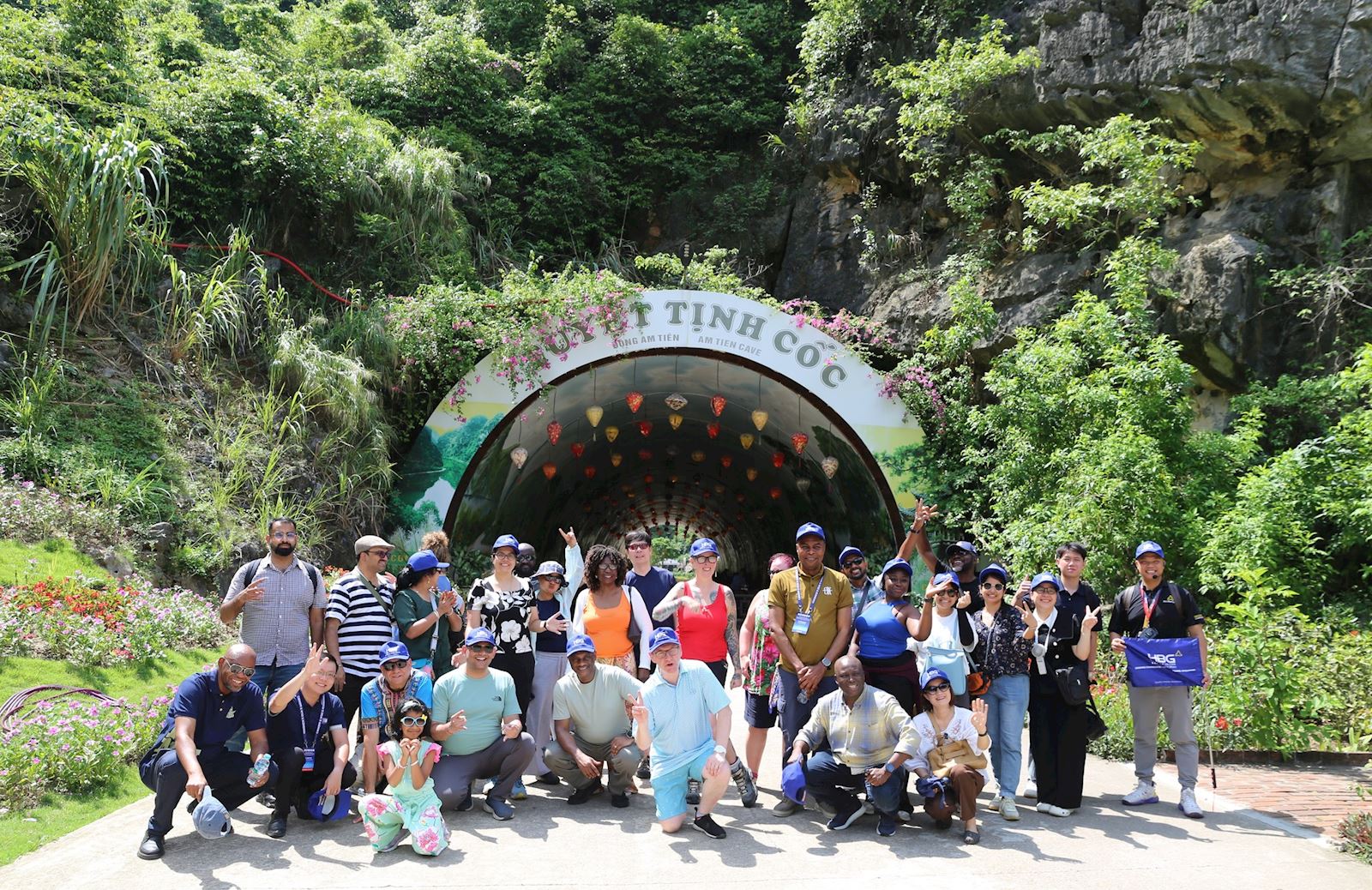
Gala activities and field trips as part of the program.
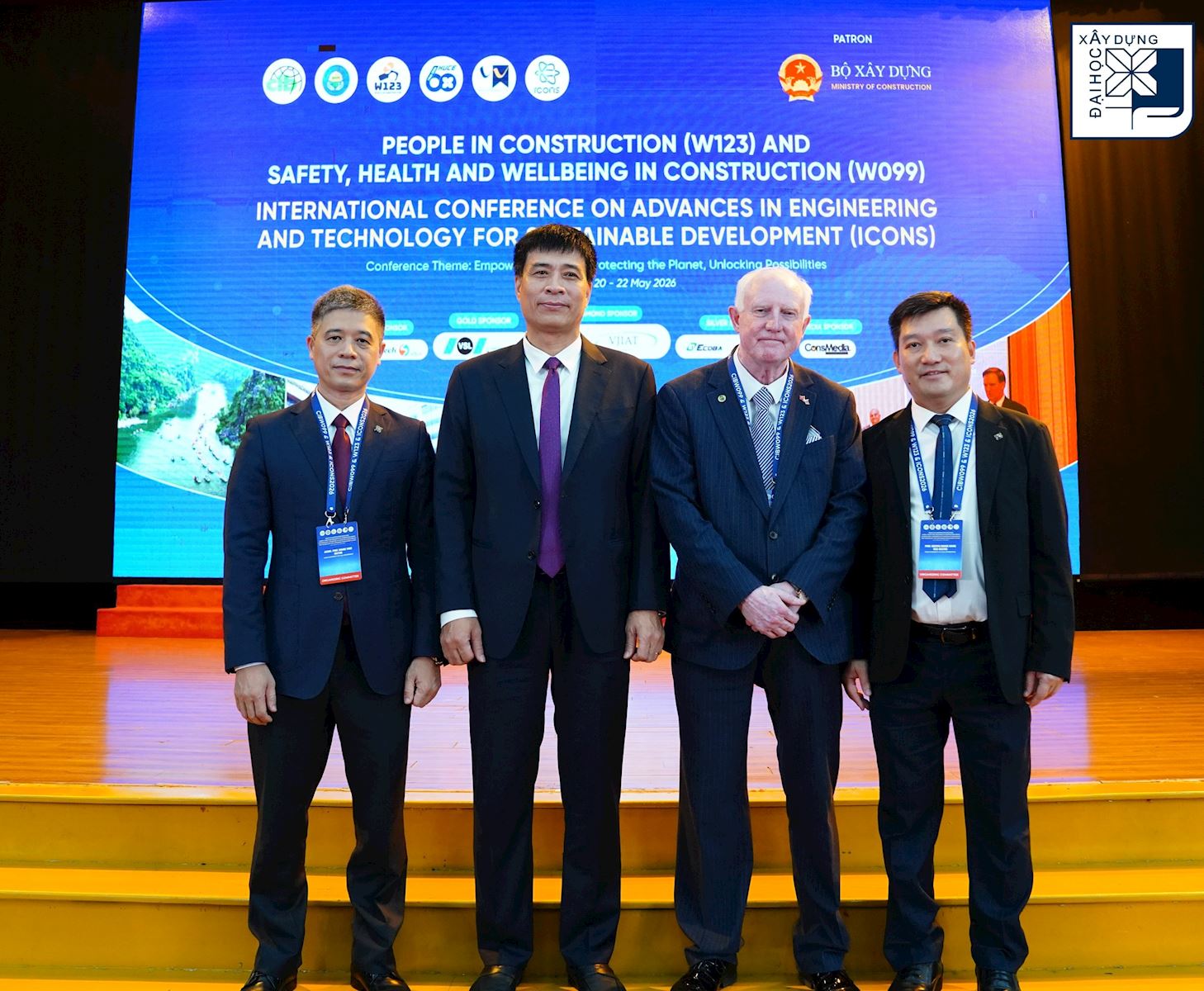
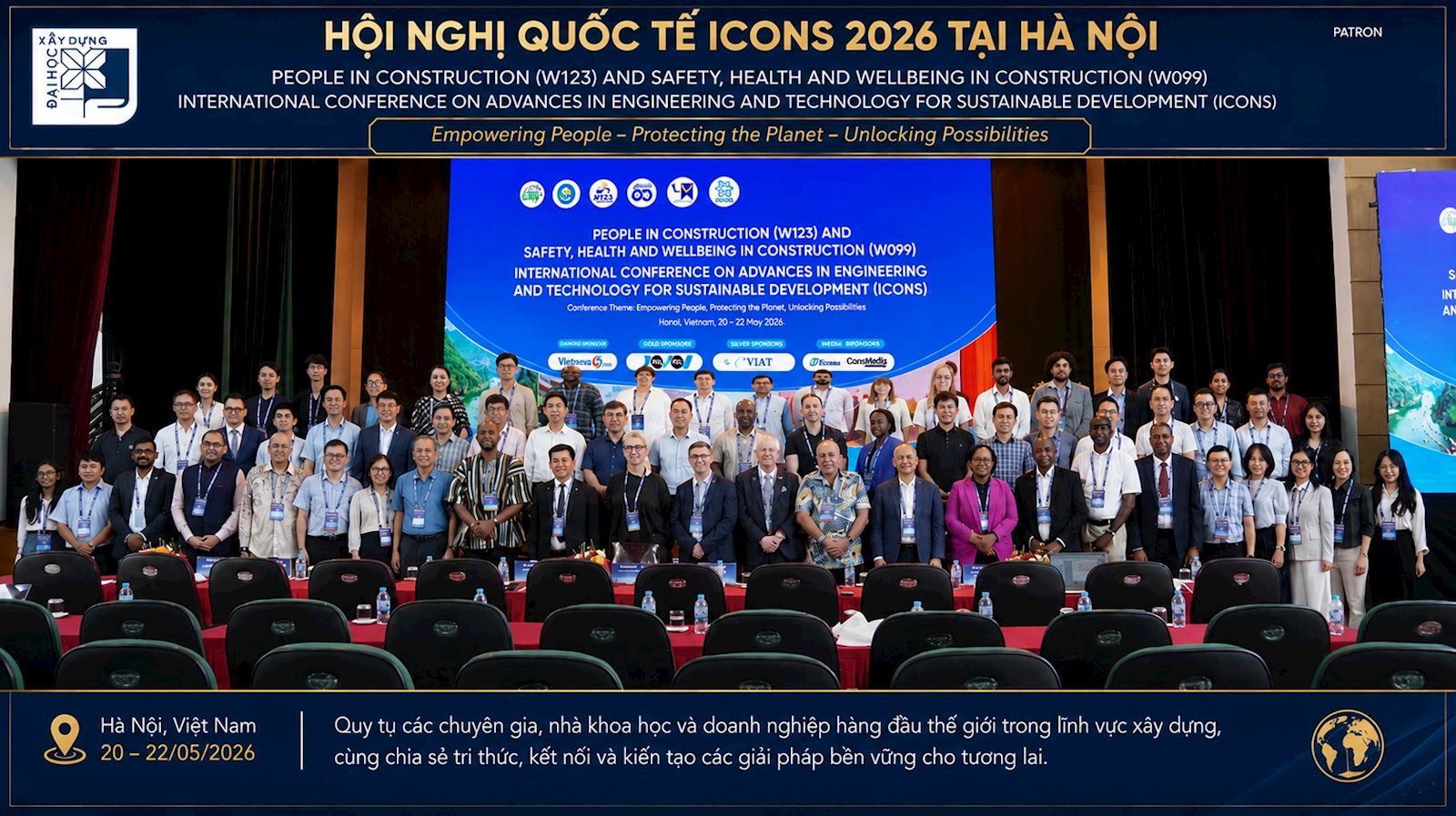
Deputy Minister of Construction Pham Minh Ha, along with Assoc. Prof. Dr. Hoang Tung - Rector of Hanoi University of Civil Engineering; Prof. Dr. Nguyen Hoang Giang - Vice Rector; and Dr. Paul Hampto - Head of the Department of Architecture and Built Environment, University of Wolverhampton, United Kingdom, posed for a commemorative photo.
The seminar attracted considerable attention from domestic media before, during, and after the event:
- Building connections between Vietnam and the UK: From policy dialogue to strategic cooperation.
- The survival dilemma behind Vietnam's series of multi-billion dollar mega-projects.
- Human resources - a key factor in the sustainable development of the construction industry.
- The epicenter news broadcast reports on the conference: https://vitv.vn/tin-video/20-05-2026/ban-tin-tam-chan-phat-song-2000-20-05-2026/319443?
- The era of mega-infrastructure is ushering in a new revolution for Vietnam's construction industry.
- Over 150 international experts arrived at a university in Hanoi to discuss "smart building..." just as Vietnam activated a series of mega-projects.
- Hanoi University of Civil Engineering promotes the trend of safe and sustainable construction.
Phòng TT&TS