







On the afternoon of June 17, 2026, Hanoi University of Civil Engineering welcomed a delegation of professors, scientists, and business leaders from Beijing Jiaotong University (China), along with many corporations and businesses operating in the fields of construction, transportation, and infrastructure.
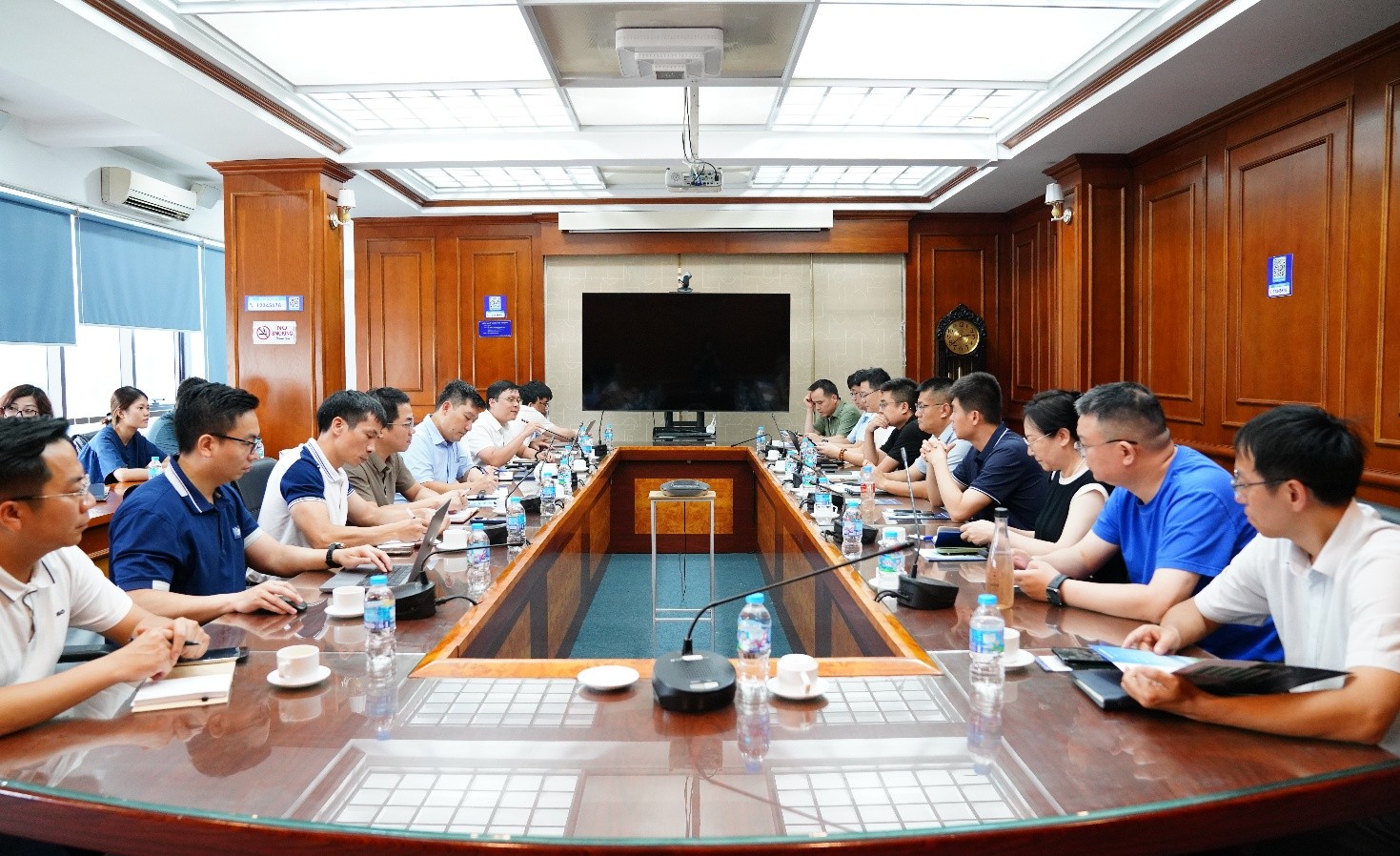
Overview of the working session
The Chinese delegation consisted of 11 delegates, including leading scientists, experts, and business leaders in the fields of construction, railway transportation, urban infrastructure, and technology. Among them were Associate Professor Liu Yanqing – former Head of the Department of International Education, School of Civil Engineering, Beijing Jiaotong University; Professor Jing Guoqing – Lecturer in Civil Engineering, Beijing Jiaotong University; Mr. Peng Zhaobin – Chairman of Xinke Qiyuan Technology Company, researcher at the Chinese Academy of Sciences; and representatives from major corporations and enterprises such as JSTI Group, Jiangsu Dongking Construction Group, China Railway Sixth Group Vietnam, and other businesses operating in the construction, railway, and technology sectors.
Representing Hanoi University of Civil Engineering were Prof. Dr. Nguyen Hoang Giang - Vice Rector; Assoc. Prof. Dr. Pham Thai Hoan - Deputy Head of the Training Management Department; Dr. Le Ba Danh - Deputy Head of the Science and Technology Department; Assoc. Prof. Dr. Tran Dinh Trong - Deputy Head of the Faculty of Bridge and Road Engineering; Dr. Nguyen Van Bich - Deputy Head of the Faculty of Bridge and Road Engineering; Mr. Nghiem Ha Tan - Deputy Head of the Department of External Relations and International Cooperation, along with representatives from specialized units and lecturers in the fields of construction, railway transport, and urban infrastructure.
During the visit of a high-level Vietnamese delegation to China in April 2026, Hanoi University of Civil Engineering signed cooperation agreements with Beijing Jiaotong University and Tsinghua University. Based on these agreements, this working session was organized to concretize the cooperation contents and implement collaborative programs between the University and Chinese universities, businesses, and partners in the fields of construction, transportation, and infrastructure.
This is an important follow-up activity to realize the commitments made during the previous trip, while promoting deeper cooperation in training, scientific research, technology transfer, and the development of high-quality human resources, leveraging the strengths and potential of all parties.
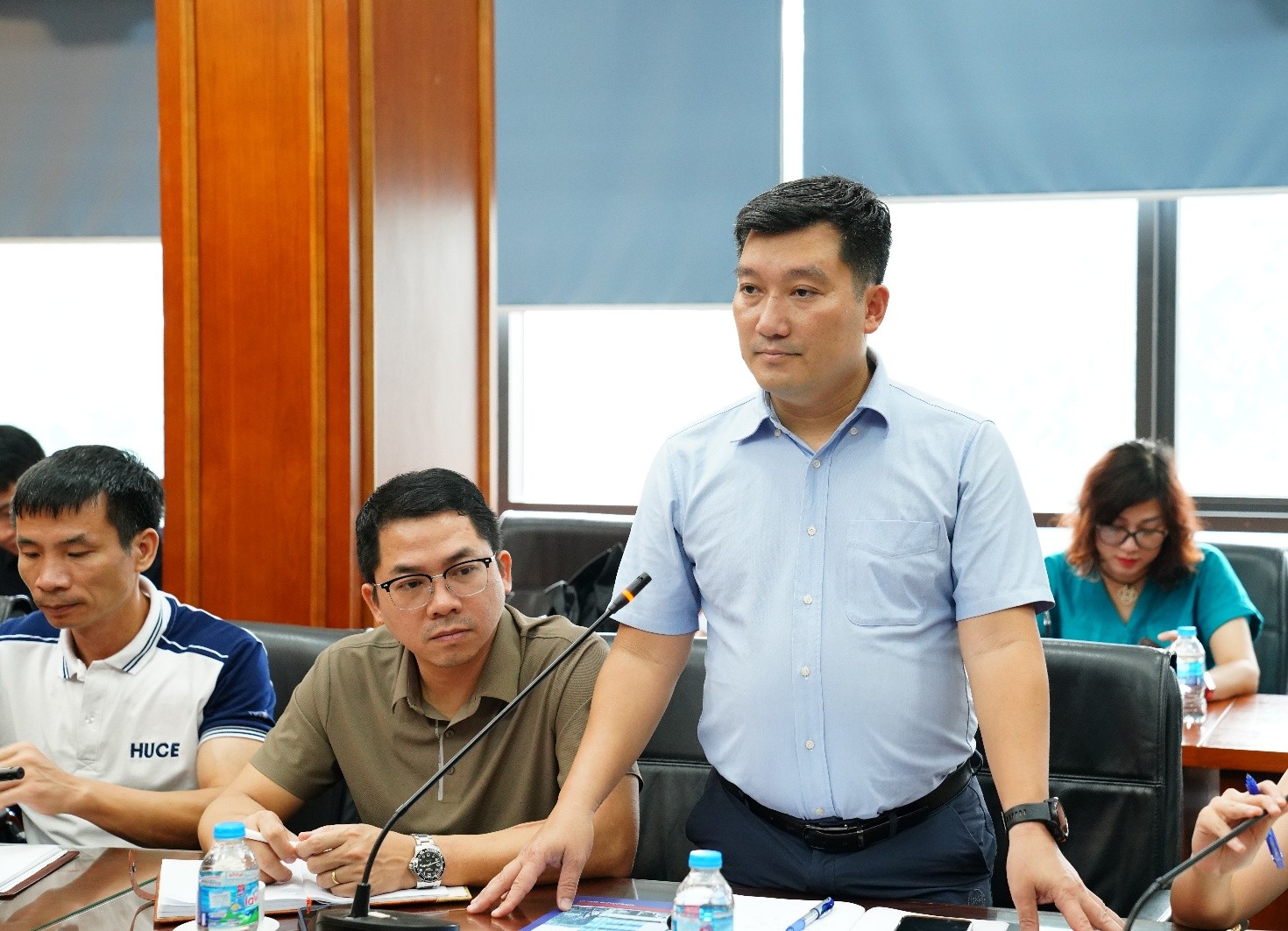
Professor Dr. Nguyen Hoang Giang - Vice Rector of Hanoi University of Civil Engineering, delivered a speech at the working session.
Speaking at the meeting, Professor Nguyen Hoang Giang, Vice Rector of Hanoi University of Civil Engineering, expressed his pleasure in welcoming the delegation from Beijing Jiaotong University and Chinese businesses to visit and work at the University.
According to the Vice Rector, strengthening cooperation with leading universities and enterprises in China not only contributes to enhancing the training, research, and reputation of the university but also creates opportunities for students to... Access to advanced technology and a modern learning and practice environment will meet the development requirements of the construction and transportation industries in the context of international integration. In particular, the two sides can cooperate in implementing undergraduate, postgraduate, master's, and doctoral training programs, exchanging lecturers and students, and developing joint research groups in the fields of construction, transportation, and infrastructure.
With a proactive and pioneering spirit, Hanoi University of Civil Engineering hopes that the cooperation contents will soon be concretized into practical programs, projects, and activities, in line with the orientation of cooperation in education, science and technology, and infrastructure development that the leaders of the two countries are promoting. The University believes that close cooperation between the parties will bring positive results, contributing to the training of high-quality human resources, promoting innovation, and contributing to the sustainable development of infrastructure in Vietnam and the region.
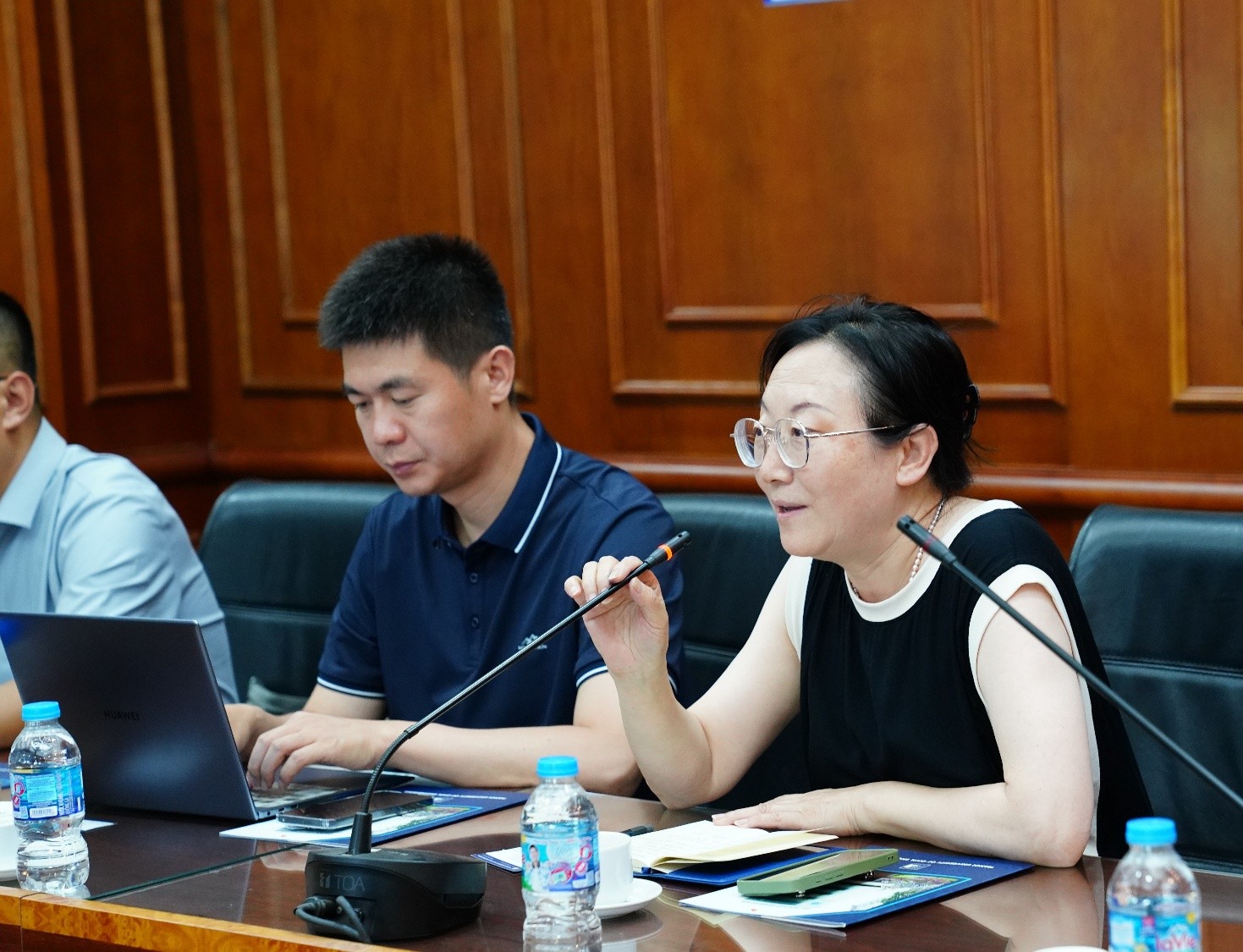
A representative from Beijing Jiaotong University spoke at the meeting.
Representatives from Beijing Jiaotong University expressed their gratitude for the warm welcome from Hanoi University of Civil Engineering and highly appreciated the potential for cooperation between the two sides in the fields of civil engineering training and international education. The partner representatives stated that the 2+2 joint training program and the enhanced Chinese language training for students are appropriate approaches, facilitating students' participation in international transfer programs, reducing tuition costs, and improving training effectiveness.
The partner also affirmed that they will continue to exchange ideas with the University to develop specific cooperation programs, leveraging the strengths of each side in training, scientific research, and the development of high-quality human resources.
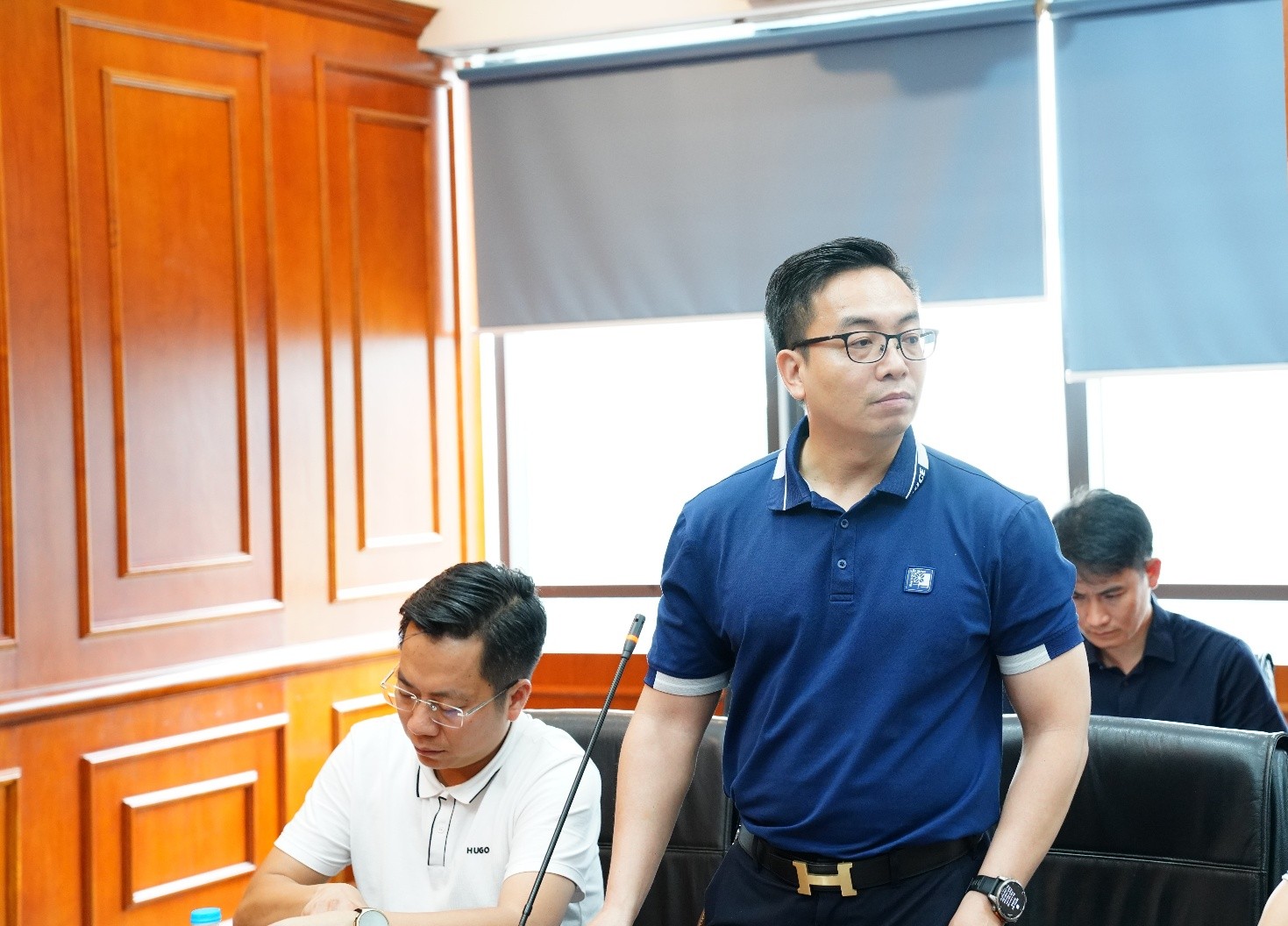
Dr. Nguyen Van Bich - Deputy Head of the Department of Bridge and Road Engineering, Hanoi University of Civil Engineering, shared his views at the working session.
During the meeting, Dr. Nguyen Van Bich, Deputy Head of the Faculty of Bridge and Road Engineering, expressed his desire to implement in-depth training and professional development programs for the faculty and related units. According to Dr. Nguyen Van Bich, in addition to the solid professional foundation of the faculty members who have received training abroad, the university wishes to continue developing in-depth research directions in the field of high-speed rail.
Dr. Nguyen Van Bich suggested that the two sides could develop training programs focusing on specific, in-depth topics such as technology. This includes high-speed railway bridge construction, foundation treatment, vibration analysis and structural behavior analysis, as well as the application of advanced technology in monitoring, operation, and maintenance of railway infrastructure.
Furthermore, the University hopes to receive support from its partners in building and developing a modern laboratory system to serve training and research. The establishment of specialized laboratories will not only contribute to improving the quality of training but also create conditions for strengthening applied research, technology transfer, and developing strong research groups in the field of high-speed rail.
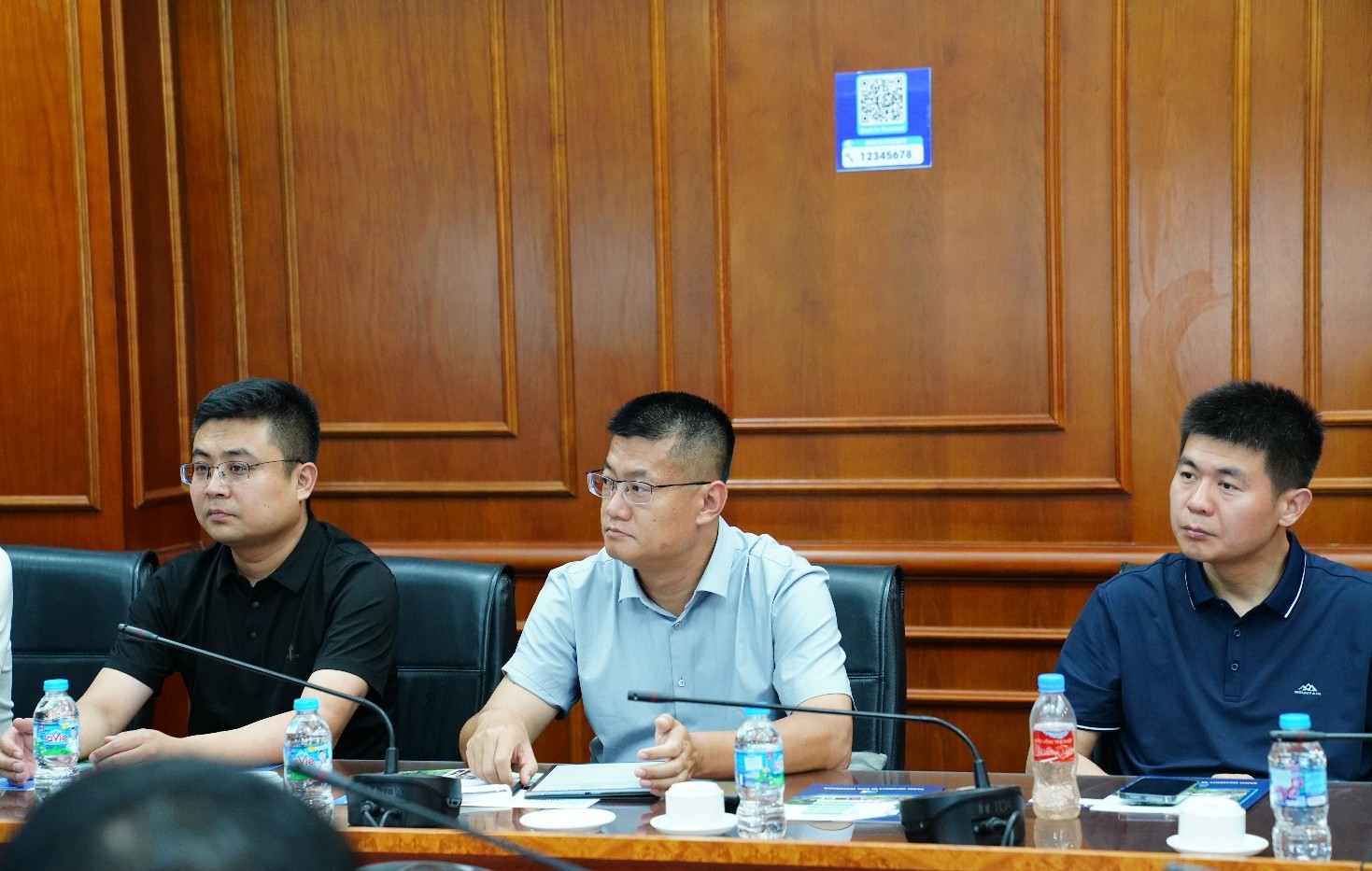
The parties exchanged views on the content of the cooperation.
During the meeting, the parties proposed implementing three key areas of cooperation to concretize the agreements reached:
- Firstly, coordinate the training and development of students, especially those in the Bridge and Road Engineering field; gradually build internship programs, academic exchanges, and professional practice opportunities at partner training institutions in China.
- Secondly, organize short-term training courses to enhance the professional capacity of the teaching staff, focusing on high-speed rail, urban rail, and modern transportation technologies.
- Thirdly, research the investment in constructing and equipping laboratories to serve training, scientific research, and technology transfer in the field of high-speed rail at Hanoi University of Civil Engineering.
These collaborative initiatives not only contribute to improving the quality of training, scientific research, and practical skills for faculty and students of the University, but also aim to realize the "Three-Party" linkage model in accordance with Resolution No. 57-NQ/TW of the Politburo, strengthening the connection between the State - University - Enterprise in training high-quality human resources, developing science and technology, innovation, and meeting the requirements of developing modern transportation infrastructure in Vietnam in the new era.
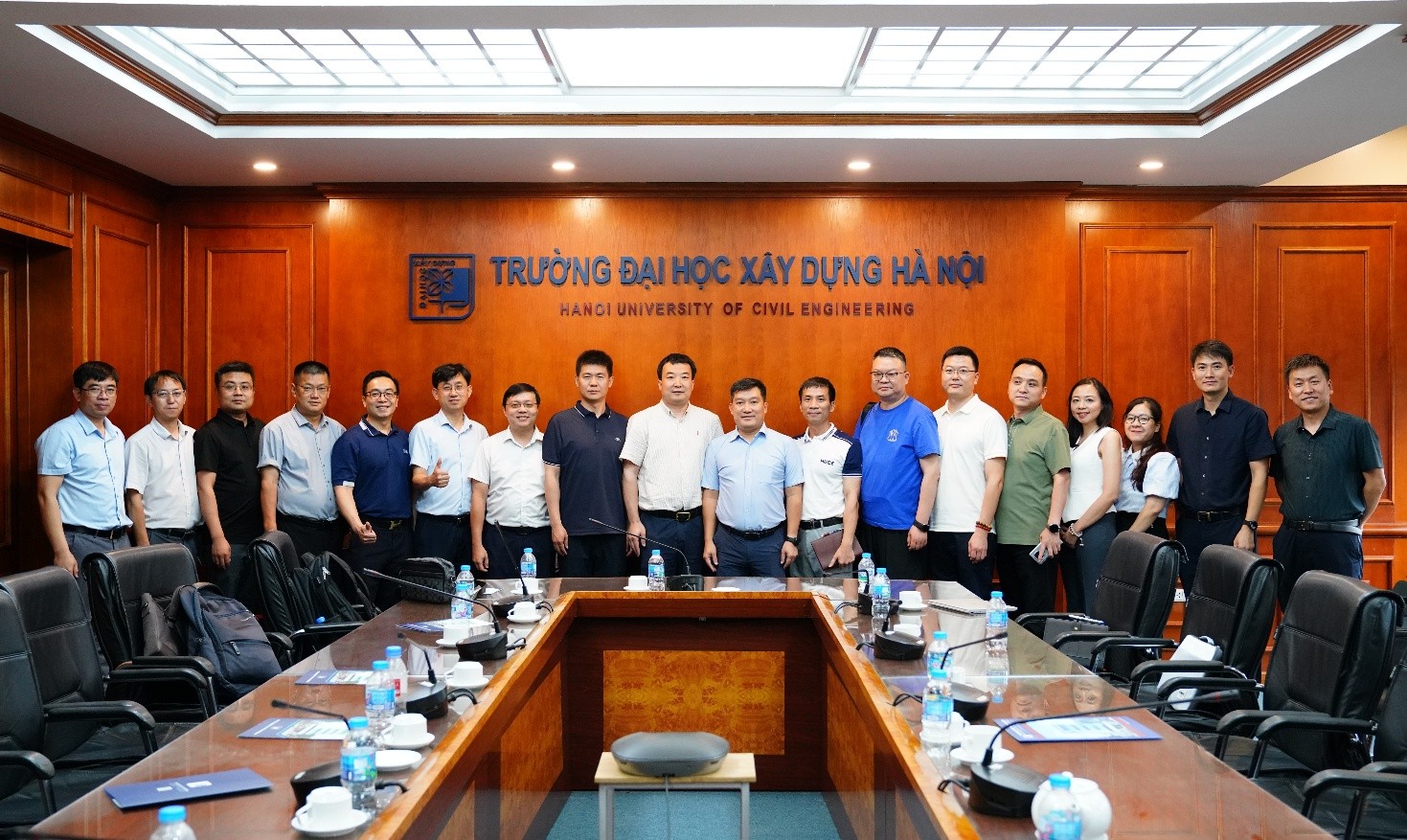
The delegates attending the meeting took a commemorative photo.
The meeting took place in an open, cooperative, and constructive atmosphere. The parties agreed to continue discussions and further elaborate on the proposed cooperation contents, aiming towards the implementation of training programs, scientific research, and technology transfer. Practical technologies in the near future.
With their complementary potential and strengths, Hanoi University of Civil Engineering and its Chinese partners expect to develop effective cooperation programs, contributing to the training of high-quality human resources, promoting innovation, and contributing to the sustainable development of a modern transportation infrastructure system in Vietnam and the region.
Phạm Nhung – Phòng TT&TS