







On March 13, 2026, a delegation from the Hanoi Department of Science and Technology (DST), led by Dr. Cu Ngoc Trang – Director of the Department, held a working session with Hanoi University of Civil Engineering (HUCE) on the development of science, technology, and innovation.
Attending the working session, on behalf of Hanoi University of Civil Engineering were Assoc. Prof. Dr. Hoang Tung - Rector, Assoc. Prof. Dr. Bui Phu Doanh - Vice Rector, along with representatives from the leadership of departments, faculties, research institutes and leading expert groups.
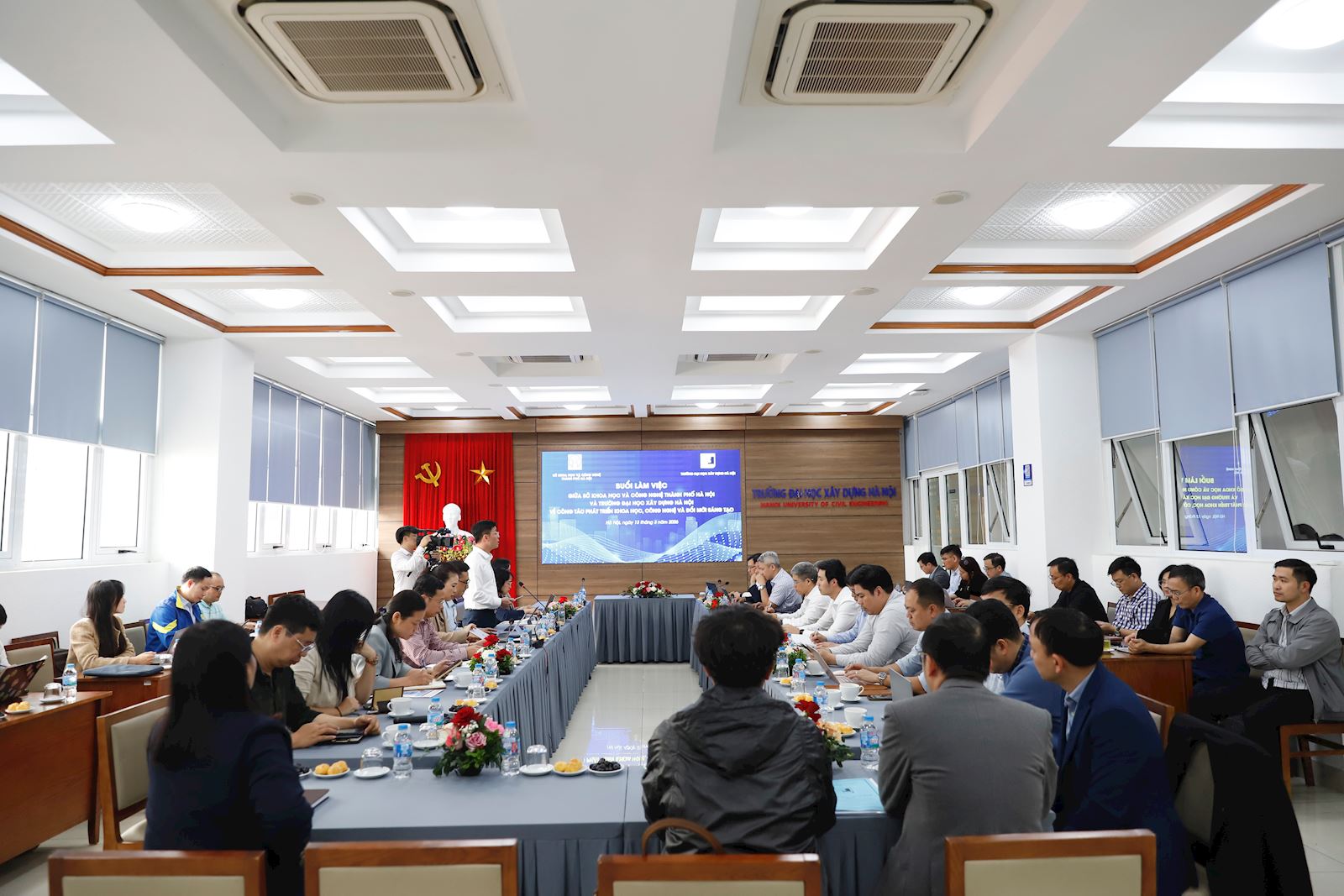
Overview of the Meeting Hall
At the meeting, Dr. Cu Ngoc Trang, Director of the Hanoi Department of Science and Technology, emphasized the city's new direction in exploiting the "gold mine" of knowledge from higher education institutions located in Hanoi. Instead of merely acting as a state agency approving funding, the Department will shift strongly towards creating an ecosystem and directly commissioning scientists to solve urgent problems facing the capital.
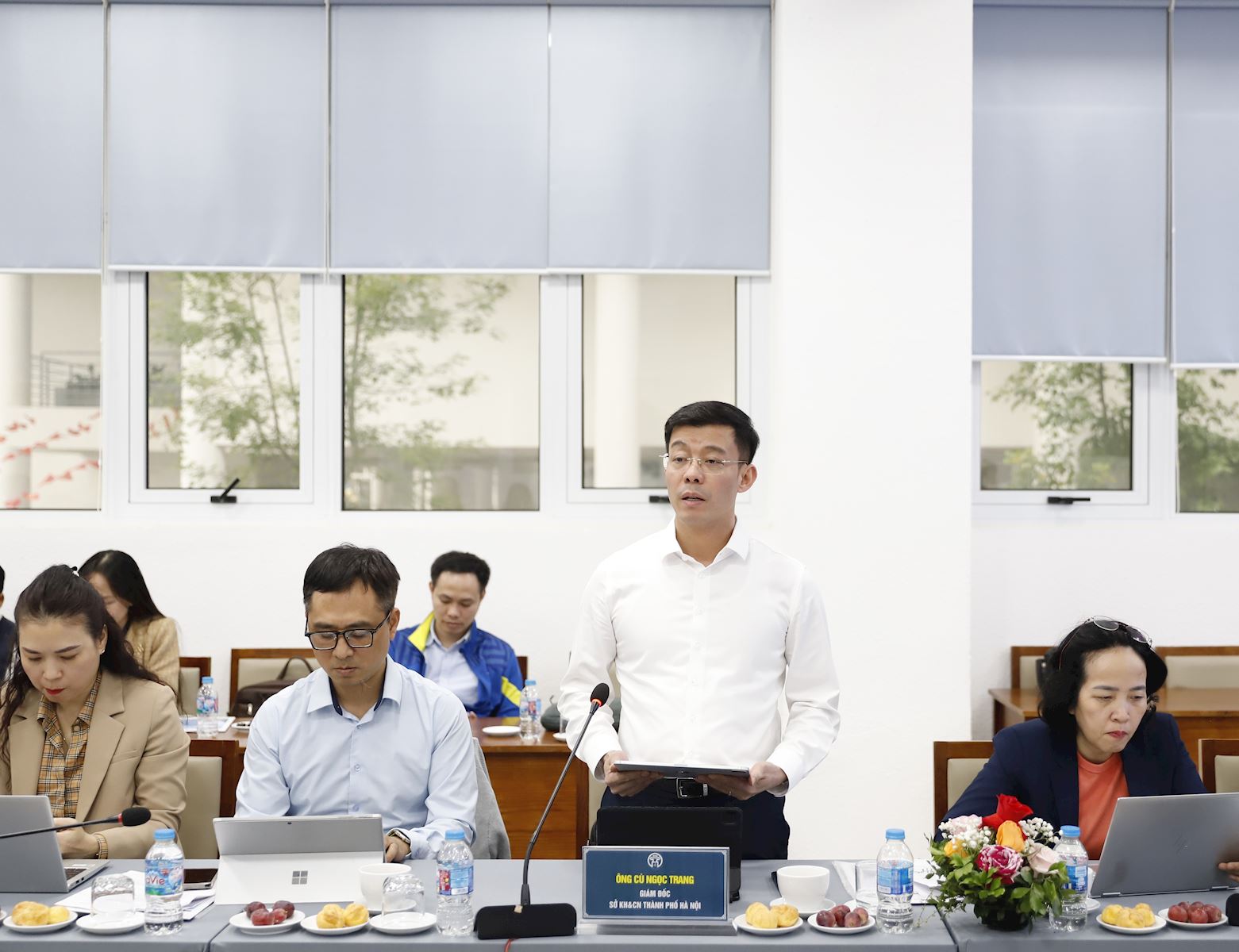
Dr. Cu Ngoc Trang - Director of the Hanoi Department of Science and Technology, delivered a speech at the working session.
"The city will not implement small, scattered projects, but will focus on key, systematic programs that thoroughly address people's livelihoods and urban development issues," affirmed Dr. Cu Ngoc Trang.
Based on the strengths of Hanoi University of Civil Engineering, the Director of the Department of Science and Technology proposed that the University collaborate on a key research program for the period 2026-2030 on "Sustainable Urban Infrastructure Reconstruction and Development". The program is expected to focus on five core components:
- Reviving inner-city rivers: Recreating the To Lich, Lu, Set, and Nhue river systems into ecological infrastructure.
- Urban flood control: Building a "sponge city" model to adapt to climate change.
- Rebuilding old apartment complexes: Technical and social solutions for Hanoi's more than 100 old, dilapidated apartment complexes.
- Transport-Oriented Development (TOD): Utilizing the space around Metro stations.
- Circular economy in construction: Recycling construction waste and developing green materials.
Speaking at the meeting, Associate Professor Dr. Hoang Tung – the Rector of the university – expressed strong agreement with the Department's new approach. The university committed to acting as a focal point, working with interdisciplinary and inter-university experts to solve the general problems commissioned by the Department of Science and Technology. Simultaneously, the university will adjust its postgraduate training programs to include relevant majors/specializations and orient its scientific research to closely align with the practical requirements of the city.
Hanoi University of Civil Engineering is ready to take on the leading role, collaborating with other engineering universities to carry out highly practical science and technology tasks, instead of just focusing on theoretical reports.
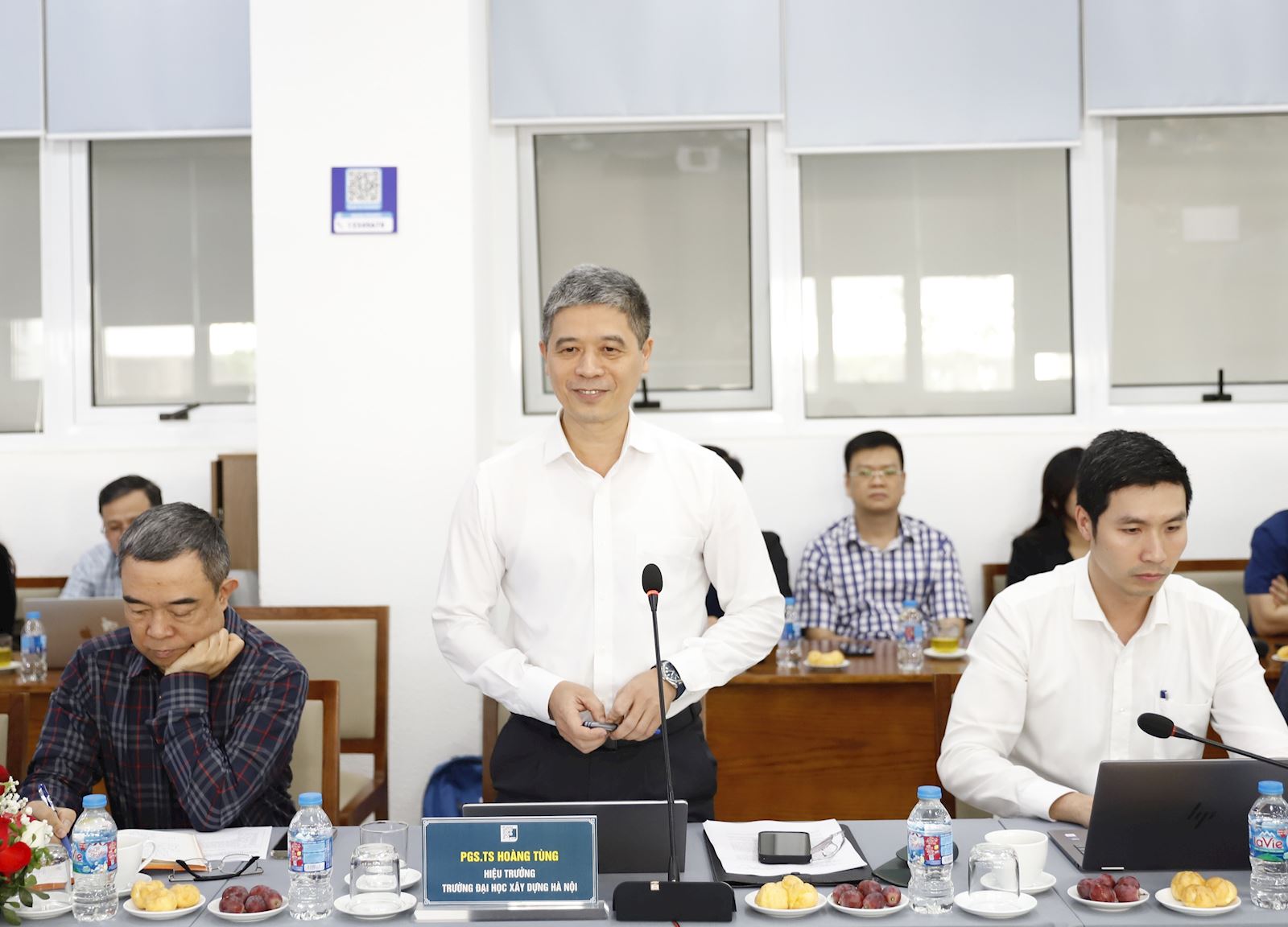
Assoc. Prof. Dr. Hoang Tung – Rector of Hanoi University of Civil Engineering, delivered a speech at the Working Session.
Both sides agreed to concretize the contents of key science and technology tasks commissioned by the Hanoi Department of Science and Technology and implement specific innovation projects in the coming time, especially the coordination mechanism in training 1,000 doctoral students linked to real-world problems in Hanoi.
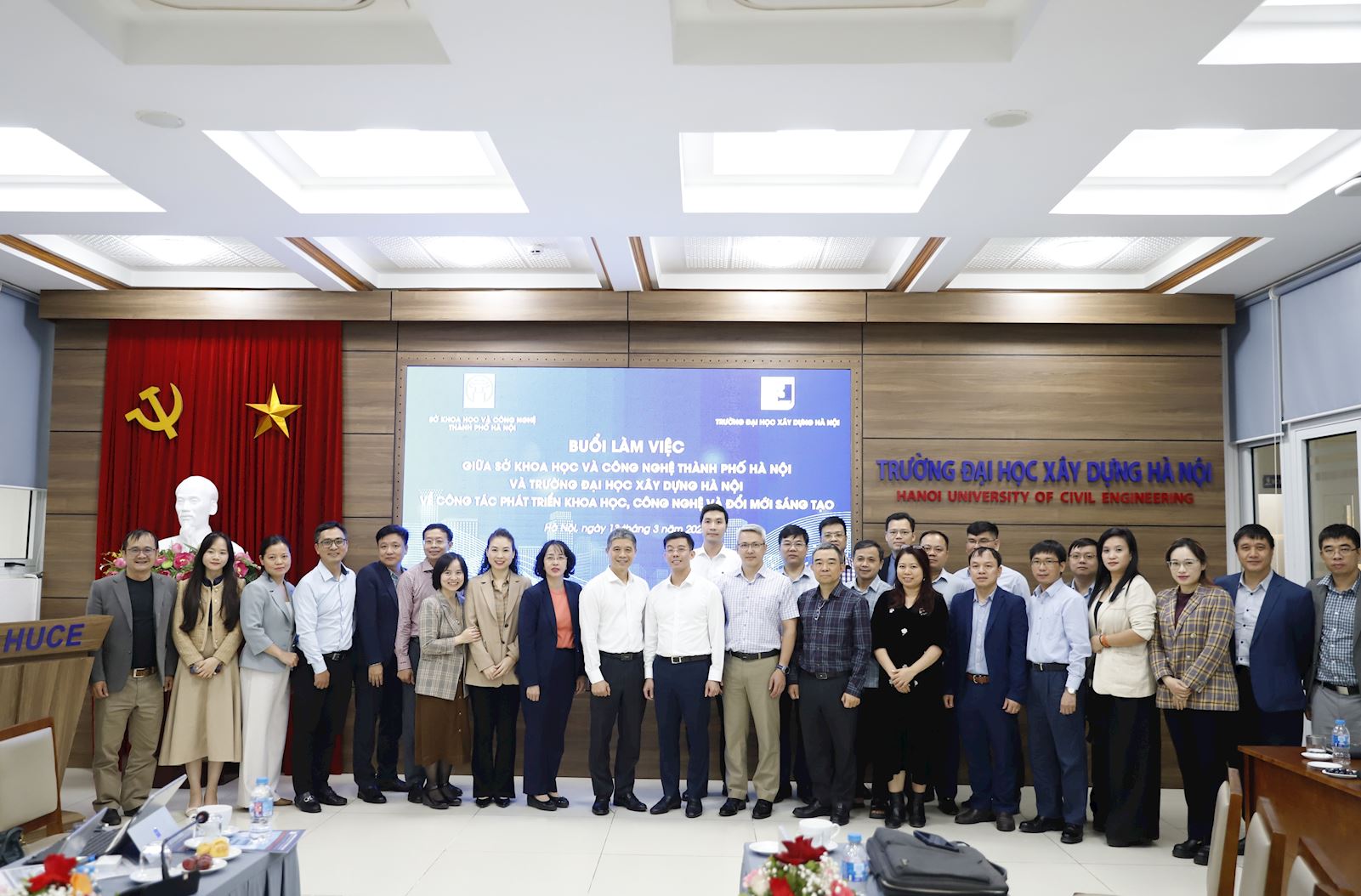
Attendees took a commemorative photo, celebrating the success of the working session between the School and the Hanoi Department of Science and Technology.
Đăng Được - Phòng TT&TS