







On the afternoon of July 28th, at the headquarters of the Vietnam Road Administration (VRA), Hanoi University of Civil Engineering (HUCE) participated in the signing ceremony of two important cooperation agreements with the VRA and leading enterprises. This event marks a significant step forward in implementing the State-University-Enterprise cooperation model, in which HUCE is entrusted with a core role in expertise and scientific research to modernize the road transport sector.
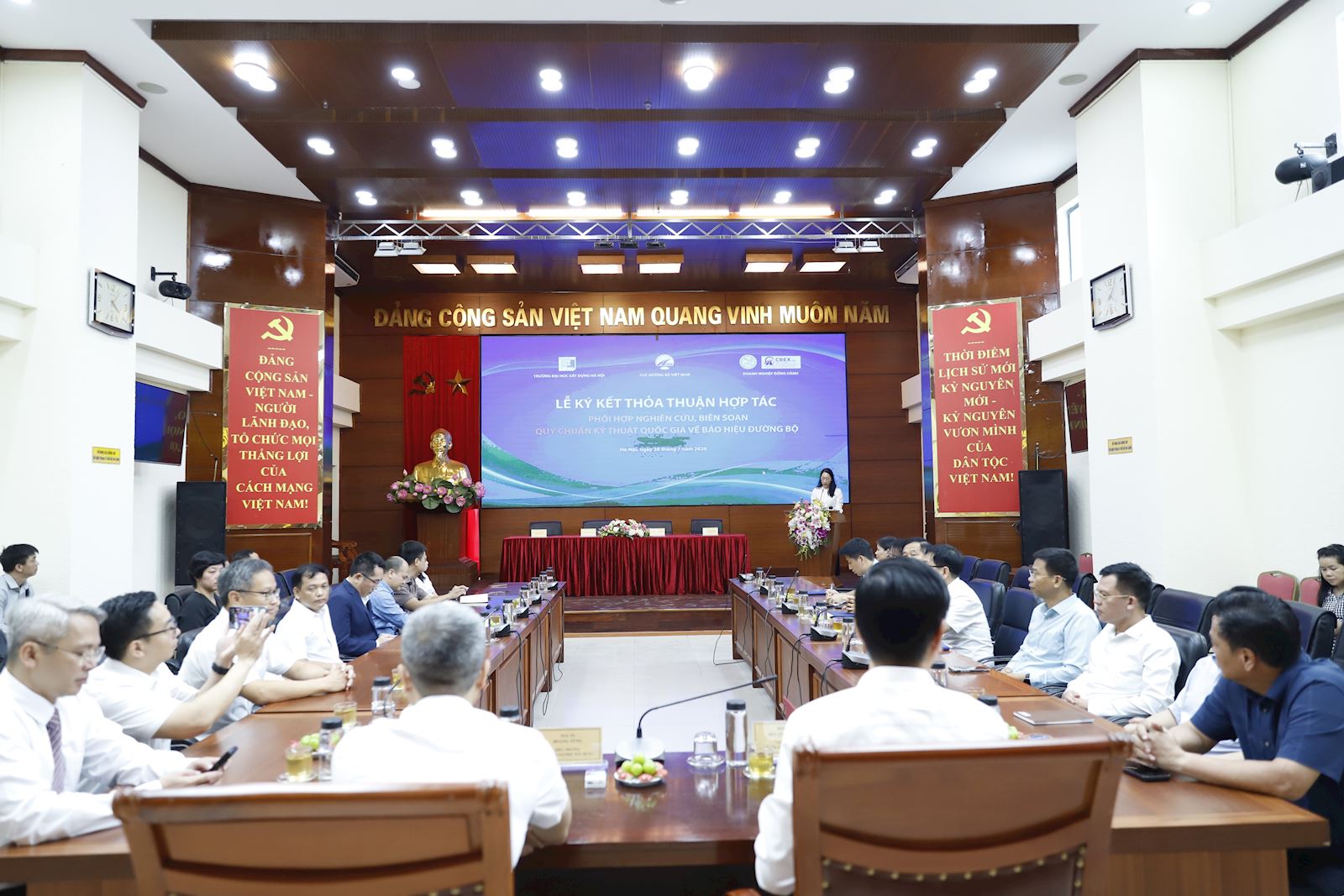
Overview of the Signing Ceremony Hall
The signing ceremony was chaired by Mr. Bui Danh Thai - Secretary of the Party Committee, Director of the Vietnam Road Administration and Assoc. Prof. Dr. Hoang Tung - Secretary of the Party Committee, Rector of Hanoi University of Civil Engineering; along with the participation of leaders of the Vietnam Road Administration , Hanoi University of Civil Engineering , partner businesses and numerous experts in the field of transportation.
Speaking at the ceremony, Comrade Bui Quang Thai - Director of the Vietnam Road Administration - stated that revising the Road Traffic Signage Regulations is an urgent requirement to meet practical management needs and align with the spirit of building a disciplined, safe, and civilized society.
According to the Director, road signage directly affects traffic management and organization, therefore the new regulations need to be easy to understand and apply, with many sample problems and specific examples so that design engineers and localities can apply them consistently in practice.
Director Bui Danh Thai also expressed his hope that traffic safety inspection would become an integral part of the construction design process, thereby enhancing the capacity of engineers right from the training process at universities.
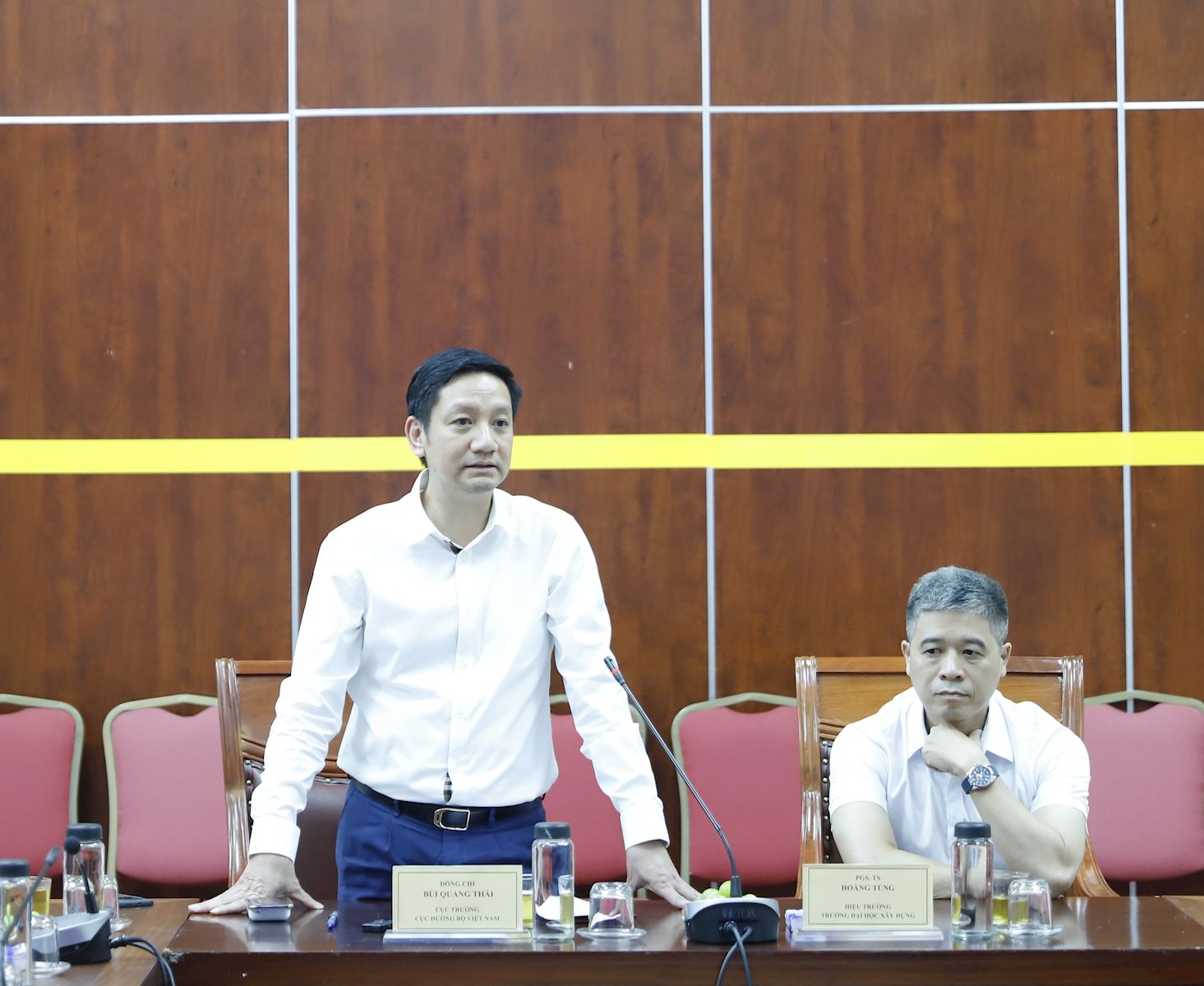
Comrade Bui Quang Thai - Director of the Vietnam Road Administration, delivered a speech at the ceremony.
Speaking at the ceremony, Associate Professor Hoang Tung - Rector of the University - emphasized the traditional and deeply rooted cooperative relationship between the University and the Vietnam Road Administration. Affirming that digital transformation is no longer just a direction but has become an urgent practical requirement, the Rector highlighted the key focus areas: Shifting from manual infrastructure quality assessment to management using a multi-objective criteria system with high accuracy; Digitizing Regulation 41 to allow citizens to easily look up road signage regulations via smartphone, bringing the law closer to daily life. He also proposed the synchronous integration of data on traffic volume, road signs, road surface quality, etc. This will be the core platform supporting management agencies and businesses in optimizing decisions regarding infrastructure exploitation and maintenance.
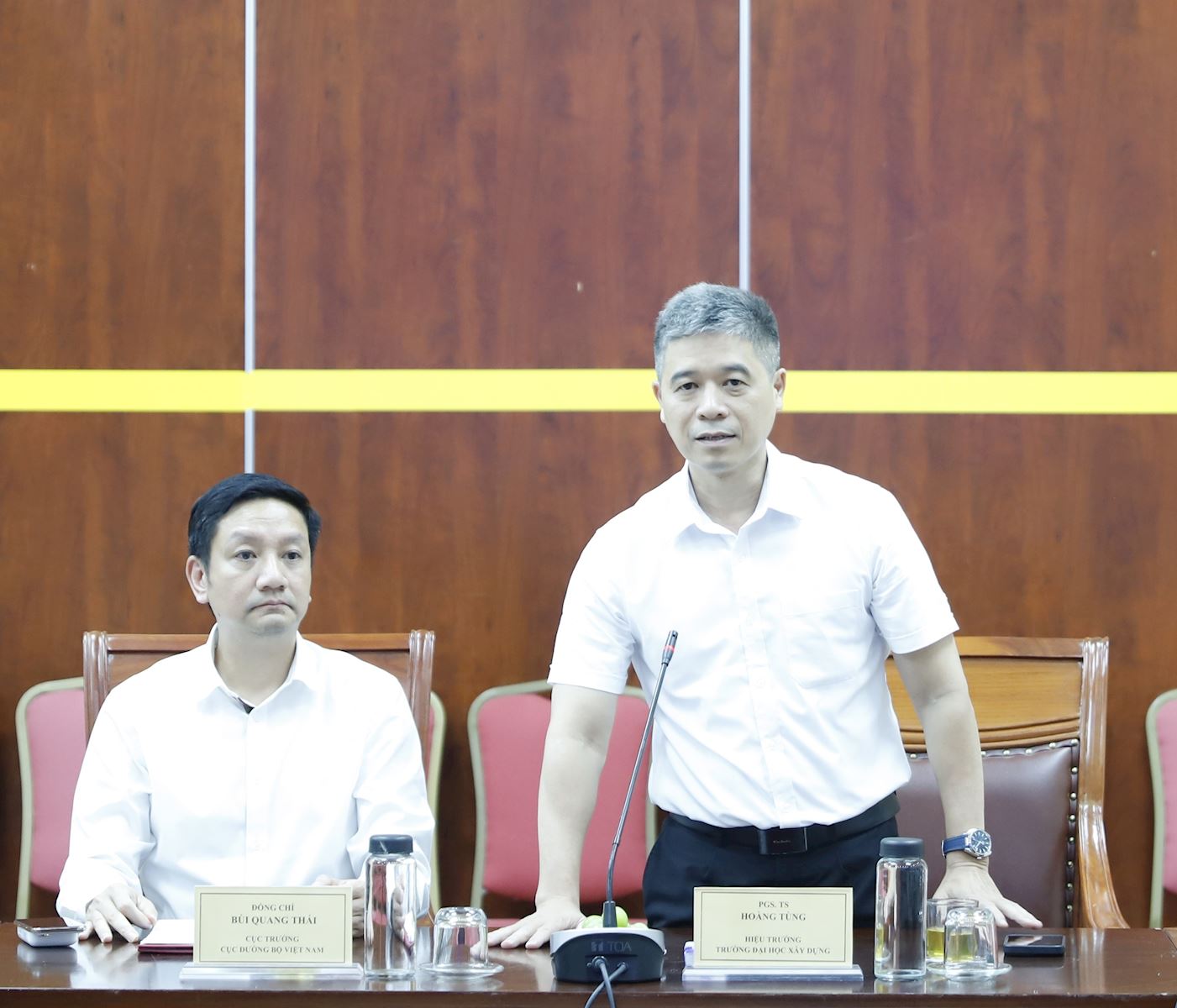
Assoc. Prof. Dr. Hoang Tung - Rector of Hanoi University of Civil Engineering, delivered a speech at the ceremony.
1. Key tasks in researching and compiling national technical standards.
One of the two core areas of cooperation is the participation of Hanoi University of Civil Engineering in researching and drafting the National Technical Standard on Road Traffic Signs, replacing QCVN 41:2024/BGTVT. For this task, the University's role is particularly important, and it will directly mobilize its team of professors, doctors, and leading experts to participate in the research and drafting. The goal of the expert team is to develop a new set of standards that ensures scientific accuracy, consistency, addresses practical shortcomings, and gradually approaches international standards.
2. Pioneering the promotion of digital transformation in transportation infrastructure.
According to the agreement, the University will cooperate with the parties to build a digital database of road infrastructure, and standardize asset data on GIS and BIM platforms. In the context of rapid technological development, Hanoi University of Civil Engineering continues to bear the responsibility of researching and implementing digital transformation in the management, operation, exploitation, and maintenance of road infrastructure. The University's experts will also research the application of advanced technologies such as artificial intelligence (AI), the Internet of Things (IoT), and big data into the management system.
3. Practical motivations from the "State - School - Enterprise" model
At the event, Director of the Vietnam Road Administration Bui Quang Thai highly appreciated the university's capabilities and affirmed that Hanoi University of Civil Engineering is the core force in science and expertise in this tripartite cooperation model. Representing the training institutions, Assoc. Prof. Dr. Hoang Tung considered the participation of businesses (such as Hanoi Ring Road 4 Expressway Joint Stock Company, Bac Nam Construction and Investment Consulting Joint Stock Company, etc.) as a "breath of fresh air." This collaboration brings great benefits to the university's research activities.
- This helps faculty and experts conduct scientific research that is not limited to theory but can directly apply to practice.
- Shorten the research process and enhance the applicability of scientific products by receiving data support from businesses and using construction sites as "field laboratories" for verification.
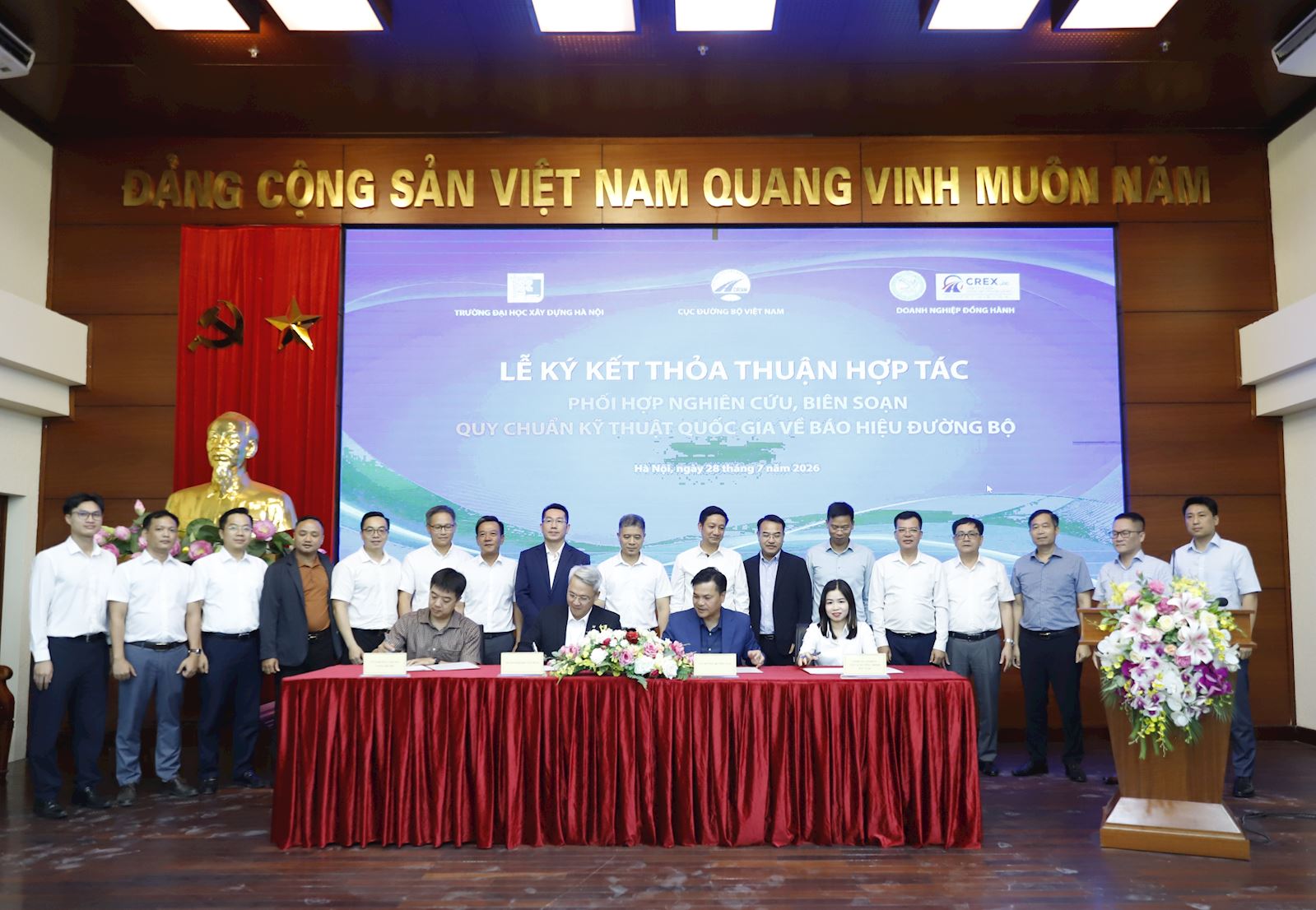
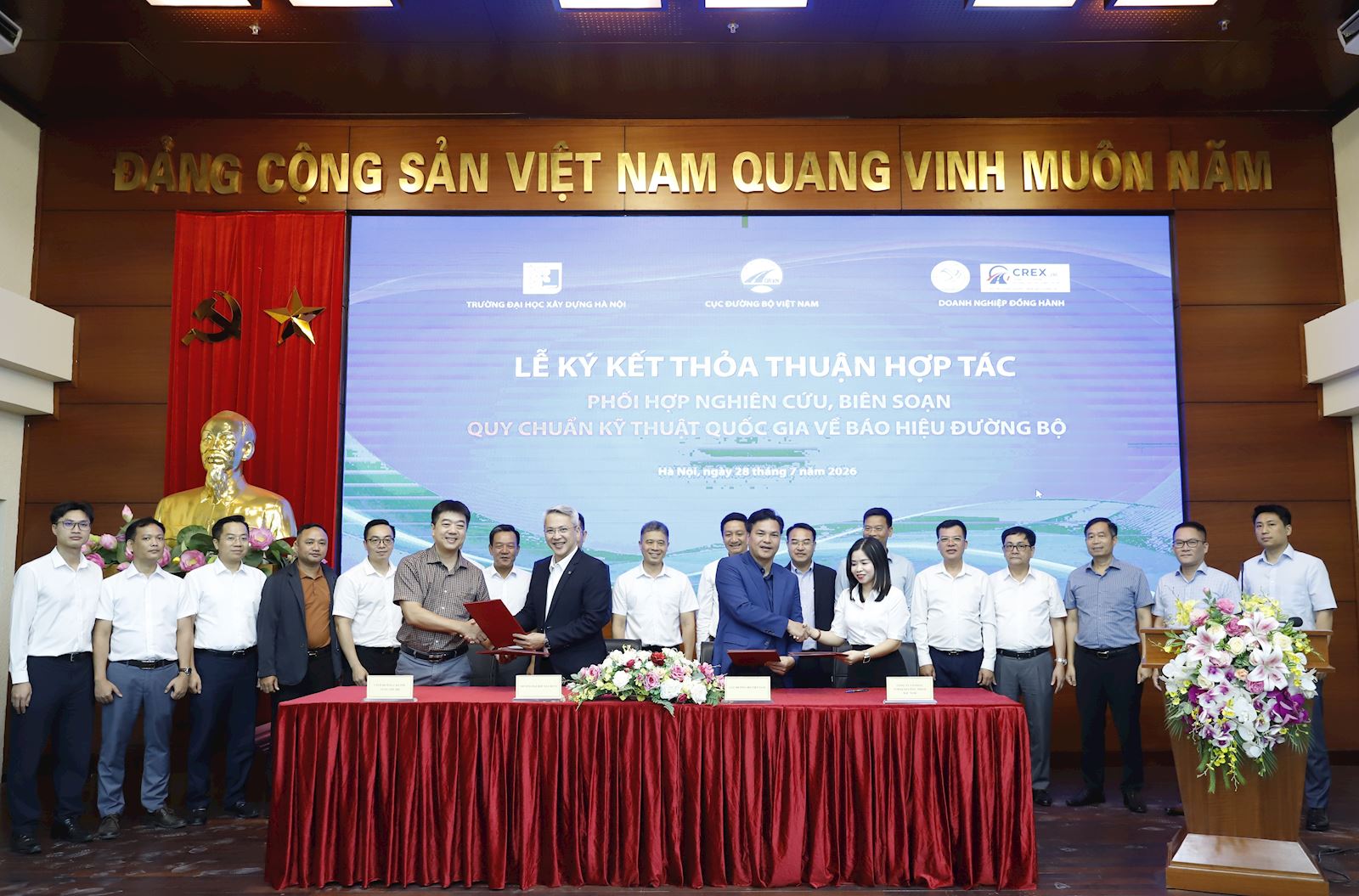
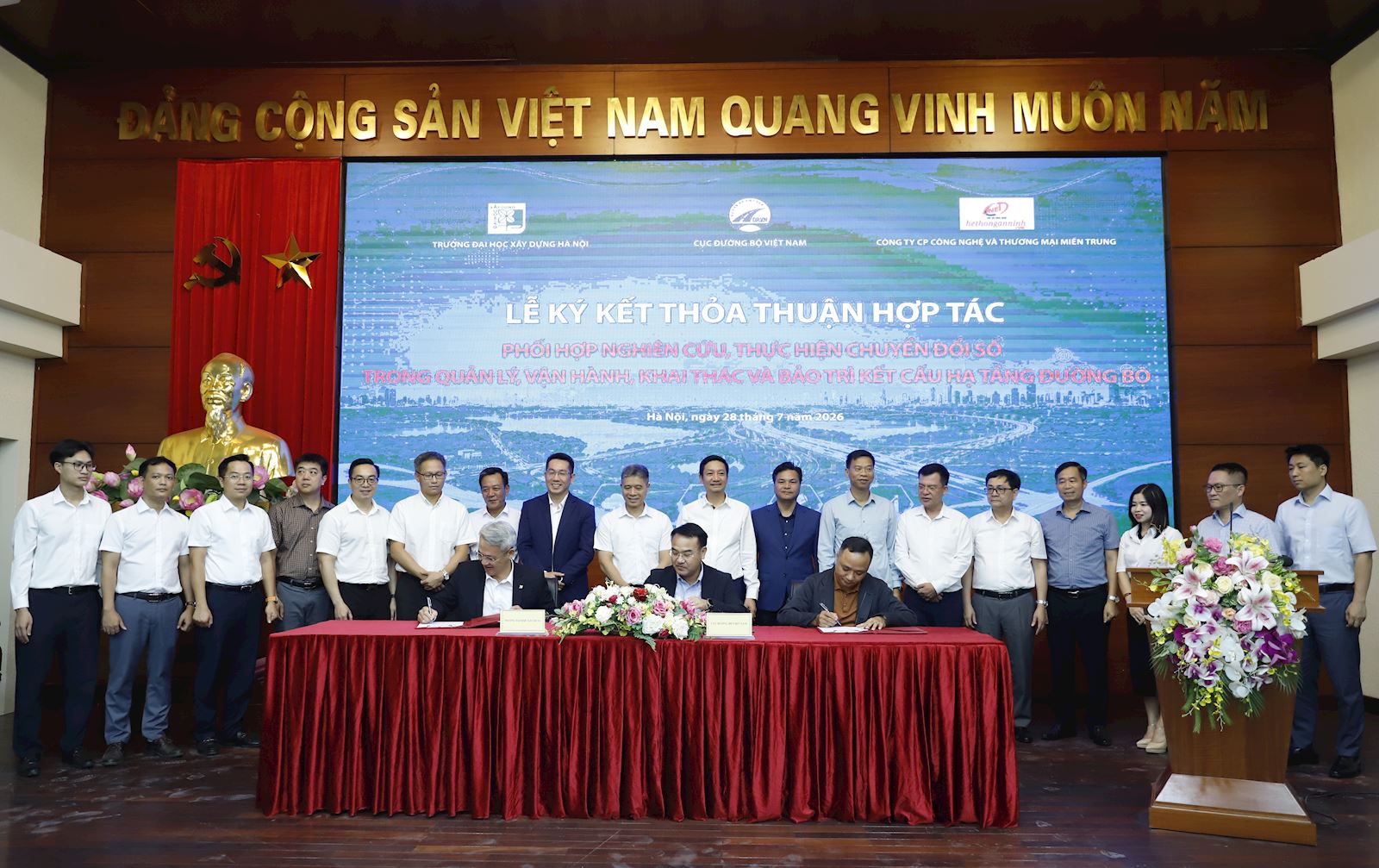
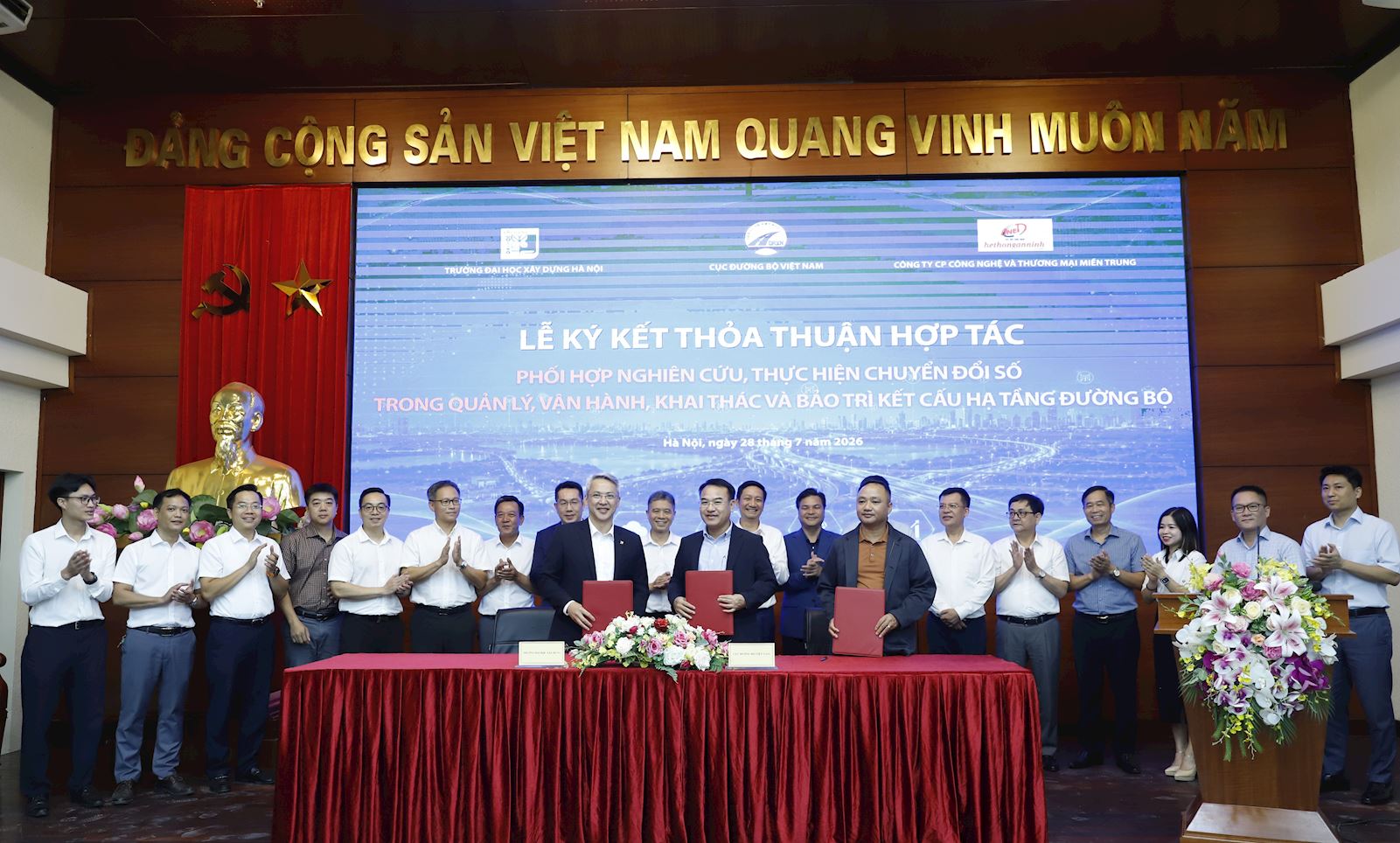
Representatives from the Vietnam Road Administration, the school, and the businesses signed the Memorandum of Agreement.
The signing ceremony of the Cooperation Agreement once again affirms the profound continuity in the traditional cooperative relationship between Hanoi University of Civil Engineering and the Vietnam Road Administration. With its intellect, dedication, and team of experienced experts, the University is committed to excellently fulfilling the assigned tasks, contributing to improving the quality of management and development of the country's road transport infrastructure in the new era.
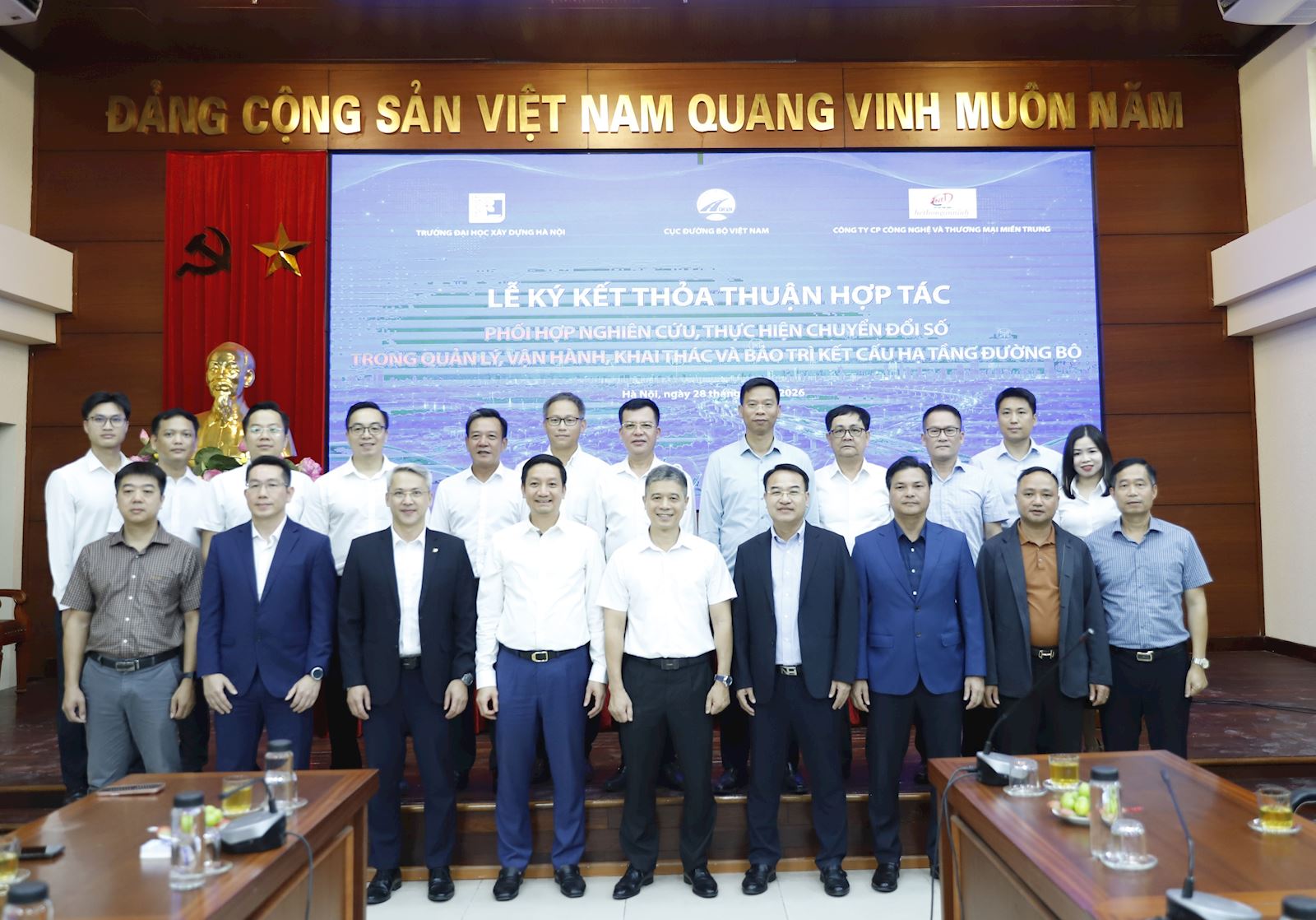
Delegates attending the signing ceremony pose for a commemorative photo.
Đăng Được - Phòng TT&TS